
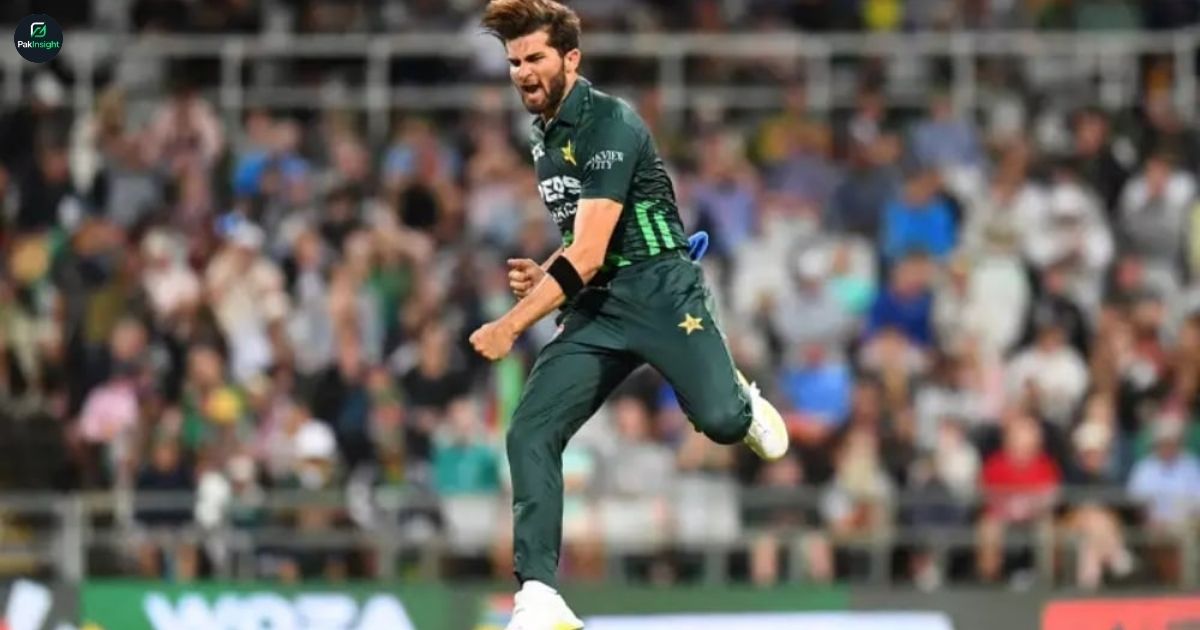
Shaheen Afridi’s pace has become a major talking point in Pakistan cricket circles after recent observations suggested a noticeable dip in his bowling speed. The left-arm pacer, once known for consistently hitting high 140s km/h, is now under scrutiny as experts and former players debate the reasons behind his reduced pace and overall workload management.
Cricket analysts and former professionals have linked this trend to Pakistan’s demanding schedule and Shaheen’s continuous involvement across formats. Concerns grew stronger after recent Test performances, where his speed reportedly dropped compared to his earlier standards.
Workload and format transition under the spotlight
Former cricketers have pointed to Shaheen Afridi’s heavy playing load as a possible reason behind the decline in pace. With constant switching between T20 leagues, international white-ball matches, and Test cricket, his body has been under continuous strain.
Experts argue that modern fast bowlers often struggle to maintain peak speed when they play all formats without extended recovery periods. In Shaheen’s case, his role as a leading strike bowler for Pakistan has increased expectations, adding further pressure on his physical fitness.
Some analysts believe that the shift toward T20 cricket has also influenced training patterns. Bowlers who regularly operate in short, explosive spells may find it difficult to adjust quickly to the endurance demands of Test cricket.
Technical rhythm and fitness concerns
Cricket observers have also pointed out that rhythm plays a crucial role in fast bowling speed. When a bowler’s schedule becomes inconsistent or overly packed, maintaining rhythm becomes difficult.
Shaheen Afridi’s pace has reportedly fluctuated in recent matches, raising questions about whether he is bowling at full fitness or managing minor niggles. Although no official injury update has confirmed a serious issue, concerns remain about long-term workload management.
Fitness experts suggest that even a 5–10 km/h drop in pace can significantly affect a fast bowler’s effectiveness, especially in Test cricket, where sustained pressure is essential.
Comparisons with past fast bowlers
The discussion has also led to comparisons with former fast bowlers who managed to maintain speed across formats. Some experts argue that players like Shoaib Akhtar and Brett Lee balanced workload differently, focusing heavily on conditioning and recovery.
However, modern cricket is more demanding due to packed schedules, franchise leagues, and limited recovery windows. This makes it harder for current bowlers to maintain peak speed consistently throughout the year.
Pakistan team management under pressure
The debate around Shaheen Afridi’s pace has also placed the Pakistan team management under scrutiny. Questions are being raised about rotation policies, fitness monitoring, and long-term planning for fast bowlers.
Cricket insiders suggest that better workload distribution could help Shaheen regain his peak rhythm. There is also growing support for structured rest periods between formats to preserve his long-term performance.
What lies ahead for Shaheen Afridi
Despite current concerns, Shaheen Afridi remains one of Pakistan’s most valuable bowling assets. His ability to swing the new ball and deliver breakthroughs in crucial moments still makes him a match-winner.
However, maintaining peak pace will be key for his continued dominance at the international level. The coming series will likely be closely watched by fans and analysts to assess whether he can regain his earlier speed.
For now, the debate around Shaheen Afridi’s pace continues to grow, reflecting both concern and expectation from a bowler who carries Pakistan’s fast-bowling hopes on his shoulders.