
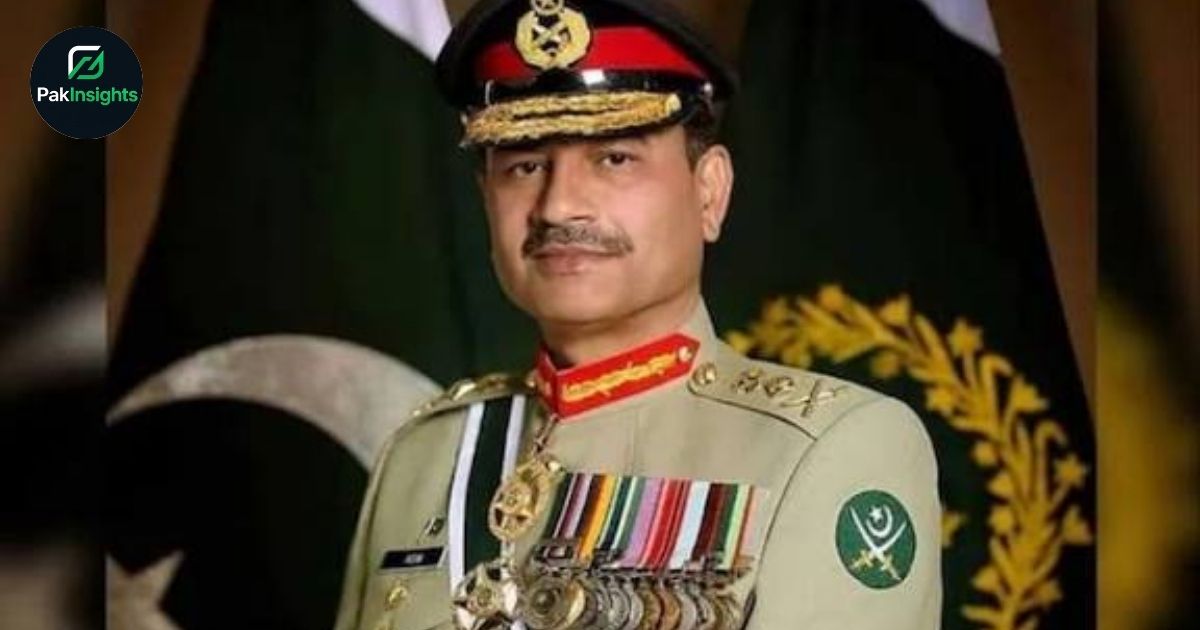
The announcement that President Approves Asim Munir as Pakistan’s New COAS and CDF marks one of the most significant defence developments in recent years, reshaping how Pakistan prepares for regional and global challenges. With the official endorsement coming through a high-level summary, the decision highlights a moment of strategic clarity for the country’s future security direction. Many analysts believe this appointment signals a new era of disciplined leadership and unified military planning as Field Marshal Syed Asim Munir’s appointment takes effect.
The move is not only a major transition for the Army but also the newly formed position of Chief of Defence Forces, which is designed to create smoother communication among military branches. As global tensions continue to evolve, Pakistan’s updated command structure aims to support stronger coordination, rapid decision-making, and improved defence readiness. Officials emphasize that this shift aligns with long-term national interests, particularly after the approval came from President Asif Ali Zardari, further confirming the importance of the step. For both Pakistan and international observers, this leadership change marks a critical moment that could influence military strategy for years to come.
Historic Leadership Shift as Asim Munir Takes Charge of Pakistan’s Military Command

The decision that President Approves Asim Munir as Pakistan’s New COAS and CDF is not a surprise to defence watchers because Field Marshal Asim Munir has held some of the most sensitive roles in the Pakistan Armed Forces. His rise from intelligence leadership to top command has been marked by discipline, strategic focus, and a record that includes the widely referenced Indian aircraft incident, which many Pakistani officials often describe as proof of his operational clarity. His position became stronger after the Appointment summary was signed and forwarded from the President’s Secretariat, a process highlighted in multiple ARY News reports.
At the same time, political leaders also tried to calm tensions. A strong statement from Federal Law Minister Azam Nazeer Tarar clarified that the clarification of the Army, Air Force, and Naval Acts showed no legal uncertainty. He even explained the Article 245 interpretation to address public doubt. His remarks formed part of a broader effort to keep facts clear after widespread claims and rumors, many of which were later debunked on social media due to updated information shared across newsrooms.
What the Dual Appointment Means for Pakistan’s Defence and Strategic Direction
The fact that President Approves Asim Munir as Pakistan’s New COAS and CDF is crucial because it creates a unified command system under one leader. This new Chief of Defence Forces role is expected to improve coordination among ground, air, and naval operations. Analysts believe this structure will create fewer communication gaps and better modern warfare planning. Many strategic experts in the USA have also started reviewing how the Concurrent military appointment might shape Pakistan’s role in regional defence.
The long-term implications of this major step can be seen in how the government is aligning internal reforms. With Pakistan’s defence leadership changes taking place, policymakers expect the new command style to guide modernization, intelligence updates, cyber defence expansion, and international cooperation. The table below shows how roles shift under the new structure.
| Position | Previous Role | New Role After Appointment |
|---|---|---|
| Chief of Army Staff (COAS) | Works under a coordinated CDF structure | Now also CDF |
| Chief of Defence Forces (CDF) | Did not exist | New unified command |
| Chief of Air Staff (CAS) | Head of Air Force | Works under coordinated CDF structure |
The dual role carried by Asim Munir allows stronger control over joint missions, cross-border monitoring, and national defence upgrades, especially after the Tenure extension of other senior officers who must now fit into a shared framework influenced by the Defence legislation 2024.
Air Chief Marshal Zaheer Ahmad Babar Sidhu’s Extension and Its Strategic Importance
The government’s decision to approve the Air Chief Marshal Zaheer Ahmad Babar Sidhu extension gained attention because his leadership in modernizing the Air Force has been praised by many officials and military observers. His continued role means the air branch will remain aligned with the new defence vision shaped by the Chief of Defence Forces’ role, especially in areas such as drone surveillance, border management, and air-to-air defence upgrades. Many believe his extension also aligns with the Service Chiefs’ tenure extension policy that aims to bring stability across all branches.
The extension strengthens the longer-term plans tied to the new command structure. It ensures that the Air Force will coordinate all strategic plans under the unified direction of the CDF. This arrangement helps maintain consistency in aerial modernization programs. That includes future jet upgrades and improved counterterrorism strategies, topics widely analyzed in military research circles in both Pakistan and the USA.
The extension of Zaheer Ahmad Babar Sidhu connects directly to Asim Munir’s five-year vision because both leaders must coordinate in unified operations that aim to modernize defence systems while reducing inter-branch gaps. This coordination creates a more predictable leadership cycle.
Political Reactions Inside Pakistan
The announcement that President Approves Asim Munir as Pakistan’s New COAS and CDF triggered immediate political reactions. One of the strongest came from Federal Minister Hanif Abbasi, who gave a direct explanation in an Exclusive interview, assuring the public that the government followed all legal steps. His remarks helped cool the public debate as he stressed the importance of national unity and strategic continuity, especially when dealing with sensitive defence transitions.
Meanwhile, public opinion spread quickly across digital platforms. Many Pakistani users described the appointment as a stabilizing step, while overseas communities, especially in the USA, looked for clarity through updates on international security implications. Reports from ARY News helped guide the conversation as they highlighted the constitutional role of the President’s Secretariat and the legal weight of the Appointment summary.
Political figures repeatedly noted the importance of showing national discipline, particularly while discussing the Notification issuance, which reflects years of structured military planning.
Historical Context of the Field Marshal Rank in Pakistan
Pakistan rarely awards the Field Marshal rank because it carries symbolic and strategic meaning. In earlier decades, the title reflected immense political influence. Today, it serves more as a professional recognition of strategic excellence. Therefore, the moment the President approves Asim Munir as Pakistan’s New COAS and CDF also becomes a moment of historical significance due to the lasting importance of the rank itself.
Experts believe this recognition matters because it highlights the depth of experience that Asim Munir brings to the leadership. His position reflects continuity, experience, and strong command capability. It signals that Pakistan expects greater discipline and a unified strategy under his guidance, especially in sensitive border regions.
The Field Marshal rank recognition is connected to broader defence reforms and symbolizes the confidence placed in a leader who now shapes policy across the entire military.
Frequently Asked Questions
Q1: Who is the new COAS and CDF of Pakistan?
A: Field Marshal Asim Munir has been appointed as the new Chief of Army Staff (COAS) and the country’s first Chief of Defence Forces (CDF).
Q2: Who approved Asim Munir’s appointment?
A: The appointment was approved by President Asif Ali Zardari following the Prime Minister Shehbaz Sharif’s summary.
Q3: How long is Asim Munir’s tenure?
A: He will serve a five-year military tenure in both positions, as per the 2024 service chiefs amendment.
Q4: What is the significance of the CDF role?
A: The Chief of Defence Forces’ role unifies command among the Army, Air Force, and Navy, improving coordination and strategic planning.
Q5: Has the Air Chief’s tenure been extended?
A: Yes, Air Chief Marshal Zaheer Ahmad Babar Sidhu’s extension was approved for two more years to maintain leadership continuity.
Meta Description
President Approves Asim Munir as Pakistan’s New COAS and CDF, marking a historic shift in military leadership and defence strategy.