
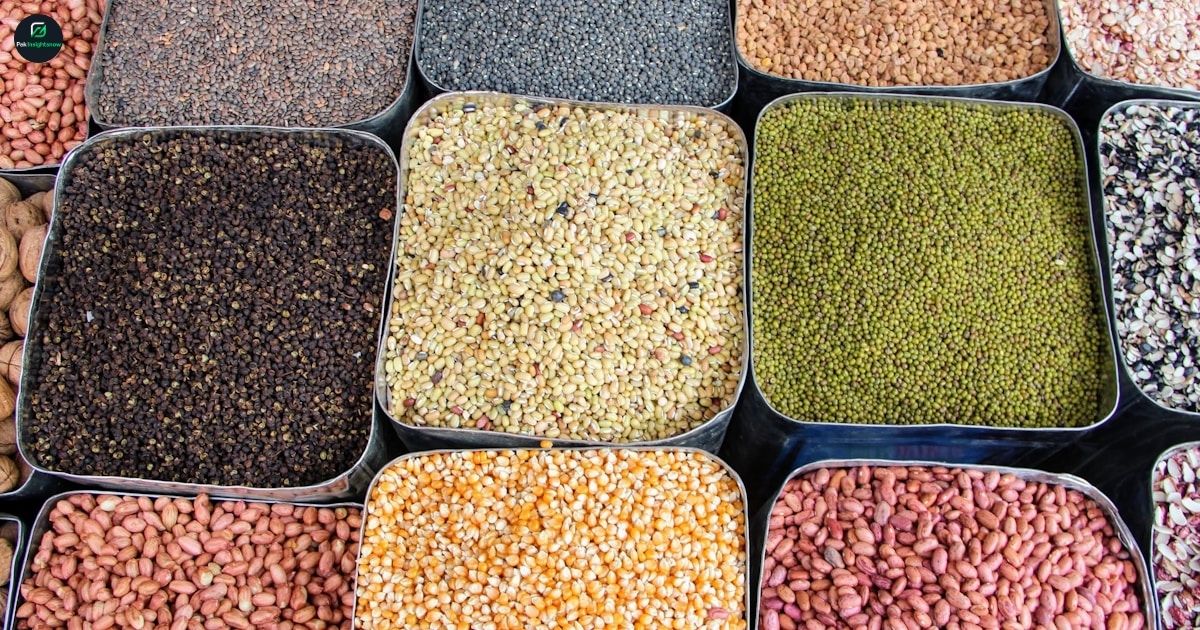
Pakistan’s pulse growth has shown a strong recovery in FY2025-26, with production jumping by 31.4 percent and emerging as one of the brightest spots in the country’s agriculture sector, according to the latest Economic Survey.
Officials reported that pulses became the fastest-growing crop category during the year. The sharp increase came after a difficult agricultural period marked by flood-related disruptions and uneven crop performance across major regions.
The surge in pulses output played a key role in lifting the broader “other crops” segment. That segment expanded by 2.43 percent, signaling a gradual but steady recovery in non-major crop production.
Agriculture experts say the latest figures highlight improved farming conditions, better input availability, and stronger government support measures. Together, these factors helped farmers recover lost ground and expand cultivated areas for key crops.
Strong Recovery Driven by Gram and Moong
Among all pulse varieties, gram recorded the most significant growth. Production rose sharply by 50.4 percent, reaching 258,600 tons. Farmers expanded the cultivated area from 707,000 hectares to 782,000 hectares, which directly supported higher output.
Moong also performed well, rising 15.2 percent to 151,100 tons. This steady growth reflects improved yield conditions and increased farmer interest in pulse cultivation.
However, the trend was not fully uniform across all pulse types. Masoor production dropped by 8 percent, while mash declined by 3.7 percent. Despite these setbacks, the overall sector maintained strong upward momentum.
The mixed performance suggests that whilePakistan’s pulses growth is accelerating, some varieties still face structural challenges, including input costs and weather sensitivity.
Broader Crop Sector Shows Mixed Performance
The overall crop sector recorded growth of 1.44 percent, rebounding from a contraction of 1.01 percent last year. This recovery reflects gradual stabilization after flood-related agricultural losses.
Major crops showed a mixed pattern. Sugarcane led the way with 6.2 percent growth, reaching 89.45 million tons. Wheat production increased by 4.3 percent to 29.61 million tons, while rice output rose by 2.8 percent, nearing 10 million tons.
At the same time, maize production fell by 2.7 percent, and cotton declined slightly by 0.5 percent. These declines highlight ongoing pressure in key cash crops, especially in areas affected by climate variability.
Despite these challenges, several supporting crops delivered strong results. Potato production surged by 27.6 percent, while chillies rose by 23.5 percent. Bajra also increased by 7.2 percent, reflecting diversified gains across the agriculture sector.
Agriculture Rebounds After Flood Impact
Officials attributed the overall improvement to better farming conditions and timely government interventions. Increased availability of fertilizers, improved seed distribution, and supportive pricing measures helped farmers recover more quickly than expected.
The Economic Survey also noted that vegetables and fruits contributed positively to the recovery. Vegetable production rose by 12.6 percent, while fruit output increased by 2.8 percent.
This broader recovery helped agriculture grow by 2.89 percent in FY2026, compared to 1.53 percent in the previous year. Livestock, forestry, and fisheries also posted positive performance, adding stability to the sector.
Analysts say the rebound in Pakistan’s pulse growth is particularly important because pulses are a key source of affordable protein for millions of households. Strong domestic production helps reduce import pressure and stabilize food prices.
Outlook for Farmers and Food Security
Agriculture planners believe the current momentum can continue if favorable conditions remain stable. However, they also warn that climate risks, water shortages, and input costs could affect future output.
Expanding pulse cultivation is now seen as a strategic priority. It not only supports food security but also improves soil fertility and crop rotation efficiency.
With rising demand and improved output, Pakistan’s pulses sector may continue to play a stronger role in shaping the country’s agricultural future.