
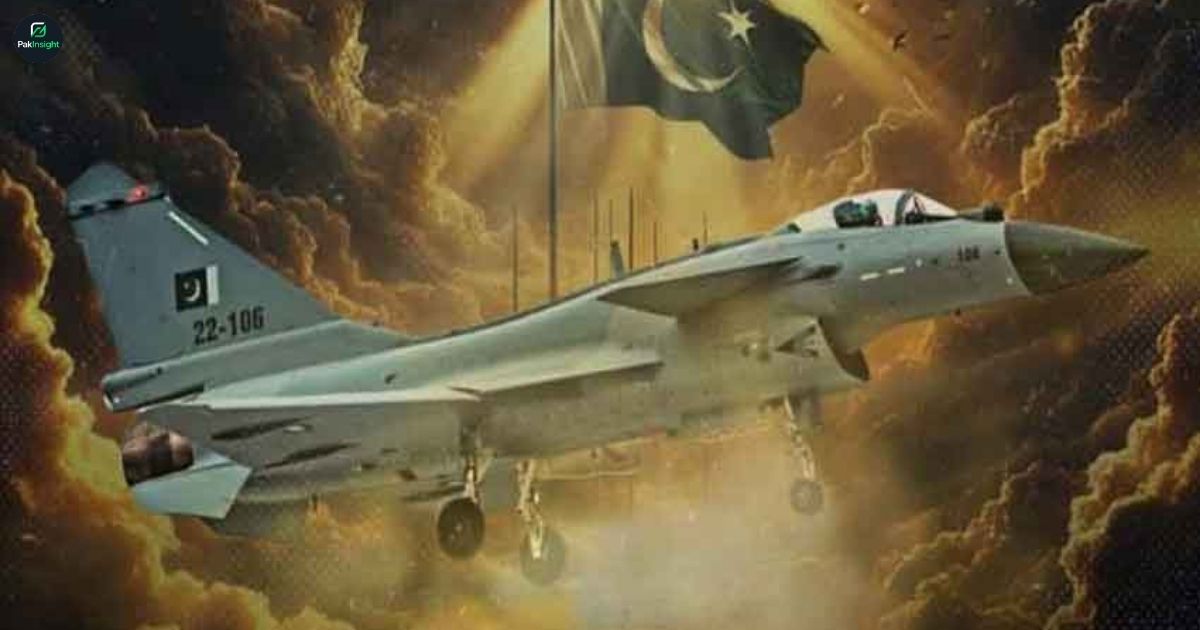
The Operation Sindoor air clash remains one of the most debated military episodes in South Asia, as both Pakistan and India mark one year since the May 2025 escalation, often referred to in Pakistan as the “Marka-e-Haq” or “Battle of Truth.” The brief but intense aerial confrontation drew global attention due to competing claims, fast-moving military developments, and its diplomatic fallout.
Background: Rising Tensions Before May 2025
The crisis traces back to heightened tensions in April 2025 following a deadly incident in Indian-administered Jammu and Kashmir. India quickly attributed responsibility to cross-border militant networks, while Pakistan denied involvement and called for an independent investigation.
Diplomatic exchanges deteriorated in the following days, with both sides increasing military readiness. Analysts at the time warned that the situation risked escalating beyond control due to the nuclear-armed status of both countries.
By early May, airspace activity and surveillance operations had significantly increased along the Line of Control and nearby regions.
Air Operations and Competing Claims
The most intense phase reportedly began on the night of 6–7 May 2025, when both countries activated air assets in what military observers described as a high-tempo aerial engagement.
Pakistan’s military sources claimed that its air force successfully engaged multiple incoming aircraft using advanced networked systems and long-range missile capability. According to these claims, several Indian aircraft were downed during beyond-visual-range combat, though exact figures were never independently verified at the time.
India, on the other hand, denied suffering significant losses and maintained that its operations were defensive in nature. Indian officials described most Pakistani claims as “misinformation,” while acknowledging that “some aircraft were lost due to operational reasons” without providing detailed confirmation.
Independent verification remained limited. Satellite imagery and debris reports circulated on social media and in select international outlets, but no fully conclusive public audit of the incident was released by neutral global institutions.
Military analysts noted that the engagement highlighted a shift toward network-centric aerial warfare, where radar systems, drones, and real-time data sharing played a decisive role alongside traditional fighter jet performance.
Escalation and Ceasefire Efforts
Tensions escalated further on 9–10 May 2025 when both sides conducted strikes and counter-strikes across forward military positions. Reports indicated damage to infrastructure on both sides, though exact assessments varied widely depending on sources.
The situation raised international concern, prompting urgent diplomatic engagement led by the United States and other global actors. Within days, both India and Pakistan agreed to a ceasefire arrangement aimed at preventing further escalation.
The ceasefire was announced publicly and was welcomed by global powers, though each side interpreted the outcome differently. Pakistan described its response as a successful demonstration of deterrence, while India framed the situation as a controlled de-escalation after achieving its operational objectives.
One Year Later: Strategic and Political Impact
One year after the May 2025 air war, the episode continues to shape military thinking in the region. Defense analysts suggest that the confrontation reinforced the importance of integrated air defense systems, satellite coordination, and electronic warfare capabilities.
For Pakistan, the event is often referenced as a moment of operational confidence and technological validation. For India, it has triggered renewed discussions on modernization gaps and the need for improved real-time battlefield networking.
International observers, however, remain divided on the overall outcome. Some describe it as a tactical stalemate with strategic lessons for both sides, while others highlight the diplomatic intervention as the key factor preventing further escalation.
What remains clear is that the Operation Sindoor air clash marked a turning point in South Asian military dynamics. It underscored how quickly modern aerial confrontations can evolve and how limited windows of escalation can carry significant geopolitical consequences.
As both countries continue to invest in advanced air capabilities, the lessons of May 2025 are likely to influence defense planning for years to come.