
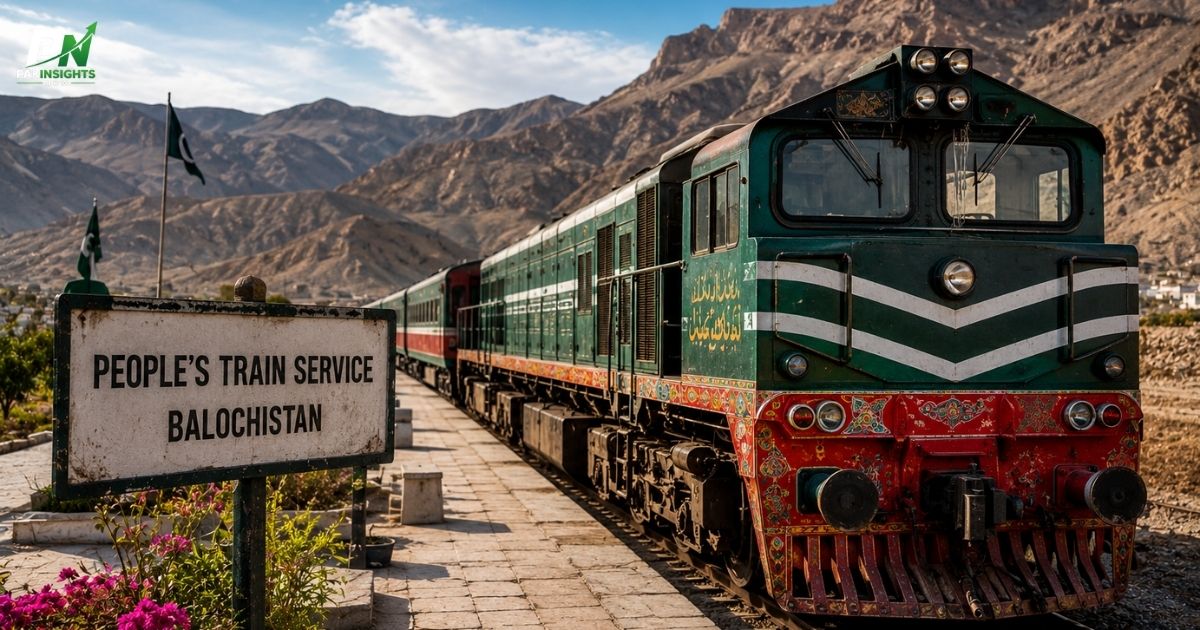
The Balochistan People’s Train Service has started operations as a new public transport option for residents of Quetta and nearby areas. The project is notable because it is the first province-funded passenger rail service in Pakistan, which makes it more than a local transport story — it is also a sign of provincial investment in mobility and affordability.
What the service offers
The initial routes connect Saryab, Quetta, and Kachlak, giving commuters a lower-cost way to move between important points in the city. For daily travelers, that can mean less pressure on road transport, fewer long waits, and a more predictable travel routine.
Because the service is designed for public use, it may also help students, workers, and families who need a dependable option that is easier on the budget than private travel. That matters in a province where transport access is often a practical challenge, not just a convenience issue.
Why this matters for Balochistan
New public transit systems can have an immediate effect on city life. When fares are more affordable and routes are clear, more people can travel for work or education without depending entirely on private vehicles or irregular local transport.
The bigger long-term benefit is confidence. If the train service runs smoothly and expands in a planned way, it can create a stronger case for more local transport investments in the future.
What to watch next
- Fare structure and ticketing details
- Frequency of train departures
- Whether more stations are added later
- Passenger demand on the first routes
- Any future expansion beyond the Quetta corridor
Those details will determine whether the service remains a symbolic launch or becomes a real part of the province’s daily transport network. Early public reaction will also matter, because steady ridership is often what decides whether a route gets expanded.
Final takeaway
The Balochistan People’s Train Service is a practical and welcome development for commuters looking for a cheaper travel option. If the service remains reliable, it could become an important example of province-led transport planning in Pakistan.
For now, the most useful thing for passengers is to follow the official route, schedule, and fare updates before planning a trip.