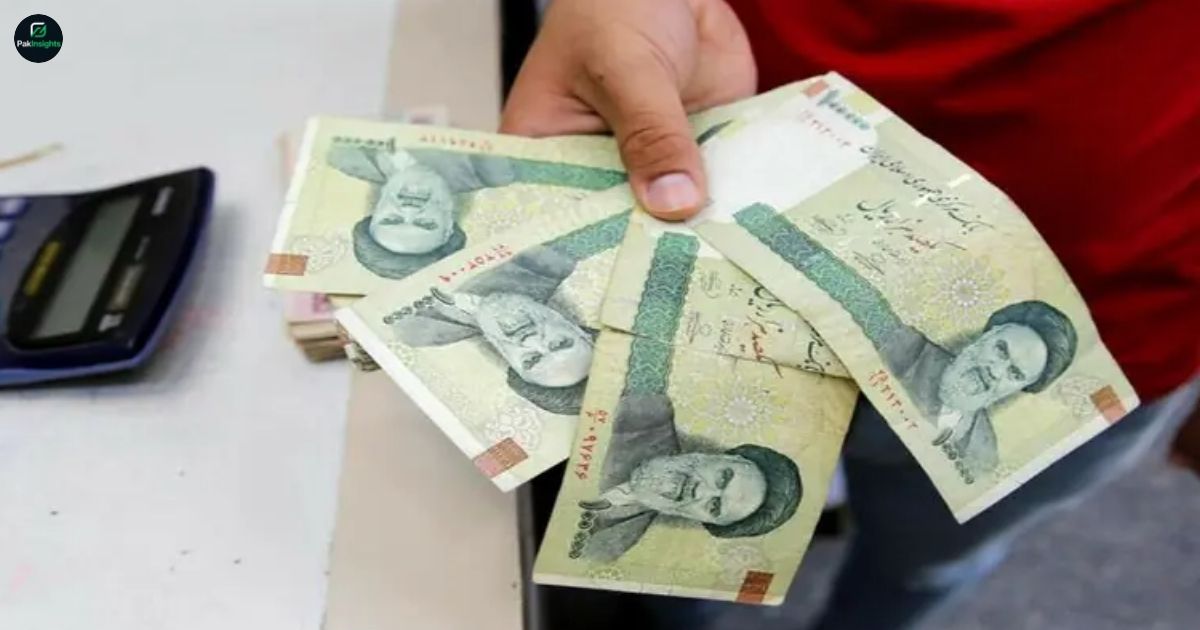
The Iranian rial investment risk is drawing fresh attention in Pakistan as demand for the Iranian currency rises sharply in local exchange markets. Traders and financial experts are warning investors to remain cautious amid fast-moving price changes and speculative buying behavior.
Market activity shows increased interest in purchasing Iranian rials across Pakistan, driven by expectations of future gains linked to geopolitical developments and possible economic shifts involving Iran. Analysts say this sudden surge reflects speculation rather than stable economic fundamentals.
Before recent fluctuations, 10 million Iranian rials were valued at around Rs2,500 in Pakistan’s informal exchange market. However, in recent days, the same amount has climbed to nearly Rs 10,000, marking a sharp increase in perceived value within a short time period.
Geopolitical Expectations Driving Speculation
Financial experts believe this rise is being fueled by investor expectations that the currency may strengthen further if diplomatic relations between the United States and Iran improve or if international sanctions on Iran are eased. These expectations have encouraged both small investors and traders to enter the market quickly.
However, currency specialists have warned that such rapid appreciation can be highly unstable. They say speculative demand often leads to sudden corrections, especially in currencies that are not freely traded in global financial systems.
Experts Urge Caution for Investors
Chairman of the Exchange Companies Association of Pakistan, Malik Bostan, highlighted that many investors are purchasing rials in anticipation of profit. He noted that some believe the currency could gain more value if economic conditions in Iran improve or if diplomatic progress is made.
At the same time, he strongly cautioned against investing solely on speculation. He said there is no guarantee that the Iranian rial will continue to rise in the near term. According to him, sudden currency spikes often attract risky investment behavior that can lead to financial losses.
Bostan also warned investors about another major risk. He said that when a currency experiences sharp fluctuations, the issuing country may withdraw or redesign high-denomination notes. In such cases, hoarded cash can lose value quickly, leaving investors exposed.
Trade Flows Adding to Market Activity
Market observers also point out that some Pakistani exporters are currently receiving payments in Iranian rials for goods shipped to Iran. These payments are then sold in local markets, adding further supply to the growing currency circulation.
On the import side, traders dealing with Iranian goods are also purchasing rials to settle payments. This dual flow of trade has contributed to rising activity in the informal currency market.
Outlook Remains Uncertain
Despite this increase in usage, experts say the market remains largely speculative. They say the Iranian rial’s true value is hard to judge due to limited global convertibility and sanctions-related restrictions.
Economists also warn that informal currency trading carries risks, including no regulatory protection and sudden policy changes. They advise investors to consider long-term financial stability rather than short-term gains driven by market rumors or political developments.
In Pakistan, where informal currency trading is often influenced by regional developments, experts say awareness is crucial. They recommend that investors understand the underlying Iranian rial investment risk before committing funds to volatile foreign currency assets.
As regional tensions continue, analysts expect the Iranian rial market in Pakistan to remain volatile.