
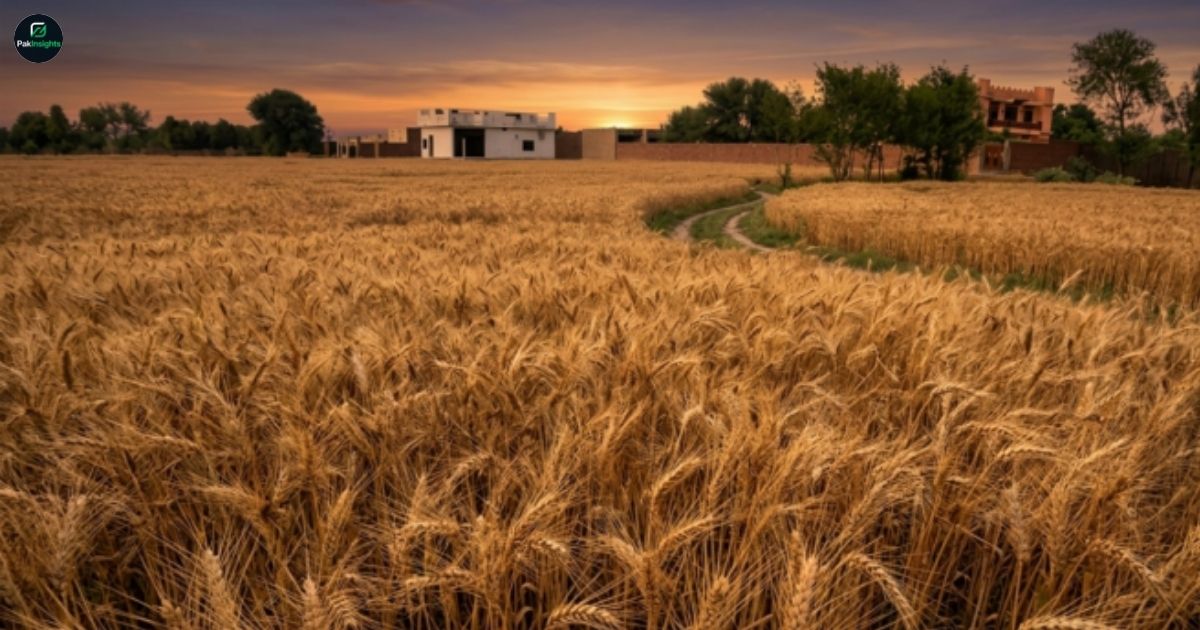
The performance of South Punjab wheat crops has come under pressure this season as unusual weather patterns disrupt growth stages and damage standing fields across key agricultural areas. Farmers and agricultural experts report that rising temperatures, followed by sudden rain and hailstorms, have significantly affected crop development and yield expectations.
According to early field assessments, wheat production in Multan, Bahawalpur, and surrounding districts is likely to fall below normal levels. The situation has raised concerns about food security and farmer incomes in one of Pakistan’s most important wheat-producing regions.
Heatwave Disrupts Critical Growth Phase
Agricultural experts say March temperatures remained well above seasonal averages, rising nearly 2.7°C above normal in parts of South Punjab. This unexpected heat surge arrived during a crucial stage of wheat growth, when grains are forming inside the spike.
Farmers report that the crop matured faster than usual due to heat stress. This early development prevented proper grain filling, resulting in smaller and lighter grains. As a result, expected yields per acre are now under pressure.
Wheat typically requires stable and moderate temperatures during this phase. However, the sudden shift in weather patterns has disturbed the natural growth cycle. Experts warn that even slight temperature changes during this stage can reduce both the quality and quantity of the harvest.
Rains and Hail Add to Crop Damage
The situation worsened in early April when several districts in South Punjab experienced unexpected rainfall and hailstorms. Large areas of standing wheat were flattened or partially damaged.
Field reports suggest that around 210,000 acres of wheat crop have been affected across the region. In many low-lying areas, lodged crops may become difficult to harvest, further reducing usable yield.
Farmers say the damage is not limited to physical crop loss. Moisture exposure during the final growth stage has also impacted grain quality. This could affect market value at the time of procurement.
Many growers fear they may struggle to achieve even 30 to 35 maunds per acre this season, a significant drop compared to average production in previous years.
Rising Costs Increase Farmer Pressure
Along with weather-related losses, farmers are also facing increasing production costs. Diesel prices have gone up, raising the cost of irrigation and harvesting operations. Fertilizer and transport expenses have also added to the financial burden.
Harvesting costs per acre have nearly doubled compared to last year, according to local farmer groups. At the same time, uncertainty in wheat procurement prices is increasing anxiety in rural communities.
Farmers in South Punjab, who already operate on tight margins, say the combination of lower yields and higher costs could significantly reduce overall income this season.
Agricultural economists warn that sustained pressure on wheat farmers may discourage investment in future crops unless policy support is improved.
Regional Importance of South Punjab Wheat Production
South Punjab plays a central role in Pakistan’s wheat supply chain. The region contributes nearly 70% of Punjab’s total wheat output, making it a critical zone for national food security.
Any reduction in production from this region directly impacts provincial wheat availability and can influence overall market stability. Officials are closely monitoring the situation as the harvest season approaches.
Experts say that while short-term interventions may help reduce losses, long-term climate adaptation strategies are now essential. These include improved seed varieties, better irrigation planning, and weather forecasting systems tailored for farmers.
The current season highlights how vulnerable traditional agriculture has become to climate variability. Sudden heatwaves, unseasonal rains, and hailstorms are becoming more frequent, creating unpredictable challenges for growers.
For now, farmers across South Punjab are preparing for a reduced harvest while hoping that remaining crops can still recover partially before full-scale harvesting begins in the coming weeks.