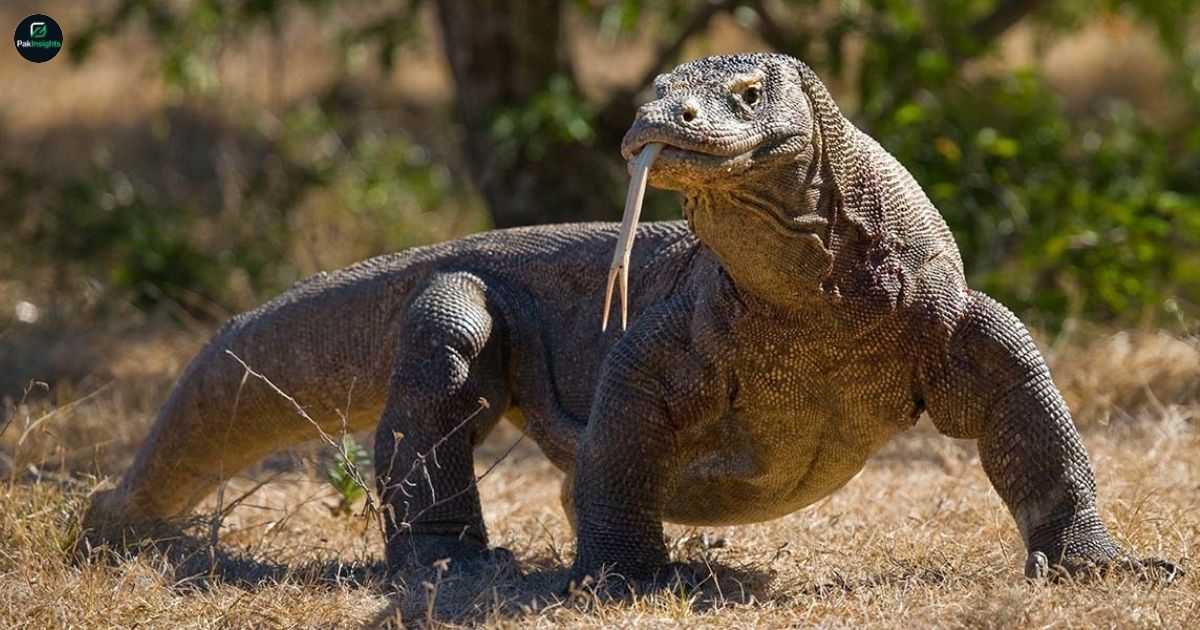
The Komodo Dragon, scientifically known as Varanus komodoensis, is the world’s largest living lizard. Found on the Indonesian islands, it commands attention as an apex predator with a fearsome venomous bite. Often called the Komodo monitor, this giant reptile has survived for millions of years, a living link to a distant fossil record. Despite its power, the species is classified as an endangered species due to population decline, habitat loss, and illegal trade. In recent decades, Conservation efforts in Komodo National Park have aimed to protect these iconic reptiles and their fragile ecosystems.
These lizards are not just predators; they are marvels of reptilian behavior. With osteoderms (armored scales), a forked tongue used for tongue-flicking behavior, and a hunting style of an ambush predator, the Komodo Dragon inspires fascination and fear alike. They eat large prey like Javan rusa deer, smaller mammals, and carrion, displaying a carrion diet that makes them flexible and opportunistic. Interestingly, they can reproduce without males through parthenogenesis, a unique reproductive strategy that ensures genetic diversity in isolated populations.
Fascinating Facts About the Komodo Dragon
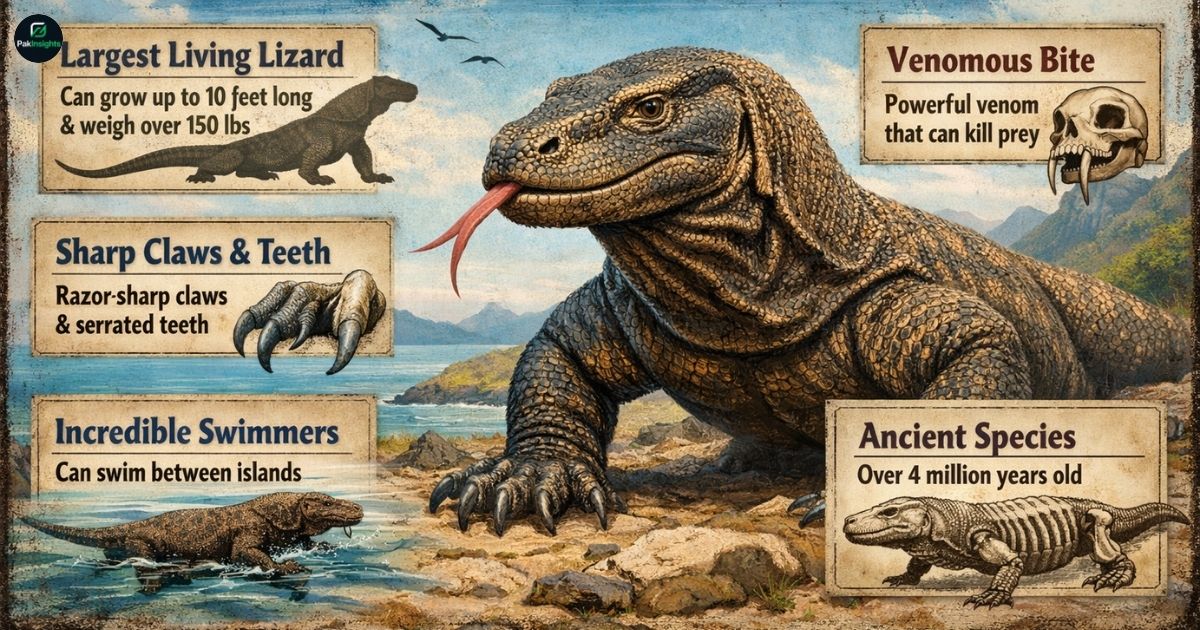
The Komodo Dragon grows up to 10 feet long and can weigh over 150 kilograms. Its teeth have tooth serrations, and its saliva often contains blood-tinged saliva and venom that lowers blood pressure and prevents clotting in prey. Known for cannibalistic behavior, older dragons sometimes eat juveniles, which makes juvenile survival a challenge. They use a complex feeding hierarchy, and their hunting techniques rely on patience, stealth, and bursts of explosive speed. As a true ambush predator, it waits in the savanna and tropical forest or lowland grasslands to strike.
Reproductive behavior is fascinating. The mating season occurs between May and August, and egg incubation lasts around 7–8 months. Females bury eggs in sandy soil or hollow trees to protect them. They also demonstrate basking and thermoregulation, using the sun to maintain body temperature. Scientists have studied their ZW chromosomal system, which is unique among reptiles. The Komodo Dragon’s combination of size, strength, and unique biology makes it one of the most fascinating creatures on Earth.
| Fact | Detail |
|---|---|
| Scientific Name | Varanus komodoensis |
| Length | Up to 10 feet |
| Weight | 70–150 kg |
| Diet | Carrion diet, deer, pigs, smaller reptiles |
| Reproduction | Parthenogenesis, eggs incubated 7–8 months |
| Special Traits | Osteoderms (armored scales), venomous bite |
Habitat and Conservation Challenges
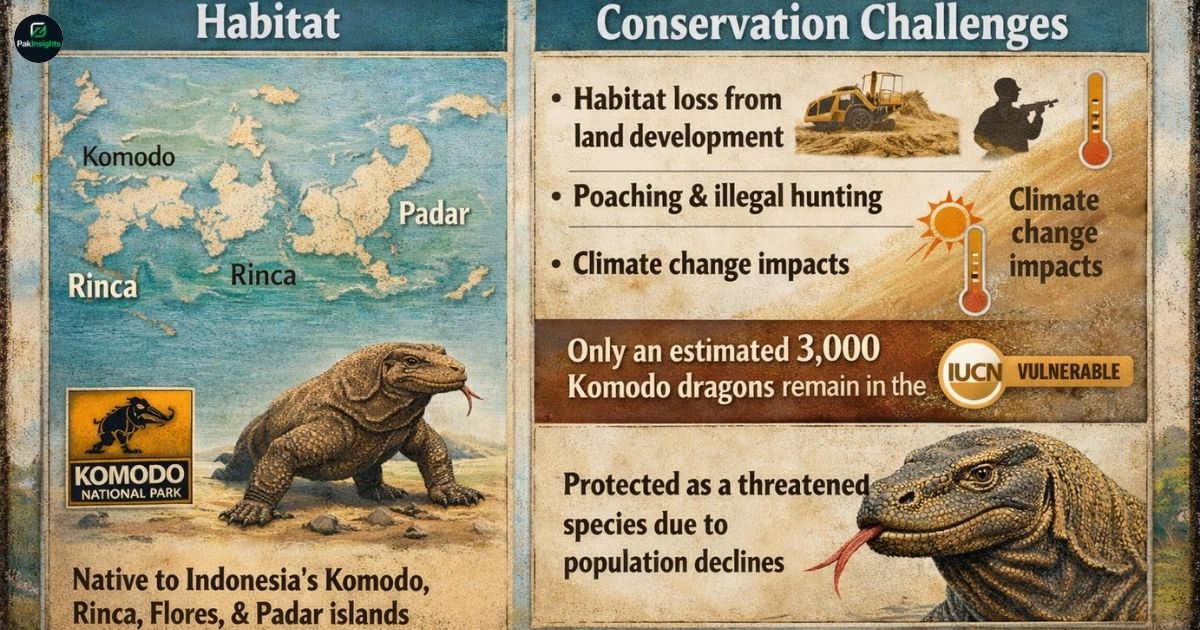
Komodo Dragons are mainly found on Komodo National Park islands like Komodo, Rinca, Flores, and smaller Indonesian islands. They thrive in savanna and tropical forest, lowland grasslands, and near freshwater sources. Their habitat range is limited, which makes them highly vulnerable. The species faces threats from climate change impacts, illegal trade, and human encounters, which can disrupt predator-prey interactions and reduce natural populations. Rising temperatures and changes in rainfall affect prey availability, influencing feeding hierarchy and overall survival.
Conservationists have introduced captive breeding programs, wildlife patrols, and strict wildlife protection laws to mitigate threats. Local communities are educated about avoiding conflicts, and eco-tourism is managed to reduce stress on lizards. Population decline remains a concern, but ongoing Conservation efforts in protected zones show promise. With careful management, Komodo Dragons may thrive, preserving this ancient predator for future generations.
| Threat | Impact | Conservation Response |
|---|---|---|
| Illegal trade | Population decline | Anti-poaching patrols |
| Habitat loss | Reduced prey and territory | Protected zones |
| Climate change impact | Changes in prey and reptilian behavior | Research and monitoring |
| Human encounters | Injuries and stress | Eco-tourism guidelines |
Komodo Dragon in Human Culture and Research
Humans have long been fascinated by Komodo Dragons, featuring them in myths and legends. Local folklore often describes them as symbols of strength and survival. Modern science studies these reptiles for insights into venomous bite, ambush predator strategies, and cannibalistic behavior. Researchers observe predator-prey interactions, feeding patterns, and tooth serrations to understand evolutionary adaptations better. Park staff carefully manage human encounters to avoid harming both people and dragons in Komodo National Park.
Tourism has created a unique connection between humans and these lizards. Guided tours educate visitors about feeding hierarchies, reproductive strategies, and habitat ranges. Scientific studies focus on genetic diversity, the ZW chromosomal system, and disease prevention. These combined efforts ensure that the Komodo Dragon remains a living link to the past, showcasing the power of evolution and the importance of wildlife protection laws.
Frequently Asked Questions
Q1: Where do Komodo Dragons live?
They live on the Komodo National Park islands and nearby Indonesian islands like Komodo, Rinca, and Flores.
Q2: Are Komodo Dragons dangerous to humans?
Yes, they have a venomous bite and are apex predators, but attacks are rare.
Q3: What do Komodo Dragons eat?
They eat Javan rusa, pigs, smaller reptiles, and carrion, following a carrion diet.
Q4: Can Komodo Dragons reproduce without males?
Yes, through parthenogenesis, females can lay fertile eggs alone.
Q5: Why are Komodo Dragons endangered?
Due to habitat loss, illegal trade, population decline, and climate change impact.