
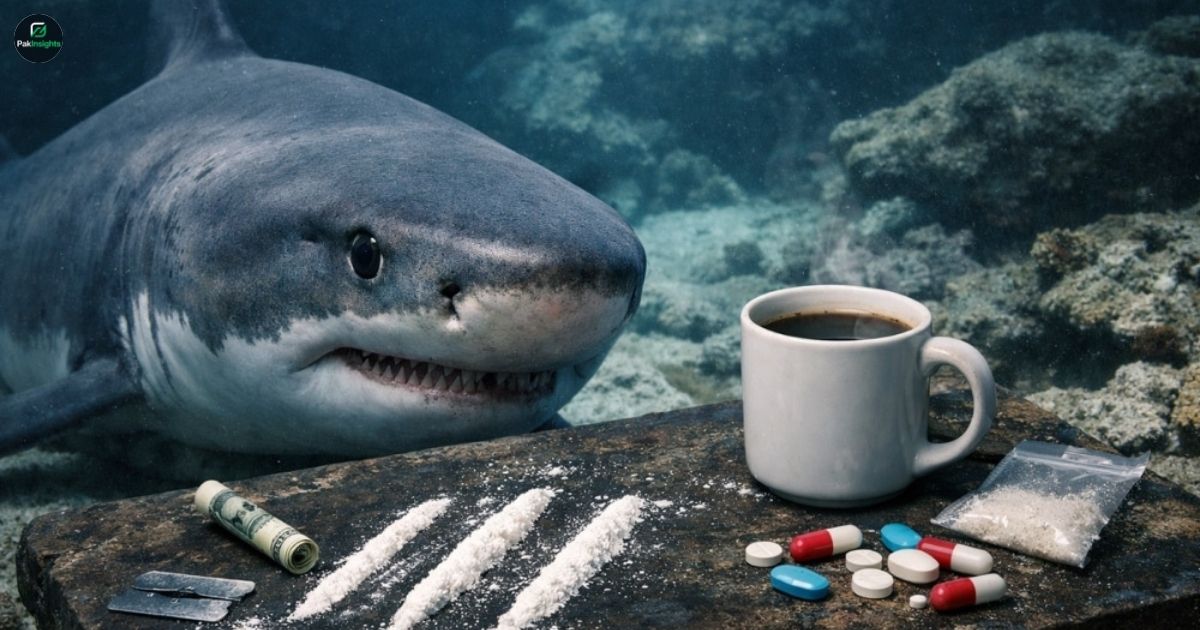
Sharks in the Bahamas found with cocaine, caffeine, and painkillers reveal growing ocean contamination. Researchers detected these substances in 28 out of 85 sharks sampled near Eleuthera Island. The study shows pharmaceutical contamination in marine life is reaching even top predators. Scientists warn that this indicates both human activity affecting wildlife and drug pollution in oceans are worsening.
Blood samples in sharks revealed caffeine, acetaminophen, diclofenac, and cocaine. Caffeine was most common, showing that recreational drug effects on wildlife are spreading beyond humans. Some sharks carried multiple substances, highlighting chemical accumulation in marine animals. These findings raise concerns about long-term drug exposure and shark health risks.
Marine pollution from sewage contamination and human waste in oceans is likely the main cause. Tourism, boating, and diving increase environmental stress in sharks because local waters carry drug residues. The Bahamas’ marine ecosystem faces growing challenges as these substances disrupt biological functions and may affect reproduction or feeding patterns.
Scientists emphasize that tracking sharks and drugs can improve marine species monitoring and help protect the ocean ecosystem’s health. The study also shows that using blood samples in sharks provides a better indicator of recent exposure than tissue testing. Ongoing ocean contamination research can guide policy changes, reduce pharmaceutical discharge, and mitigate the effects of drugs on wildlife.
In conclusion, sharks in the Bahamas found with cocaine, caffeine, and painkillers reflect wider human impact on oceans. Proper waste management and awareness are vital to reduce pharmaceutical contamination in marine life. Protecting marine predators ensures long-term ecosystem balance and safer oceans for all species.