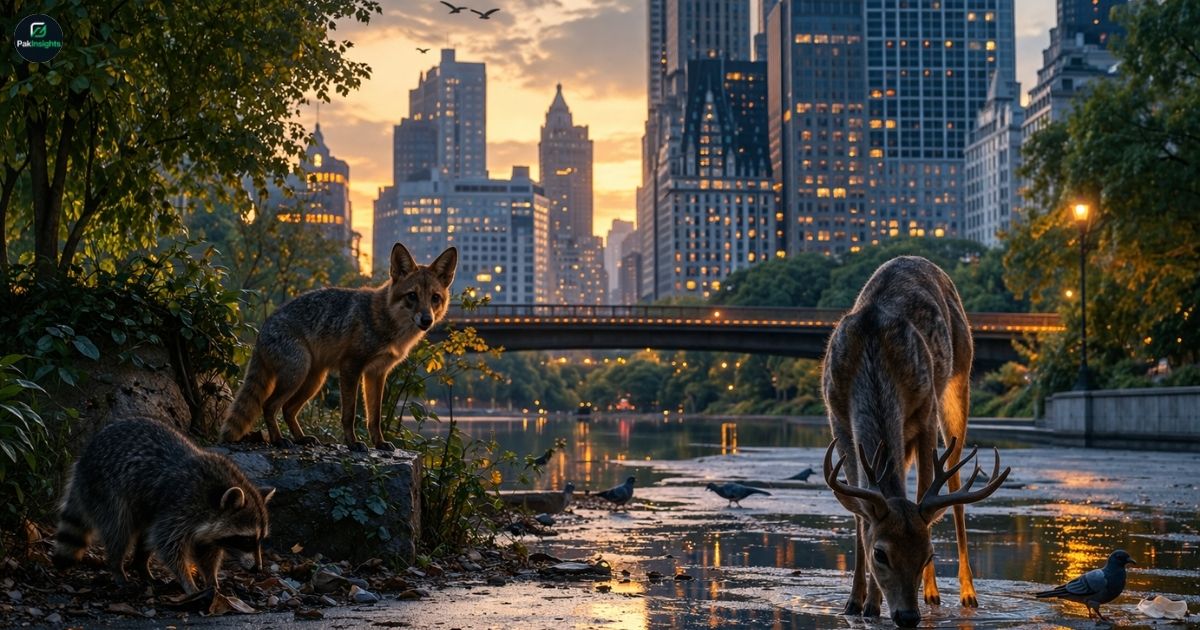
Urban life is no longer only for humans. Across the United States, the rise of urban predators is changing how we view cities. From coyotes in Los Angeles to raccoons in New York, more urban wildlife are exploring streets, parks, and suburban areas. These animals are not just surviving; they are thriving in man-made habitats, taking advantage of food sources in urban areas and shelter in backyards, alleys, and green spaces. The movement of animals in cities is often linked to habitat loss in rural areas, climate change, and expanding human-dominated ecosystems. This shift is a vivid example of human-wildlife interaction in a modern anthropogenic environment, where city streets become an unlikely home for many species.
Scientists are studying urban ecology and urban animal behavior to understand how these predators adapt. Many species are showing remarkable behavioural and biological adaptation, evolving faster than we imagined. The concept of Human-induced rapid evolutionary change (HIREC) explains why some animals thrive despite human interference. Smaller species, like rodents and certain birds, show rapid evolutionary adaptation of animals, while larger predators adapt more slowly. Cities have become arenas for wildlife to test new survival strategies for urban animals, challenging our traditional understanding of nature and coexistence.
Understanding Urban Predators: Who They Are and Why They Thrive
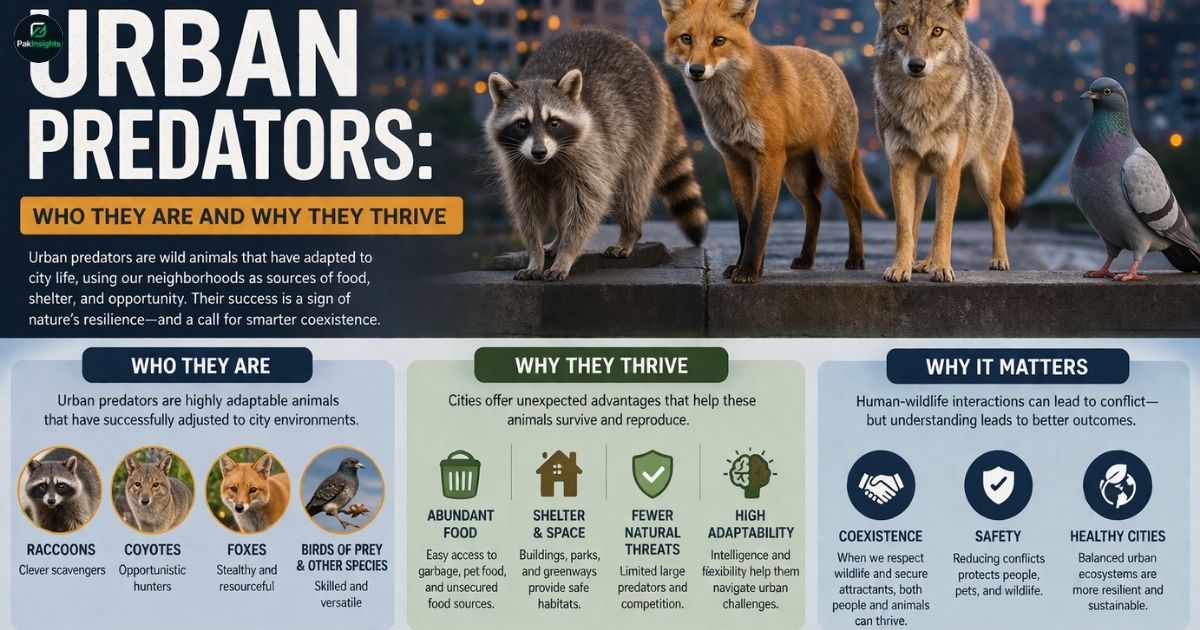
Urban predators include coyotes, foxes, raccoons, and even birds of prey that have moved into suburban wildlife zones. They find food sources in urban areas, shelter in parks and green spaces, and safety from larger predators. Their ability to thrive comes from both human-wildlife interaction and urbanization, and animal adaptation. Animals are adjusting their behavior to navigate traffic, humans, and artificial landscapes. This kind of rapid evolution in small animals demonstrates how species can respond quickly to environmental stressors.
Cities also create new opportunities for predators. Man-made habitats like dumpsters, abandoned buildings, and city parks provide easy food and shelter. Urban wildlife is also migrating from destroyed habitats caused by climate change impact on wildlife and migration due to habitat destruction. In some areas, coyotes hunt in suburban neighborhoods, and raccoons raid trash bins, showing how urban animal behavior adjusts to human activity. Ecological monitoring in cities has become vital to track these changes, helping humans and animals coexist safely.
Impact on City Life: Safety, Ecology, and Public Health
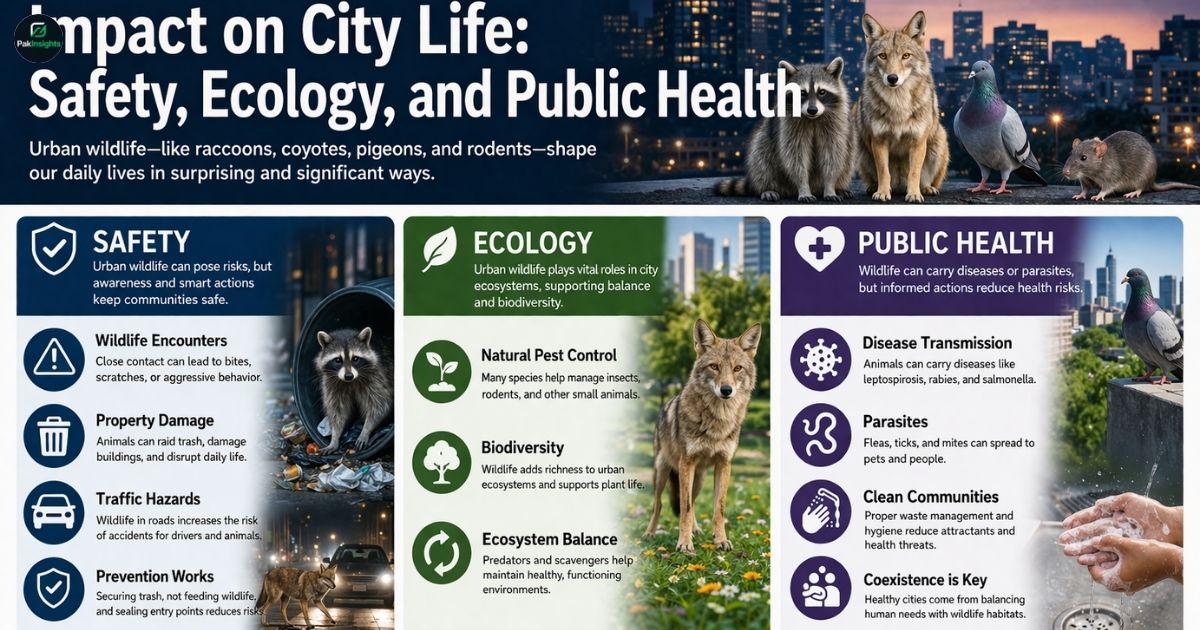
The rise of urban predators affects cities in many ways. Safety is a major concern. Coyotes, raccoons, and foxes sometimes attack pets or small children, creating tension in human-wildlife interaction. Property damage is also common, with animals breaking into attics, sheds, and garages. Beyond safety, these predators influence city ecosystems. They help control rodent populations but may threaten biodiversity in cities by competing with native species. Their presence shows how urban ecology can shift when animals adapt to urban life.
Public health is another critical aspect. Predators can spread diseases like rabies or parasites, impacting humans and pets. Wildlife feeding on trash or sewage may carry pathogens into human spaces. Wildlife conflict with humans increases when natural habitats are lost due to habitat loss, forcing animals into populated areas. On the other hand, cities offer a unique chance for wildlife conservation in urban landscapes, creating wildlife-friendly cities that balance human activity and predator survival.
Prevention and Management Strategies in Urban Areas
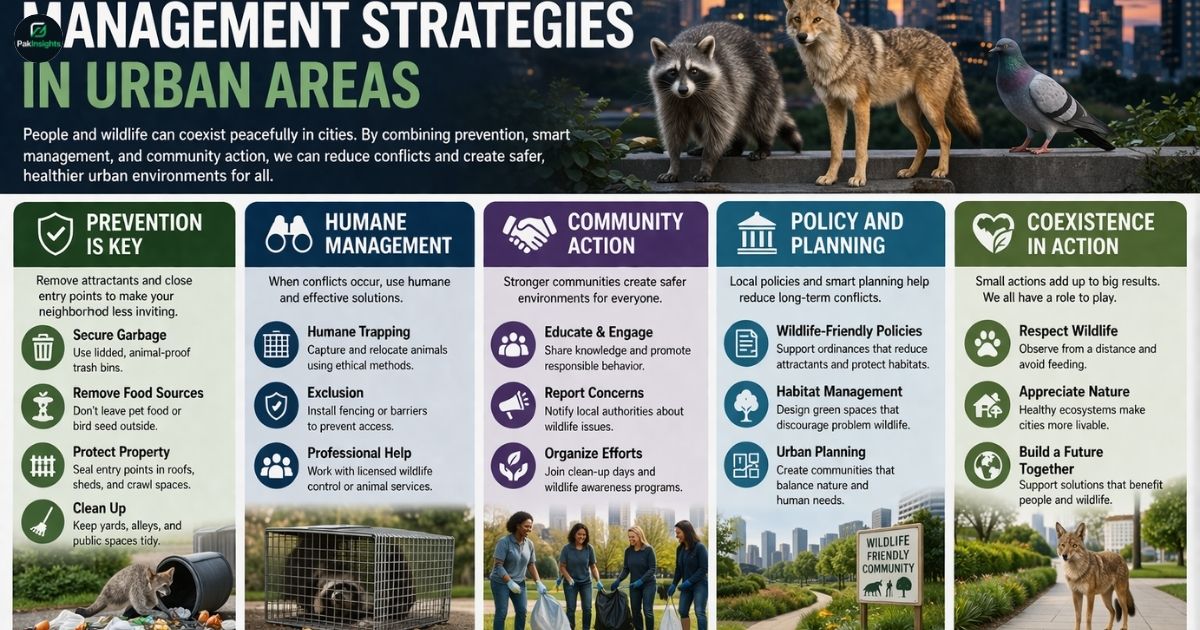
Managing the rise of urban predators requires thoughtful planning. Urban planning for wildlife can create safe corridors, parks, and green spaces that allow animals to move without threatening humans. Securing trash, avoiding feeding wild animals, and using fencing can reduce human-wildlife interaction conflicts. Cities like Chicago and Los Angeles have programs to educate residents about coexistence with urban animals. These efforts help maintain urban biodiversity management while preventing aggressive encounters.
Long-term solutions focus on the preservation of biodiversity and preventing extinction in urban areas. By expanding natural areas and improving wildlife conservation in urban landscapes, we allow animals that cannot adapt to man-made habitats to survive. Ecological monitoring in cities helps track predator populations, their health, and migration patterns. Combining these strategies creates wildlife-friendly cities, where humans and urban wildlife can share spaces safely and sustainably.
Table: Common Urban Predators in U.S. Cities and Their Adaptations
| Animal | City Adaptations | Typical U.S. Locations | Diet in Urban Areas |
|---|---|---|---|
| Coyote | Active at night, avoids humans | Los Angeles, Chicago | Pets, small mammals, fruit |
| Raccoon | Climbs buildings, opens trash bins | New York, Seattle | Garbage, pet food, insects |
| Red Fox | Uses backyards and alleys for hunting | Boston, Denver | Rodents, birds, fruit |
| Peregrine Falcon | Nests on skyscrapers, hunts pigeons | Philadelphia, San Francisco | Birds, small mammals |
| Opossum | Shelters in attics, scavenges food | Atlanta, Houston | Garbage, pet food, and insects |
Frequently Asked Questions
Q1: What are urban predators?
Urban predators are animals like coyotes, raccoons, and foxes that live and hunt in city areas.
Q2: Why are predators moving into cities?
Loss of natural habitats, food sources in urban areas, and human activity push animals to adapt to cities.
Q3: Are urban predators dangerous to humans?
Most are cautious, but they can threaten pets or property if provoked or hungry.
Q4: How do animals adapt to city life?
Through behavioural and biological adaptation, animals learn to find food, shelter, and avoid humans.
Q5: How can cities manage urban predators safely?
By creating wildlife-friendly cities, using secure trash, green spaces, and educating residents about coexistence with urban animals.