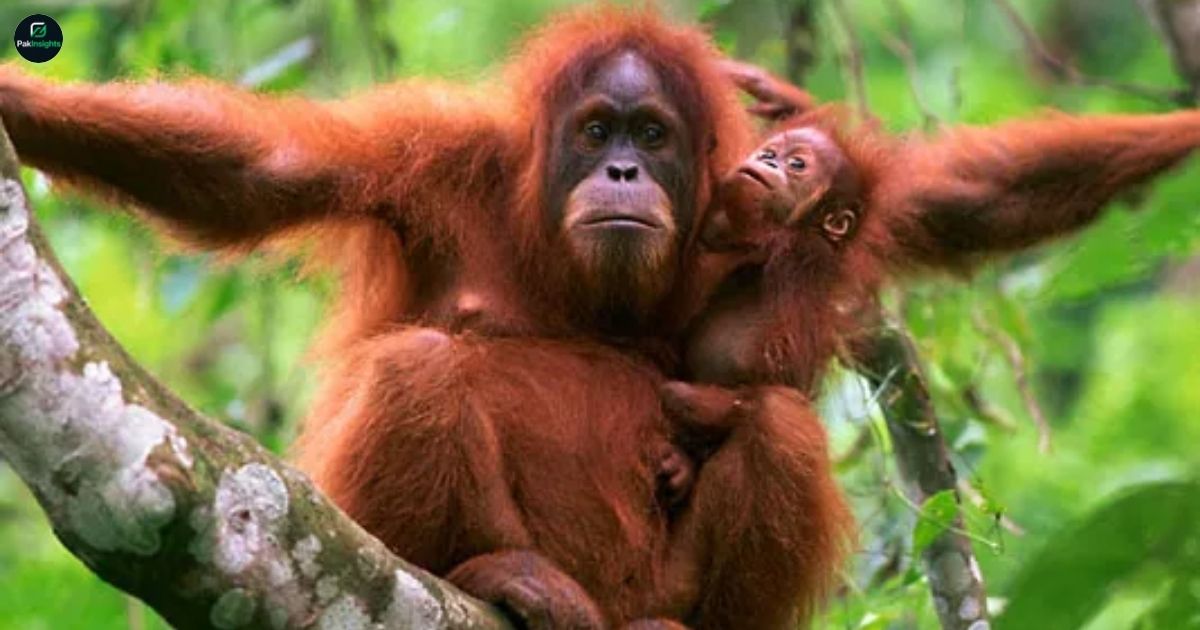
The Endangered Sumatran orangutan is one of the rarest primates on Earth. Found only in the northern forests of Sumatra, this species, known scientifically as Pongo abelii, is critically endangered. Unlike its cousin, the Bornean orangutan, the Sumatran orangutan lives mostly in dense Indonesian rainforest, where it climbs high trees and feeds on a frugivorous diet supplemented by insects. With fewer than 14,000 individuals remaining in the wild, these threatened primates face an uncertain future. Every sighting of a wild orangutan is precious because their numbers continue to decline due to habitat loss and deforestation in Sumatra.
The Endangered Sumatran orangutan is more than just a symbol of Sumatra’s wildlife. Its behavior, intelligence, and social habits make it one of the most fascinating primate species. Researchers have documented complex tool use in primates, communication through gestures, and unique feeding techniques that reveal how adaptable they are. For example, some orangutans in Gunung Leuser National Park use sticks to extract insects from tree bark. Others protect themselves from rain with large leaves. Understanding their life is crucial for global orangutan conservation efforts.
Understanding the Sumatran Orangutan and Its Habitat
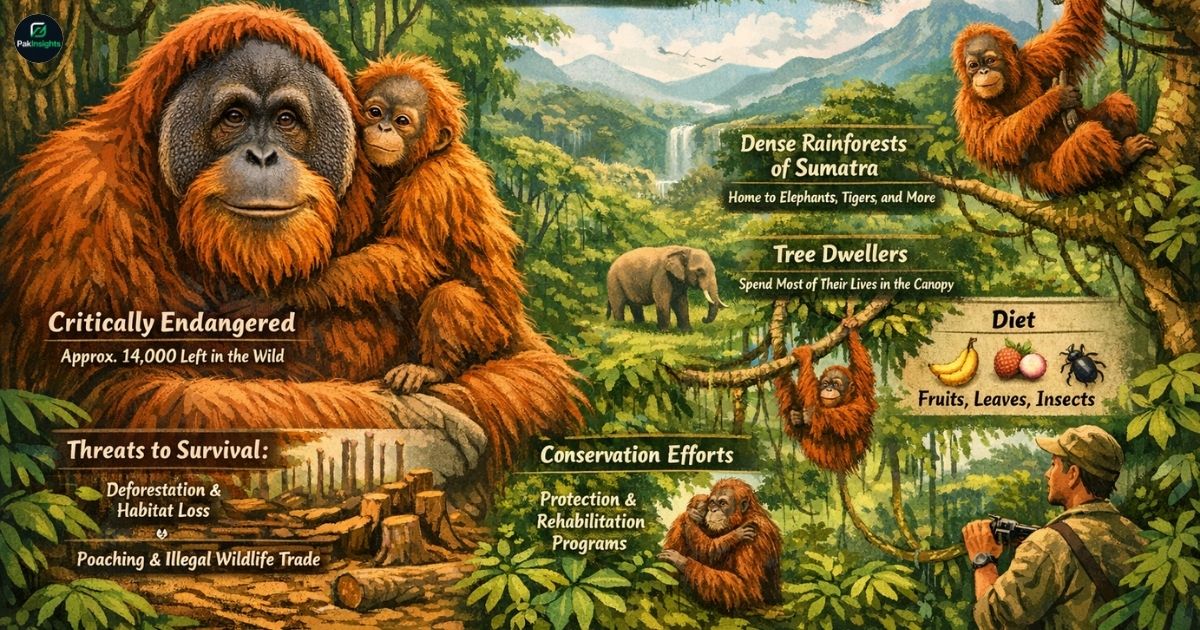
The Sumatran orangutan lives almost entirely in trees, showcasing incredible arboreal locomotion. They move slowly, using all four limbs, balancing on flexible branches. These apes prefer fruits, including durians, lychees, jackfruit, and figs, but also eat insects and bird eggs, reflecting an insectivorous diet. Their Sumatran orangutan diet and feeding habits vary seasonally, depending on fruit availability. When fruit is scarce, some may even hunt small animals like the slow loris, demonstrating resourcefulness in survival. These behaviors are essential to their orangutan behavior and ecology, highlighting the unique adaptations that set them apart from Tapanuli orangutans or Bornean orangutans.
Their habitat is limited to the northern tip of Sumatra, mainly Aceh Province, where forests remain intact. Areas like Bukit Lawang orangutan sanctuary and Gunung Leuser National Park provide a crucial refuge. However, the effects of deforestation on orangutan habitats have fragmented their living space, forcing them into smaller patches. Forest fragmentation reduces food availability and limits migration routes. Scientists have even created tables tracking population density, showing higher numbers in undisturbed lowland forests than in fragmented highlands. This highlights the importance of protecting remaining forests to sustain their wild populations.
| Habitat Region | Population Estimate | Status |
|---|---|---|
| Aceh Province | ~11,500 | Stable but fragmented |
| Gunung Leuser National Park | ~2,000 | Protected |
| Bukit Lawang Sanctuary | ~350 | Monitored and rehabilitated |
Reasons Behind the Critical Endangerment
The Endangered Sumatran orangutan faces multiple threats. Deforestation in Sumatra for palm oil plantations, agriculture, and logging destroys vital habitats. With fewer forests, the orangutan population declines. Human impact on orangutan survival is significant, as animals are hunted for food or captured for illegal trade. Even occasional poaching affects population stability. Fragmented forests also limit mating opportunities, affecting orangutan reproductive and interbirth rates, which are naturally long and slow. Female orangutans reproduce only every 8–10 years, making recovery difficult.
Diseases and environmental changes add to the risk. Captive breeding programs help, but reintroducing orangutans into the wild is challenging. The reintroduction of ex-captive orangutans must be carefully managed to maintain wild behaviors. Wild populations must also navigate predators like Sumatran tigers, pythons, and clouded leopards. The lifecycle of Sumatran orangutans is long, and their survival depends on intact forest ecosystems. Conservationists emphasize the urgent need to mitigate threats and maintain corridors for safe migration and feeding.
Conservation Efforts and How You Can Help
Conservation programs focus on both habitat and species protection. Orangutan conservation projects rehabilitate rescued orangutans and teach them survival skills before release. Rehabilitation and reintroduction projects in Bukit Lawang orangutan sanctuary and Gunung Leuser National Park have seen success, with some orangutans reintegrating into the wild. Additionally, global campaigns support wildlife protection, enforce anti-poaching laws, and promote sustainable palm oil initiatives to reduce habitat loss.
You can help even from the USA. Supporting organizations like the World Wildlife Fund or adopting a virtual orangutan contribute directly to survival efforts. Raising awareness about the social structure of Sumatran orangutans and educating others about the conservation status of Sumatran orangutans makes a difference. Simple actions like choosing certified sustainable products or donating to rescue centers can aid in reversing the orangutan population decline. Each step you take helps ensure that these critically endangered primates continue to thrive in their natural habitat.
Key Facts Table: Endangered Sumatran Orangutan
| Feature | Details |
|---|---|
| Scientific Name | Pongo abelii |
| Conservation Status | Critically Endangered |
| Average Lifespan | 44–58 years |
| Diet | Frugivorous diet, insects, occasional small animals |
| Habitat | Indonesian rainforest, mainly Aceh Province |
| Behavior | Tool use, arboreal locomotion, gestural communication |
| Threats | Deforestation in Sumatra, hunting, habitat fragmentation |
Frequently Asked Questions
Q1: Why is the Sumatran orangutan critically endangered?
The Sumatran orangutan is critically endangered due to deforestation in Sumatra, hunting, and habitat fragmentation.
Q2: Where do Sumatran orangutans live?
They live mainly in Aceh Province and protected areas like Gunung Leuser National Park in the Indonesian rainforest.
Q3: What do Sumatran orangutans eat?
They follow a frugivorous diet supplemented by insects, bird eggs, and occasionally small animals.
Q4: How long do Sumatran orangutans live?
Females live around 44–53 years, while males can reach 47–58 years in the wild.
Q5: Can humans help Sumatran orangutans?
Yes, through supporting orangutan conservation, donating to sanctuaries, and promoting sustainable palm oil products.