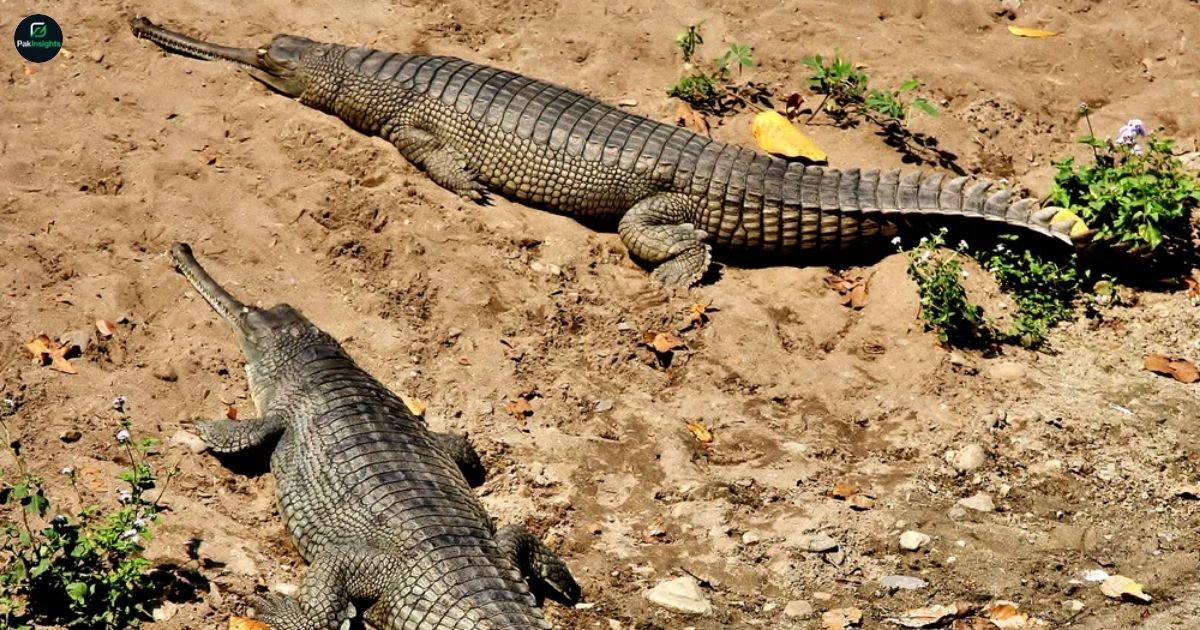
The Gharial (Gavialis gangeticus) is one of the most unique and fascinating crocodilian species in the world. Known as the fish-eating crocodile, it has a very long and narrow snout, perfectly adapted to hunting fish in Indian subcontinent rivers. This critically threatened animal has survived from the Pleistocene to the present, with fossil records in the Sivalik Hills showing its ancient lineage. Today, it is listed as a critically endangered reptile on the IUCN Red List, with fewer than a thousand individuals remaining in the wild. The male and female gharials show remarkable sexual dimorphism, with adult males developing a distinct ghara (nasal protuberance) used in courtship and mating behavior to attract females. Their size is impressive: males can grow up to 6 meters long, while females reach 4.5 meters.
The Gharial is fully aquatic and spends most of its life in riverine habitat. It rarely leaves water except to bask on sandbanks or dig nests. Their diet is specialized, focusing on feeding on fish, insects, tadpoles, small crustaceans, and occasionally turtles. Hatchlings and juveniles grow in shallow water before moving to deeper river sections. Its long snout, sharp interlocking teeth, and snout shape adaptation make it one of the most efficient aquatic predators in its habitat. Fossil evidence and historical records suggest it once thrived across major rivers like the Karnali, Chambal, Ganges, Girwa, and Narayani rivers, highlighting its importance in river ecosystems.
Understanding the Gharial: Unique Features and Habitat
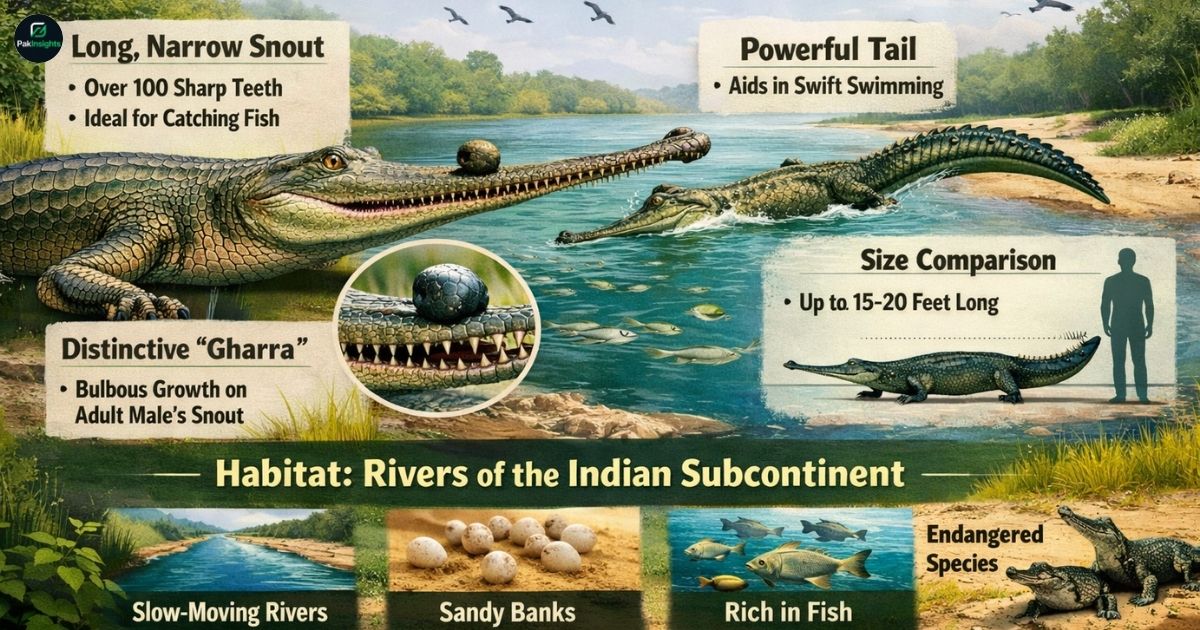
The Gharial is instantly recognizable by its slender snout and large size. The ghara (nasal protuberance) in males is unique among crocodilian species. It produces hissing sounds to communicate and attract mates. The male and female gharials have different sizes and behaviors. Females are more involved in protecting nests, while males dominate basking areas and guard territories. Juvenile gharials hide in shallow waters to avoid predators and gradually move to deeper zones as they grow. Their diet consists mainly of fish, but they also eat small insects and tadpoles.
The Gharial inhabits major rivers in India and Nepal. They prefer clean, deep waters with sandy banks for sandbank nesting. These nesting sites are essential for reproductive success, as females lay 20–95 eggs per clutch. The egg incubation (71–93 days) coincides with monsoon seasons, allowing hatchlings to enter the river safely. Historically, fossil records in the Sivalik Hills and the Indus Valley Civilisation depictions show that Gharial populations were abundant thousands of years ago. Their presence is not just ecological but also cultural, representing deities like Ganga and Varuna, giving them religious significance in South Asia.
| Feature | Details |
|---|---|
| Scientific Name | Gavialis gangeticus |
| Family | Gavialidae family |
| Length | Males: 6 m, Females: 4.5 m |
| Diet | Feeding on fish, insects, tadpoles, small crustaceans |
| Habitat | Riverine habitat, sandy banks for sandbank nesting |
| Conservation Status | Critically Endangered reptiles (IUCN Red List) |
Threats to Survival: Why Gharials Are Critically Endangered
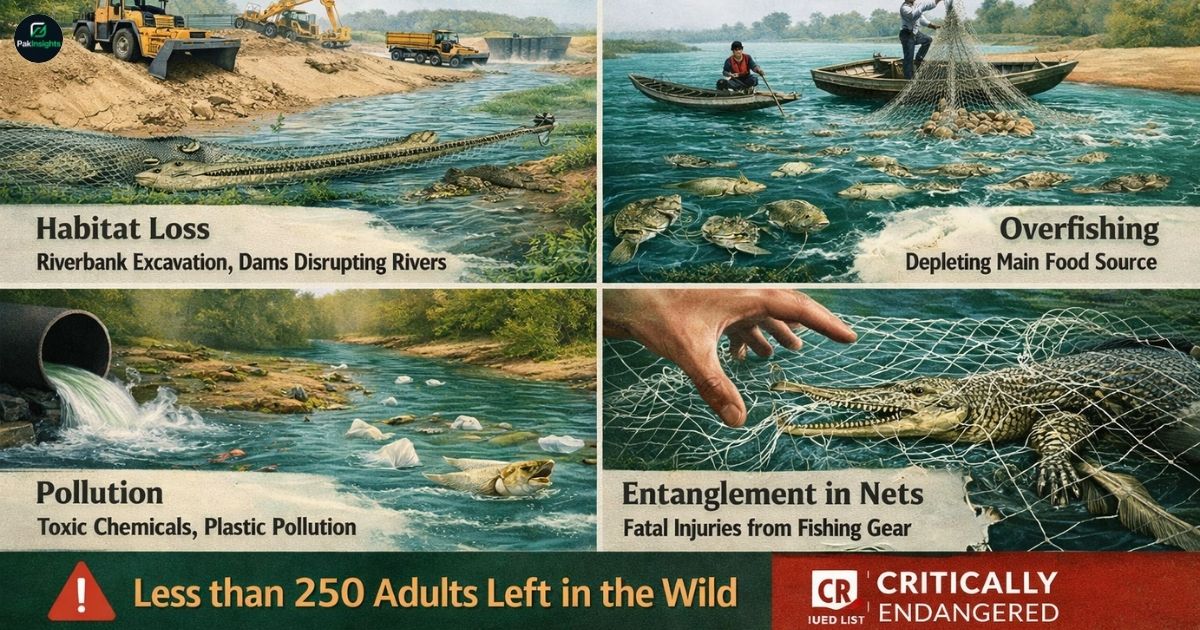
Gharials face multiple human-induced threats. The major ones include habitat loss, sand mining, and the use of gill nets, which entangle and kill these fragile reptiles. Rivers are also altered by dams and barrages, affecting their riverine habitat and nesting sites. Pollution and depletion of fish stocks reduce available prey, making survival even harder. Compared to other crocodiles like the mugger crocodile (Crocodylus palustris) or the false gharial (Tomistoma schlegelii), the Gharial has very specific habitat needs, making it extremely vulnerable to environmental changes.
Population numbers have dropped drastically since the early 20th century. From thousands of individuals across the Indian subcontinent rivers, the population now survives in small, fragmented groups. Surveys show that fewer than 900 wild male and female gharials exist today. Even protected areas such as wildlife sanctuaries, Corbett, Katarniaghat, and National Chambal face threats from poaching, fishing, and human disturbance. Monsoon floods can wash away sandbank nesting sites, and juveniles often fall prey to predators or die due to low water quality. The combination of these human-induced threats and natural challenges has made their survival precarious.
Conservation Initiatives and How You Can Help

Several conservation programs in India and Nepal aim to save the Gharial. Captive breeding programs produce juveniles for captive-bred reintroduction into rivers like the Chambal, Ganges, and Girwa rivers. These programs monitor reproductive success, hatchlings, and juveniles, and ensure safe release. Protected wildlife sanctuaries: Corbett, Katarniaghat, and National Chambal provide riverine habitat where courtship and mating behavior can occur undisturbed. Active habitat restoration includes removing woody vegetation, adding sand for sandbank nesting, and controlling fishing in sensitive areas.
You can also help the Gharial from the USA. Supporting NGOs like WWF, donating to conservation efforts, or spreading awareness about critically endangered reptiles can make a difference. Educating communities about sustainable fishing and river protection reduces human-induced threats like gill nets. Modern studies using molecular genetics and phylogeny help track population diversity and improve conservation strategies. Through these efforts, the Gharial has a chance to recover, preserving not only a unique aquatic predator but also an ancient link to Pleistocene to present ecosystems and cultural heritage.
Frequently Asked Questions
Q1: What is a Gharial?
A Gharial (Gavialis gangeticus) is a long-snouted fish-eating crocodile found in South Asian rivers.
Q2: Why is the Gharial critically endangered?
It faces habitat loss, sand mining, gill nets, and river pollution, reducing survival chances.
Q3: Where do Gharials live?
They inhabit riverine habitats in the Indian subcontinent, rivers like the Chambal, Ganges, and Narayani rivers.
Q4: What do Gharials eat?
Their diet includes fish, insects, tadpoles, and small crustaceans, making them specialized aquatic predators.
Q5: How do Gharials reproduce?
Females lay eggs on sandbank nesting sites, with egg incubation (71–93 days) before hatchlings enter the river.