
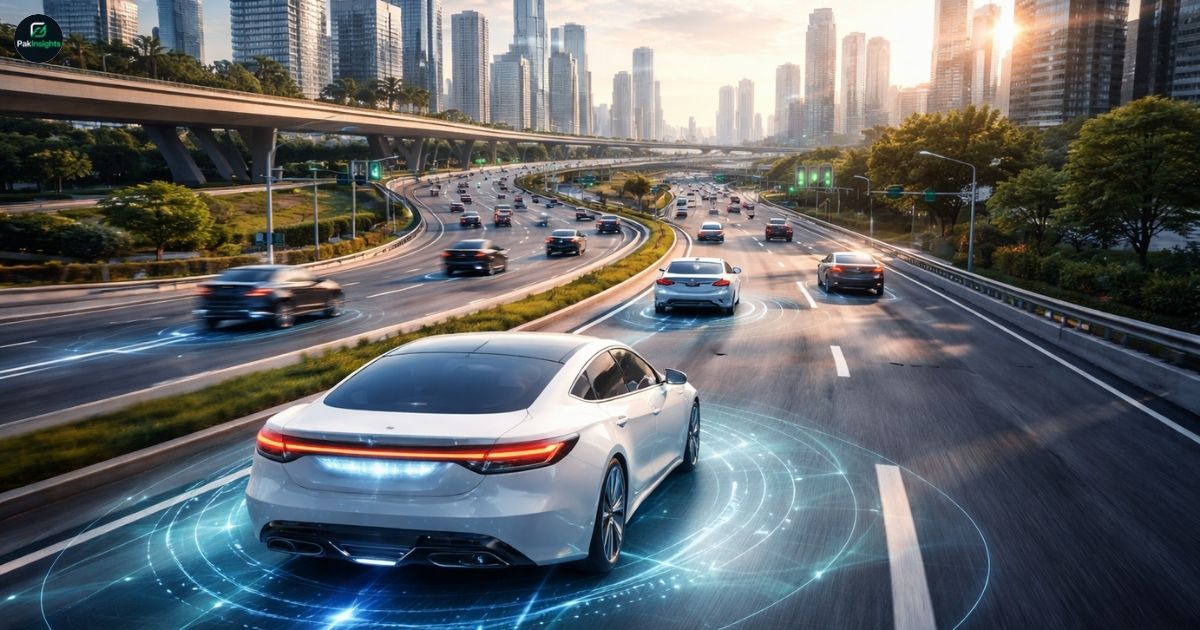
The world of autonomous vehicles is no longer a vision from the movies. Across the United States, self-driving cars are emerging as the next big shift in urban transport optimization. Imagine streets where traditional cars no longer dominate and driverless car adoption drastically reduces accidents caused by human error and driver inattention. Cities could see safer roads, cleaner air, and smoother traffic thanks to the rise of AI in transportation and vehicle-to-vehicle communication.
The introduction of autonomous transport systems is not just about replacing drivers. It’s about redesigning the way we move goods and people. Smart transportation networks and the intelligent vehicle grid promise more efficient highways, reduced congestion, and improved parking utilization. With IoT-enabled vehicles collecting real-time data, cities can manage traffic like never before, creating a future where commuting efficiency is optimized and road fatalities decline sharply.
How Autonomous Vehicles Are Revolutionizing Modern Transportation
Autonomous vehicles are changing the rules of transportation. Self-driving vehicles rely on AI systems and embedded sensors to make decisions faster than humans. Companies like Tesla, Google Car, Nissan, Toyota, Audi, Lexus, BMW, Mercedes-Benz, and Volvo are leading the charge, testing electric and autonomous cars on public roads. These autonomous transport systems promise benefits like reduced accidents, better fuel economy, and fewer traffic jams. For example, studies show traffic fatalities could fall by up to 90% with widespread driverless car adoption.
Beyond safety, autonomous vehicles improve efficiency. Car platooning allows vehicles to travel closely together, reducing drag and saving fuel. Vehicle cloud / intelligent grid systems coordinate traffic and share data for smarter decisions. Cities gain the advantage of road safety and traffic management, while commuters experience less time in traffic. Tables tracking fuel savings, accident reduction, and CO2 reduction clearly show the potential impact of autonomous transport systems on modern American roads.
| Metric | Traditional Cars | Autonomous Vehicles |
|---|---|---|
| Traffic Fatalities | ~1.3M globally | 90% reduction potential |
| Average Commute Time | 30–45 min | 20–30 min |
| Fuel Wastage Searching Parking | 40% in urban areas | 10% or less |
| Car Utilization | 5% | 75% |
Smart Transportation Systems: Integrating Technology with Urban Mobility
The future of mobility depends on smart transportation networks. Autonomous vehicles interact with IoT-enabled vehicles, big data analytics for vehicles, and vehicle-to-vehicle communication. This creates a distributed vehicle network where cars can cooperate, share traffic info, and optimize routes. Cities adopting these systems experience traffic congestion reduction and improved urban transport optimization. The combination of electrification and autonomous cars also reduces carbon emissions, improving air quality in urban areas.
Shared mobility and the gig economy in transport also benefit. People can share self-driving cars for rides, deliveries, or commuting, reducing the need for personal vehicles. Vehicle cloud platforms manage fleets, track usage, and optimize parking utilization. The integration of AI in transportation ensures that road networks operate more safely and efficiently. Autonomous vehicles are not just machines; they are part of a system designed to make travel smarter, greener, and faster.
Challenges and the Road Ahead for Autonomous Vehicles
Despite the promise, autonomous vehicles face challenges. AI systems, lidar systems, and communication technology require massive investments. Legal and regulatory hurdles in the USA delay widespread driverless car adoption. Concerns about job loss in traditional driving roles, cybersecurity, and liability remain hot topics. Yet, companies like Tesla, Google Car, and Volvo continue testing, and cities are slowly adapting smart transportation networks.
The road ahead is bright but complex. Autonomous transport systems will continue evolving, combining electric cars, vehicle cloud networks, and car platooning to maximize efficiency. Safety, innovation, and future trends indicate that in the next decade, streets and highways will look very different. Urban transport optimization, fuel efficiency, and CO2 reduction, and improved traffic management show that autonomous vehicles will not only change how we drive but also redefine life in American cities.
Frequently Asked Questions
Q1: What are autonomous vehicles?
Autonomous vehicles are self-driving cars that use AI systems, sensors, and vehicle-to-vehicle communication to navigate without human input.
Q2: How do autonomous vehicles improve road safety?
They reduce accidents caused by human error, driver inattention, and speeding, making roads and urban areas safer.
Q3: What is the intelligent vehicle grid?
The intelligent vehicle grid is a connected network of IoT-enabled vehicles that share data to optimize traffic flow and urban transport.
Q4: Can autonomous vehicles save fuel?
Yes, self-driving cars use car platooning and optimized routes to increase fuel efficiency and CO2 reduction.
Q5: Are autonomous vehicles legal in the USA?
Laws vary by state, and while some cities allow testing, full driverless car adoption is still regulated and under development.