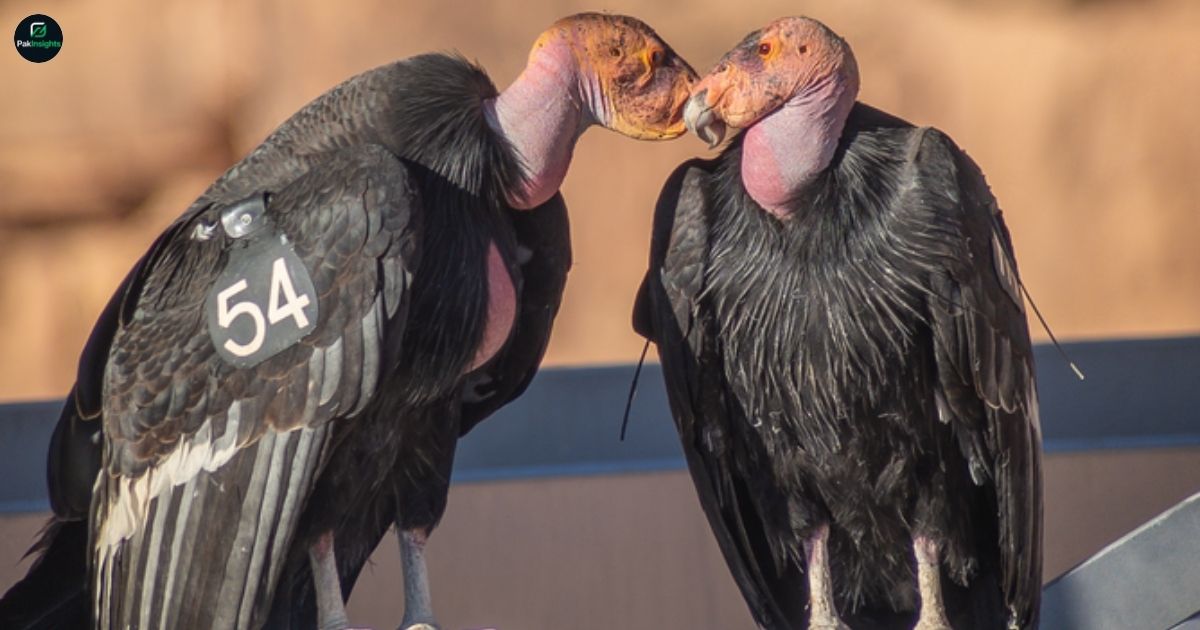
The California Condor is one of the most remarkable birds in North America. Known scientifically as Gymnogyps californianus, it holds the title of North America’s largest land bird. With a wingspan of 9–10 feet, it can soar high and travel great distances. These birds are carrion-eating scavengers, feeding mostly on dead animals like deer, cattle, sheep, and sometimes even marine mammals washed ashore. Despite its size and strength, the California condor is a critically endangered bird, and its survival has relied heavily on human intervention over the past few decades.
These birds have existed since the Late Pleistocene era, around 40,000 years ago. They typically nest on cliffs or in tall, gnarled trees, making their homes difficult for humans to reach. Their wild population has faced severe declines, and today, they are a symbol of both ecological importance and conservation success. The story of the California condor teaches us how humans can both harm and protect nature, making it a focal point for conservation efforts across the United States.
Overview of the California Condor
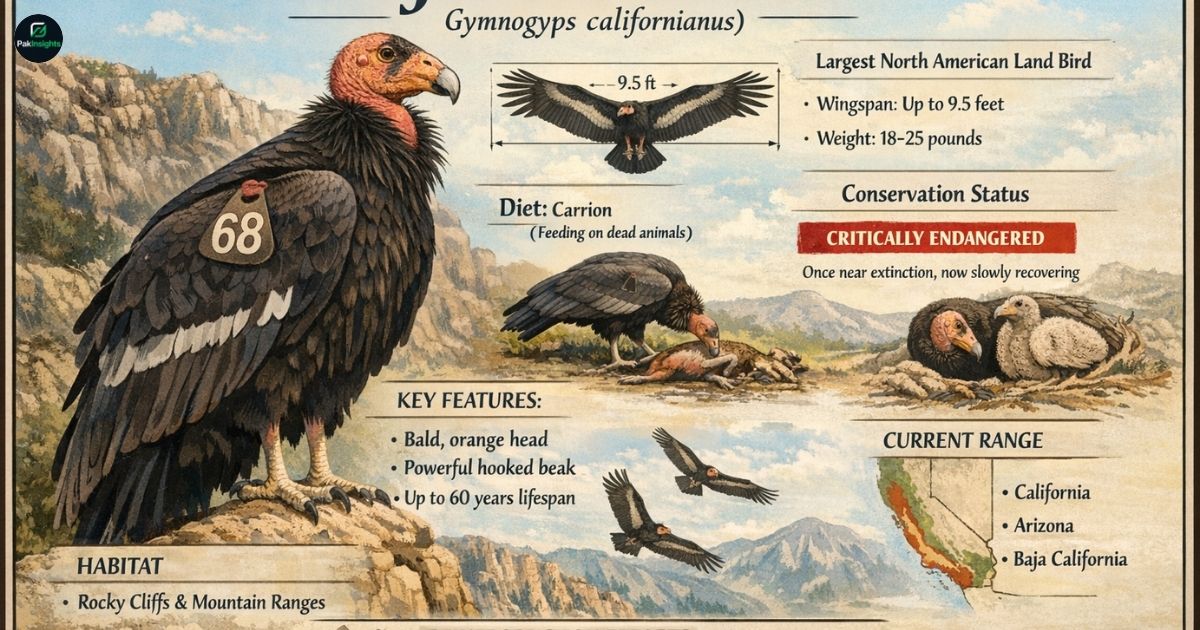
The California Condor is a majestic bird with a sharp presence in the skies. Its soaring and flight patterns allow it to travel up to 250 miles/day in search of food. These birds rely on keen eyesight rather than smell to locate carrion. They often follow other scavengers, like turkey vultures, to find food. Their feeding habits include consuming a wide range of animals, from deer and cattle to smaller creatures like squirrels and rabbits. Despite their ability to cover long distances, human threats and environmental changes have significantly limited their habitats.
Nesting in caves, rock crevices, and tree cavities, the California condor shows remarkable parental care and chick development. They reach sexual maturity at 6–7 years and reproduce slowly, laying only one egg per year during the mating season from winter to spring. Chicks remain with their parents for months, learning to fly and survive in the wild. This slow reproduction makes the species especially vulnerable, highlighting the critical need for habitat protection and ongoing reintroduction programs.
Threats and Conservation Challenges
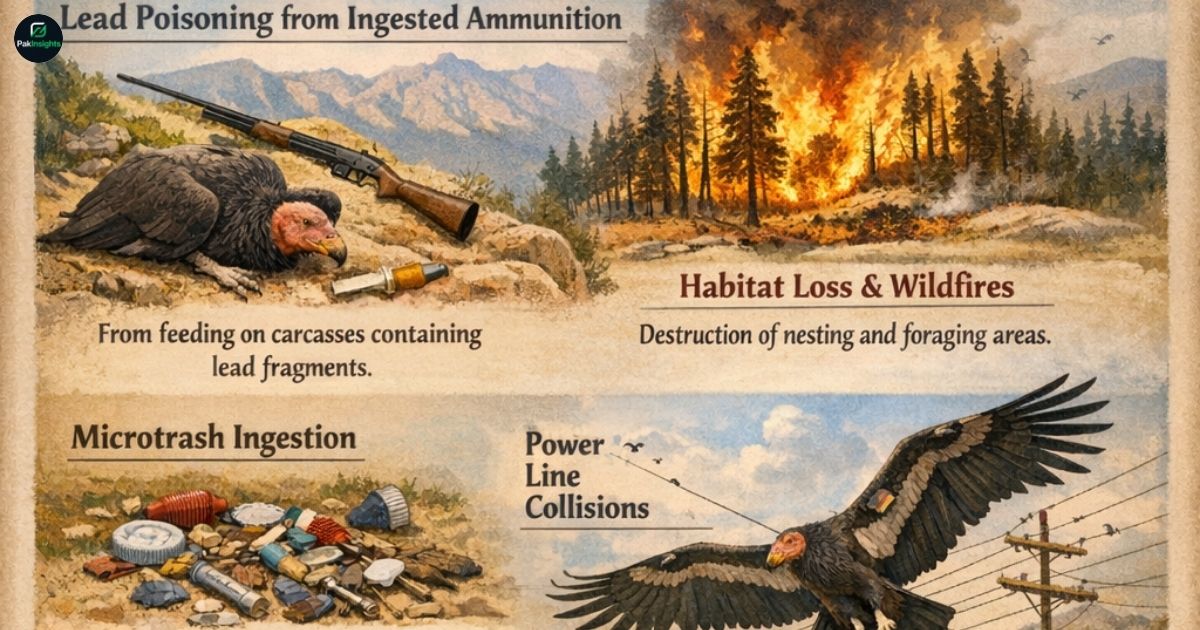
The California condor nearly vanished in the late 20th century. By the 1980s, only 22 condors in 1980s survived. The species faced numerous human threats, including lead poisoning from spent ammunition, microtrash ingestion, and habitat destruction caused by housing developments, oil drilling, and wildfires. These factors, combined with slow reproduction, created a perfect storm for population collapse.
Environmental changes continue to impact these birds. Severe wildfires and oil drilling have degraded their natural habitat, while human development has fragmented areas essential for nesting and foraging. The Endangered Species Act, IUCN Red List, and CITES Appendix I recognize the California condor as a species in need of protection. Understanding these threats is key to ensuring that future generations of Americans can witness these incredible birds in the wild.
| Threat | Impact on California Condor |
|---|---|
| Lead poisoning | Major cause of adult mortality |
| Microtrash ingestion | Can harm young birds |
| Habitat destruction | Reduces nesting and foraging areas |
| Wildfires & oil drilling | Fragmented and degraded habitat |
| Slow reproduction | One egg per year slows population growth |
Conservation Efforts and Recovery Programs
Conservation of the California condor is a story of hope. Captive breeding and reintroduction programs began in 1987 when the last free-flying birds were captured. Since 1992, these programs have helped the population grow to 347 free-flying condors (2022) and 214 condors in captivity. Organizations like Defenders of Wildlife initiatives have played a crucial role by advocating for non-toxic ammunition and habitat protection.
Modern efforts also focus on community involvement. Public awareness and support, combined with policies that phase out lead ammunition, are essential. Conservationists promote “Leave No Trace” ethics and monitor wind and solar energy impact mitigation to protect key landscapes. The success of these programs demonstrates that with careful planning, dedication, and public cooperation, the California condor can continue to thrive in its native habitats for generations to come.
| Conservation Program | Description | Result |
|---|---|---|
| Captive breeding | Breeding condors in controlled environments | Increased population from 22 to 561 |
| Reintroduction programs | Release of condors back into the wild | 347 free-flying condors in 2022 |
| Lead ammunition phase-out | Promoting non-toxic bullets | Reduced lead poisoning deaths |
| Habitat protection initiatives | Partnerships with states and renewable energy companies | Protected critical nesting and foraging areas |
Frequently Asked Questions
Q: Why is the California Condor critically endangered?
A: It faces threats like lead poisoning, habitat destruction, and slow reproduction, which drastically reduced its population.
Q: Where can California Condors be found today?
A: They live in California, Arizona, southern Utah, and northern Baja California, mostly in cliffs, canyons, and forested areas.
Q: What do California Condors eat?
A: They are carrion-eating scavengers, feeding on dead animals like deer, cattle, sheep, and occasionally marine mammals.
Q: How big is a California Condor?
A: It is North America’s largest land bird, with a wingspan of 9–10 feet, and can weigh up to 20 pounds.
Q: How are conservation programs helping condors?
A: Through captive breeding, reintroduction programs, lead-free ammunition, and habitat protection, the population has grown to over 347 free-flying birds.