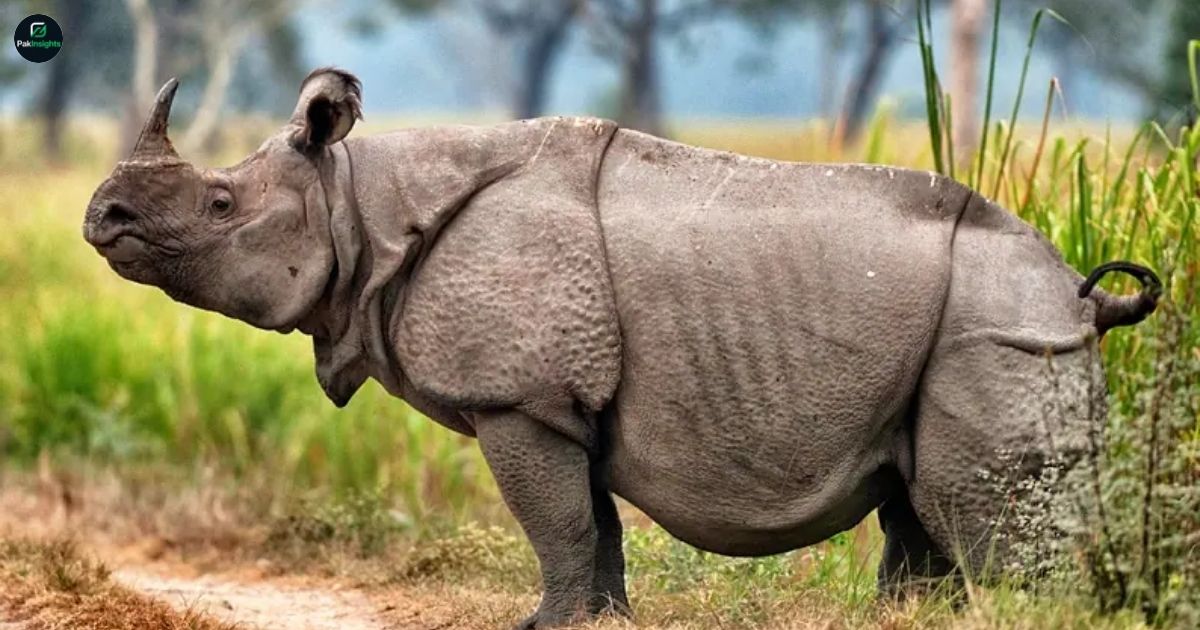
The Javan rhinoceros is one of the rarest rhinoceros species in the world and a true marvel of nature. Often called the Sunda rhinoceros or lesser one-horned rhinoceros, this animal is critically endangered, with fewer than 80 individuals surviving today. It belongs to the Rhinocerotidae family in the Perissodactyla order and is closely related to the Indian rhinoceros and Sumatran rhinoceros. Known for its single short horn and armored, folded skin, the Javan rhinoceros has fascinated wildlife enthusiasts and conservationists worldwide. It is one of the rarest large mammals on Earth and a symbol of endangered wildlife species protection.
The species mainly survives in Ujung Kulon National Park in Java, Indonesia, which offers a dense lowland rainforest habitat perfect for its survival. Unfortunately, this once widespread species across Southeast Asia is now reduced to a tiny population due to rhinoceros habitat loss and the rhino poaching crisis. Conservationists from organizations like the World Wildlife Fund and International Rhino Foundation are tirelessly working to protect the Javan rhino, making it one of the most studied yet elusive wild rhinoceros species in existence.
Habitat, Population Status, and Unique Characteristics of the Javan Rhinoceros
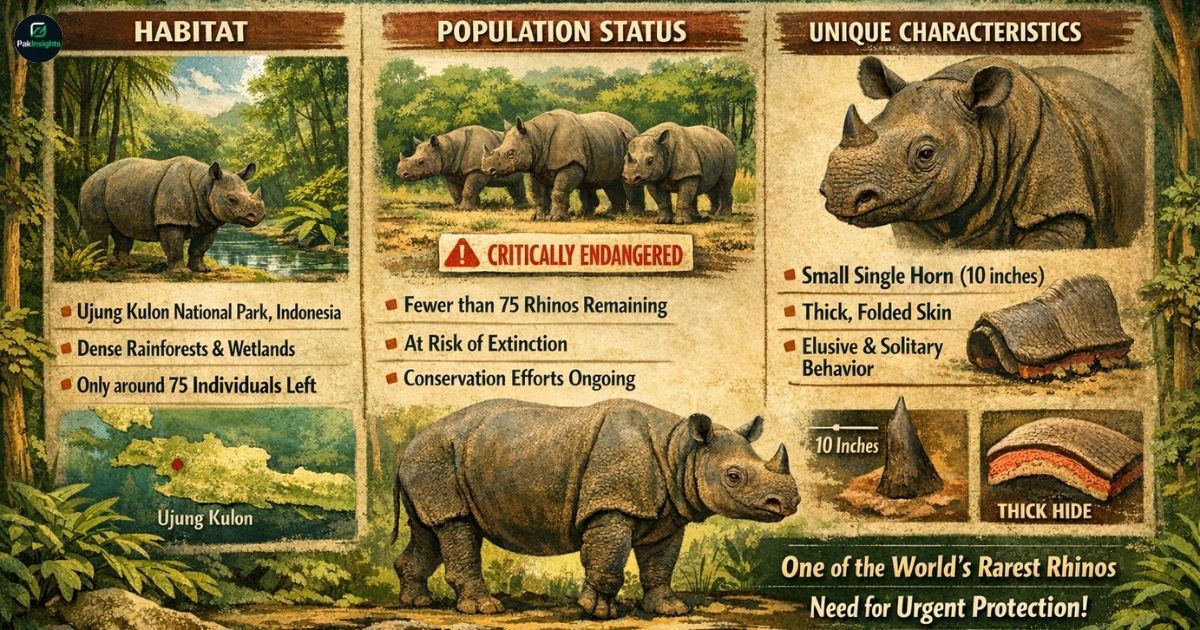
The Javan rhinoceros lives mostly in Ujung Kulon National Park, a protected area in Java, Indonesia. This park provides dense lowland rainforest habitat, rivers, mud wallows, and grassy clearings. The rhinos use mud wallowing behavior to cool down and prevent parasites. Unlike other Asian rhinoceros species, they are mostly solitary and feed on shrubs, young leaves, and fallen fruit. They are herbivorous browsing animals with a prehensile upper lip that helps them grab food easily. Adults weigh up to 2,300 kilograms and can reach lengths of 3.2 meters. Despite its size, the Javan rhino remains very elusive.
Today, the Javan rhino population is extremely small, with only about 74–77 individuals in the wild. There are no known rhinos in captivity, making it one of the rarest mammals in the world. The species is highly sensitive to environmental changes, and wildlife genetic diversity is at risk due to inbreeding depression. Even small population shifts can drastically affect survival. These rhinos coexist with Asian elephants, leopards, Sumatran tigers, and occasionally saltwater crocodiles, making their ecosystem delicate and complex.
Major Threats Driving the Javan Rhino Toward Extinction
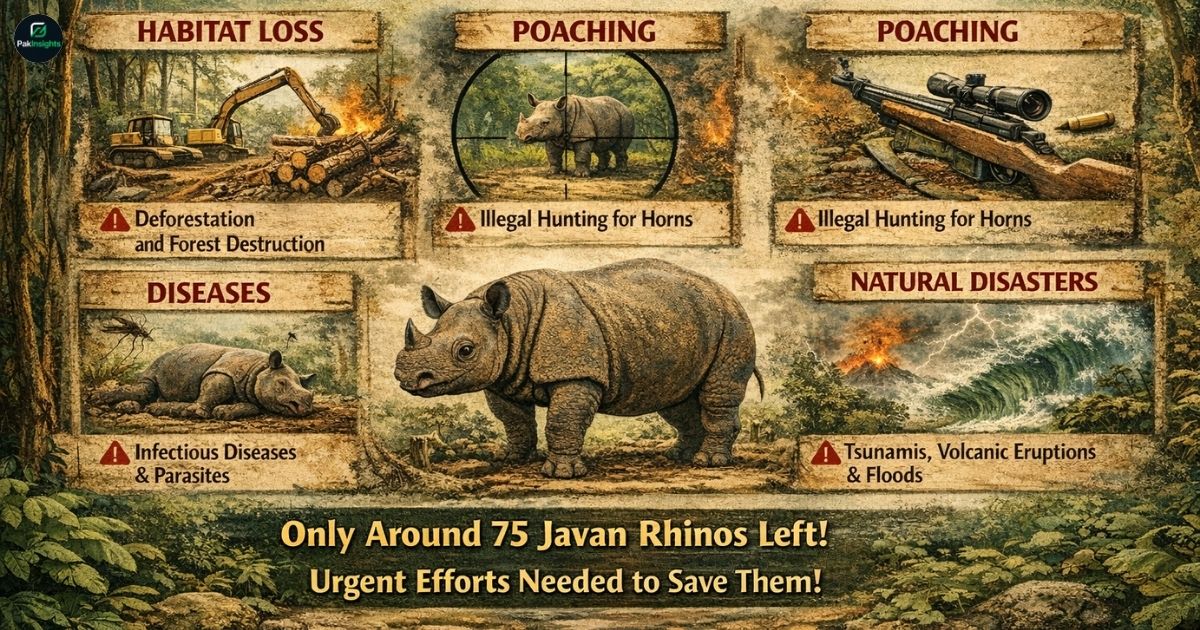
The Javan rhinoceros faces many threats, with the rhino poaching crisis topping the list. Their horns are highly valued in traditional medicine, and the illegal rhinoceros horn trade continues despite strict laws. Historically, hunting and poaching drove their numbers down across Southeast Asia, including Vietnam, Borneo, and Sumatra. Even today, small population numbers increase rhino extinction risk, as each loss has a big impact on the overall survival of the species.
Habitat loss is another major threat. Expansion of agriculture, deforestation, and human settlements has reduced the rhinoceros’ habitat dramatically. Events like volcanic eruptions, tsunamis, and disease outbreaks can further damage the fragile population. With only a single wild population remaining, the Javan rhinoceros is highly vulnerable. Conservationists emphasize rhinoceros protection efforts and long-term monitoring to prevent the species from disappearing forever.
Conservation Efforts and the Future of the Javan Rhinoceros
Conservationists have developed intensive rhino conservation programs to save the Javan rhinoceros. Organizations like the World Wildlife Fund and International Rhino Foundation use camera trap monitoring to track rhino movements without disturbing them. These programs help measure population growth, feeding patterns, and health conditions. Protecting Ujung Kulon National Park ensures that the rhinos have safe areas with food, water, and wallows.
Efforts also include rhino breeding programs and relocation plans to maintain wildlife genetic diversity. Scientists track individual rhinos to prevent inbreeding depression and ensure the long-term survival of the species. Government protection, anti-poaching patrols, and local awareness campaigns support these efforts. With careful planning, it is hoped that the Javan rhinoceros will recover, making it a rare success story in Indonesian wildlife conservation and a model for saving other endangered animals in Southeast Asia.
Population Snapshot of the Javan Rhinoceros
| Category | None since the early 20th century |
|---|---|
| Location | Ujung Kulon National Park, Java |
| Population | 74–77 wild individuals |
| Captivity | None since early 20th century |
| Average Weight | 2,300 kg |
| Length | 3.1–3.2 m |
| Main Threats | Rhino poaching crisis, rhinoceros habitat loss |
| Conservation Organizations | World Wildlife Fund, International Rhino Foundation |
| Lifespan | 30–45 years |
Frequently Asked Questions
Q1: Where does the Javan rhinoceros live today?
A1: The Javan rhinoceros survives only in Ujung Kulon National Park, Java, Indonesia.
Q2: How many Javan rhinos are left in the wild?
A2: Fewer than 80 individuals remain, making it one of the rarest rhinoceros species.
Q3: Why is the Javan rhino critically endangered?
A3: Major threats include rhino poaching, rhinoceros habitat loss, and inbreeding depression.
Q4: Does the Javan rhinoceros have a horn?
A4: Yes, but only males have a single short horn, usually less than 25 cm long.
Q5: Are there any Javan rhinos in captivity?
A5: No, there haven’t been successful captive Javan rhinos since the early 20th century.