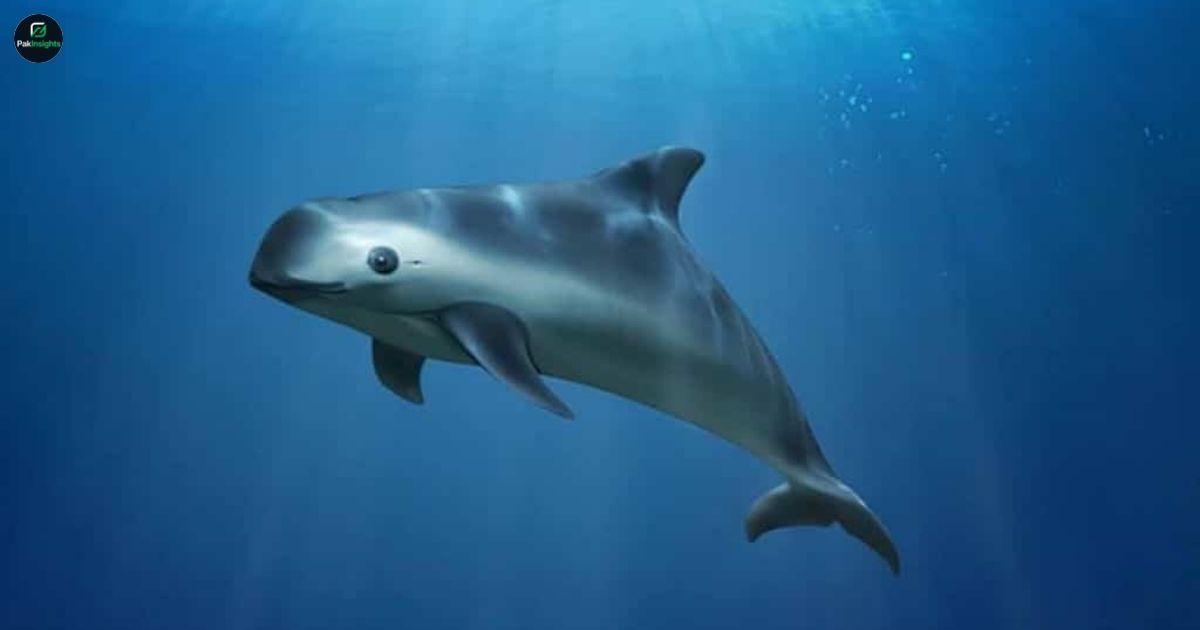
The Vaquita is one of the rarest creatures on Earth. Known scientifically as Phocoena sinus, this Vaquita porpoise is a tiny, elusive Gulf of California marine mammal. It is the smallest cetacean species, growing only about 4 to 5 feet long. Its dark eye rings and triangular dorsal fin make it unique among coastal porpoise species. Sadly, the Vaquita population decline is severe. Experts warn it may vanish completely if urgent action is not taken. This tiny porpoise represents a critical piece of the Sea of Cortez ecosystem and highlights the broader marine biodiversity crisis affecting endangered marine wildlife worldwide.
The Vaquita is a living reminder of how humans impact marine life. Its fragile population suffers from illegal fishing impact on marine life, including the totoaba fishery threat and the gillnet fishing problem. Pollution, habitat degradation, and small population genetics make the situation worse. This species is a vital part of the Mexican marine ecosystem, and protecting it is crucial for marine mammal conservation and marine ecosystem protection. For the USA audience, understanding the Vaquita is essential because seafood consumption and global trade indirectly affect this endangered porpoise species.
What Is the Vaquita? Habitat, Unique Features, and Why It Matters to Marine Ecosystems
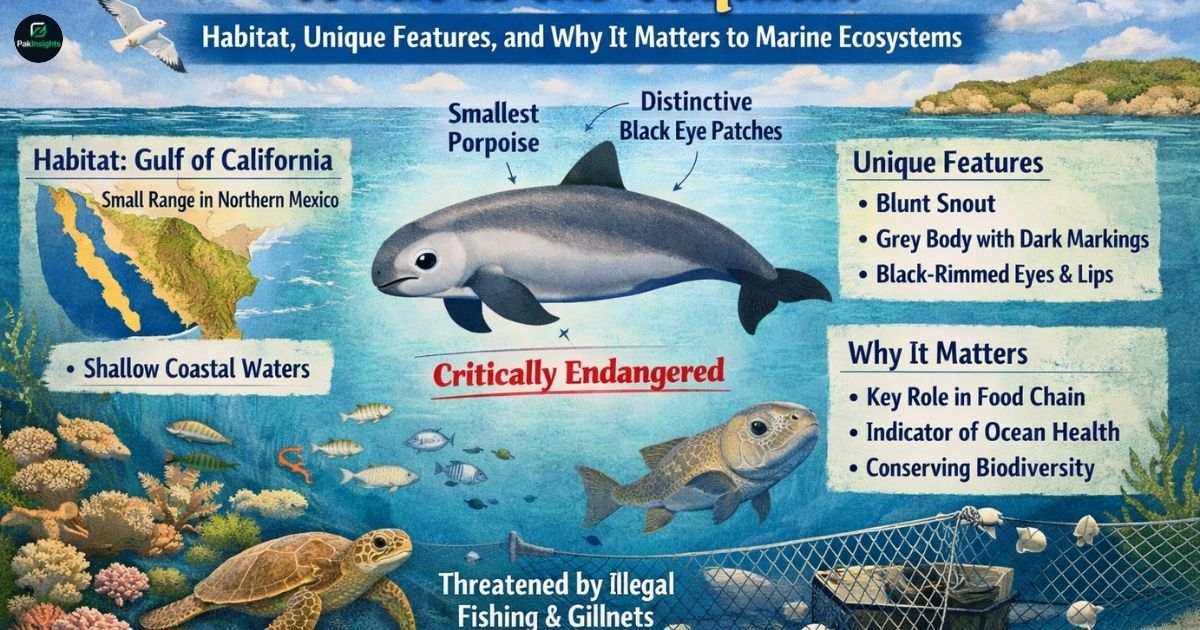
The Vaquita lives only in the northern Gulf marine habitat, particularly in shallow coastal waters of the Gulf of California. It is a coastal porpoise species, rarely leaving its restricted range. Adults reach around 4.9 feet in length, with females slightly larger than males. Their small bodies, rounded heads, and distinct black lip and eye patches distinguish them from other cetacean species like Burmeister’s porpoise and the Spectacled porpoise, which belong to the porpoise family Phocoenidae. The Vaquita’s unique morphology helps it survive in the turbid waters of the Sea of Cortez, feeding on demersal fish prey, marine crustaceans, and squid.
This Gulf of California marine mammal plays a key role in the Mexican marine ecosystem. By preying on small fish and invertebrates, the Vaquita maintains ecological balance. Loss of this species would disrupt food webs and further intensify the marine species extinction risk. Scientists also study the reproductive biology of the Vaquita, calving interval, gestation, and marine mammal life expectancy to understand its resilience. Protecting the Vaquita habitat in the Gulf of California is essential for the protection of endangered marine species and biodiversity conservation efforts.
Why the Vaquita Is on the Brink of Extinction: Illegal Fishing, Gillnets, and Human Impact
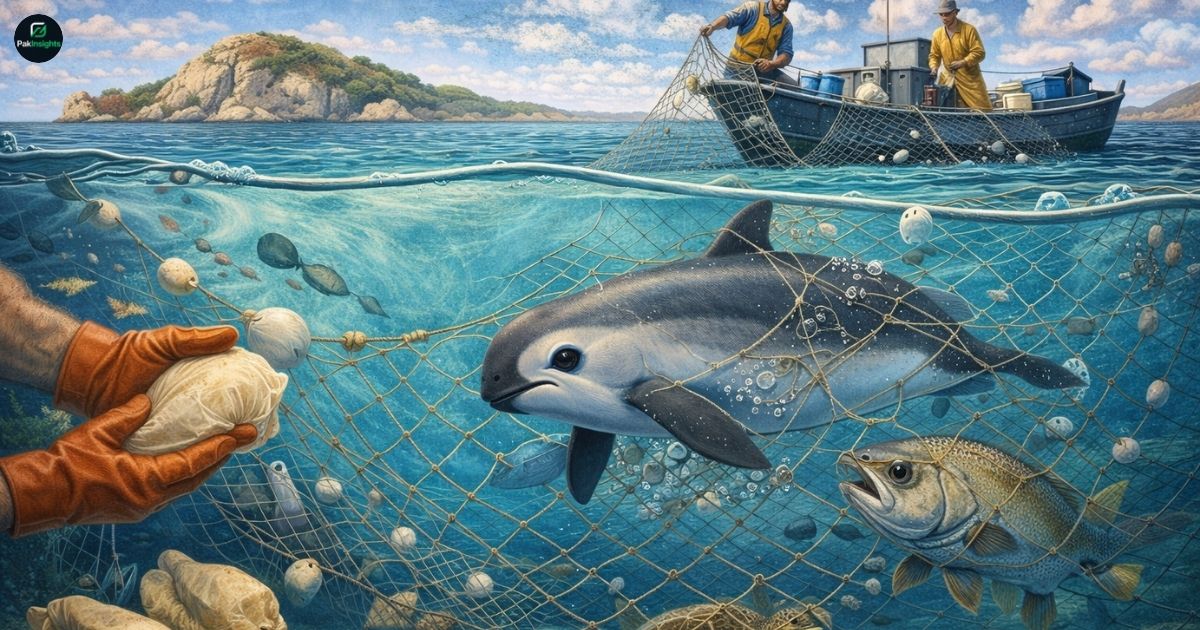
The Vaquita faces unprecedented threats from humans. The illegal totoaba fishing in the Gulf of California is the most dangerous. Totoaba swim bladders are sold on the black market, luring poachers into fishing net entanglement, which kills Vaquitas accidentally. Shrimp and gillnet fisheries worsen the problem, creating what scientists call bycatch in fishing nets. Combined with marine pollution runoff and pesticides in marine waters, these threats amplify the Vaquita population decline. Small population size also causes a population bottleneck, reducing genetic diversity and triggering the Allee effect in small populations.
The threats to marine mammals are not just numbers—they affect behavior too. Vaquitas live alone or in small groups and have slow reproduction. Females reach sexual maturity at 3–6 years and give birth every two years. The combination of the low reproductive biology of the Vaquita, long gestation, and external threats makes recovery difficult. Table 1 shows recent population estimates:
| Year | Estimated Vaquitas Remaining | Source |
|---|---|---|
| 2007 | 150 | IUCN Red List |
| 2018 | <19 | CIRVA Report |
| 2022 | <10 | NMFS Survey |
| 2024 | 6–11 | Latest Wildlife Survey |
This alarming decline emphasizes the urgent need for protection of endangered marine animals and marine conservation programs in the Sea of Cortez ecosystem.
Global Conservation Efforts to Protect the Vaquita and What the Future Holds
Efforts to save the Vaquita combine local and international action. The Mexican government has established gillnet bans, protected zones, and programs like PACE-VAQUITA. Organizations like Sea Shepherd and U.S. authorities such as NOAA enforce these laws and educate the public on seafood choices. Conservation & Environmental Terms like the International Union for Conservation of Nature Red List and Convention on International Trade in Endangered Species of Wild Fauna and Flora are crucial in monitoring and supporting endangered marine species protection.
Innovative methods include acoustic monitoring, drones, and biobanking of genetic material. Some vaquitas were even temporarily relocated to protected pens. Success is limited, but these actions aim to halt illegal fishing’s impact on marine life and restore populations. Recovery requires continued marine mammal conservation, stricter enforcement, and public awareness. If these programs succeed, this endangered porpoise species may survive, safeguarding the delicate balance of the Mexican marine ecosystem and inspiring global efforts for biodiversity conservation.
Frequently Asked Questions
Q1: What is a Vaquita?
The Vaquita (Phocoena sinus) is the world’s rarest Gulf of California marine mammal and the smallest cetacean species, known for its dark eye rings and triangular dorsal fin.
Q2: Why is the Vaquita endangered?
The Vaquita faces illegal totoaba fishing, gillnet bycatch, pollution, and a very small population, which threatens its survival.
Q3: Where does the Vaquita live?
It lives only in the northern Gulf marine habitat of the Gulf of California and Sea of Cortez, in shallow coastal waters.
Q4: How many Vaquitas are left?
As of 2024, fewer than 10–11 Vaquitas remain in the wild, making it the most endangered porpoise species.
Q5: What do Vaquitas eat?
Their diet includes demersal fish prey, marine crustaceans, and squid, playing a key role in marine ecosystem protection.