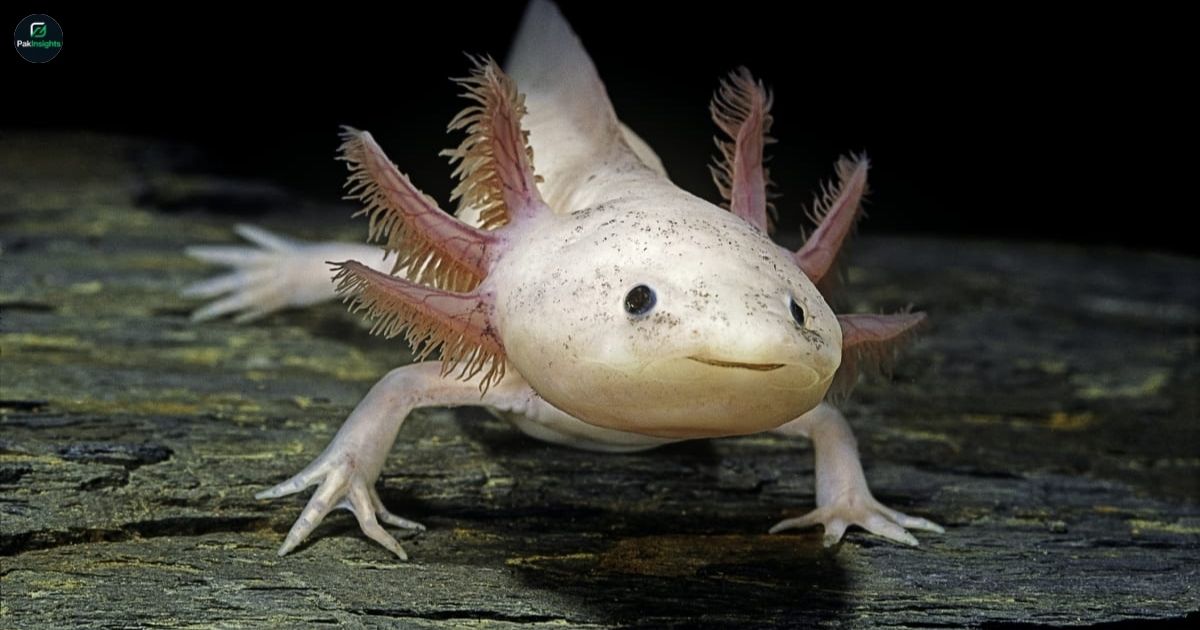
The Axolotl, also known as Ambystoma mexicanum or Mexican axolotl, is one of the most remarkable creatures on Earth. Unlike most amphibians, this paedomorphic salamander never truly grows up in the usual sense. Thanks to neoteny, adult axolotls retain juvenile traits, such as external gills and an aquatic lifestyle, making them appear like salamander larvae even when fully grown. Their ability for regeneration is legendary. They can regrow limbs, tails, parts of their heart, and even sections of their brain. This combination of unusual biology, charm, and resilience has made the axolotl a subject of fascination for scientists, hobbyists, and culture enthusiasts alike.
In the United States, interest in axolotls has surged, especially among aquarium hobbyists and researchers studying regenerative medicine. The laboratory axolotls in research centers are used as a model organism to understand limb regeneration, stem cells, and neural tube closure, providing insights that may one day help humans heal serious injuries. Their friendly appearance, bright color variants like leucistic, albino, melanistic, and xanthic, and adaptability to aquariums make them increasingly popular aquarium pets, though proper care is essential to maintain their health.
What Makes Axolotls Unique? Biology, Appearance, and Lifespan
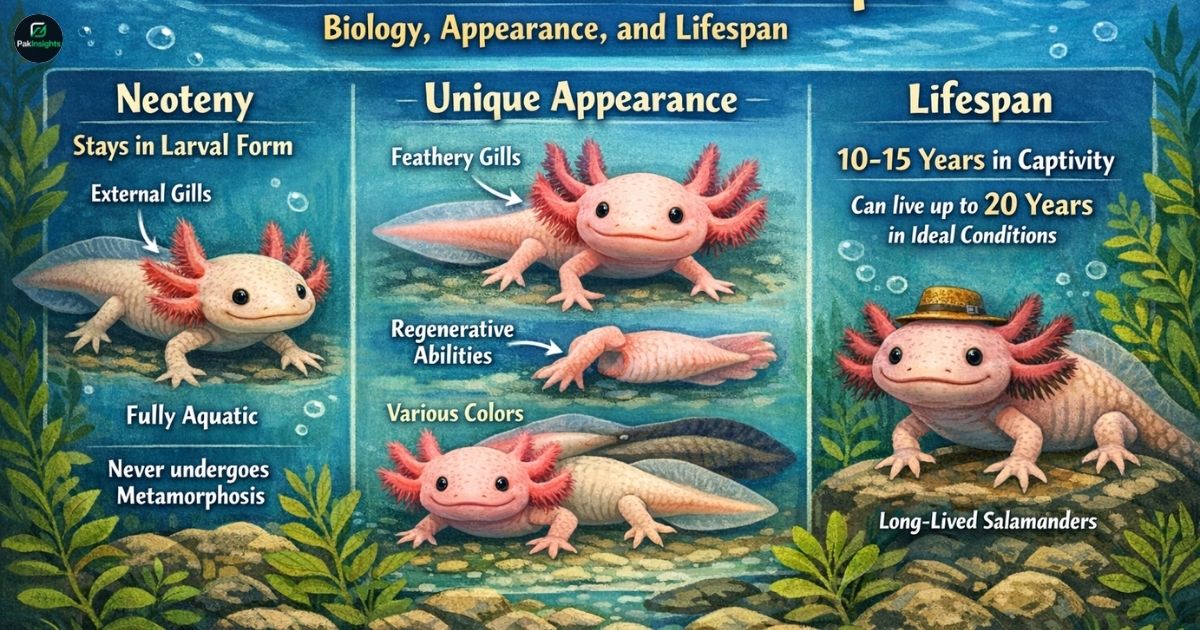
The axolotl stands out in the animal kingdom because it never completes metamorphosis naturally. Unlike most amphibians, it keeps its gills and stays aquatic throughout its life. This is due to a lack of thyroid hormones necessary for metamorphosis. Their external gills fan out like feathery crowns behind the head, allowing them to absorb oxygen directly from the water, while a caudal fin helps them glide gracefully. Adult Mexican axolotls usually measure 15 to 23 cm, although some can grow as long as 45 cm. The Ambystomatidae family also includes relatives like the Eastern tiger salamander, but none show the extreme neoteny seen in axolotls. Their wide head, lidless eyes, and underdeveloped limbs give them a permanently youthful look.
Their most extraordinary feature is tissue regeneration. When an axolotl loses a limb, cells at the injury site form a blastema, which eventually develops into a fully functional limb. Scientists believe the apical-ectodermal ridge (AER) and apical-ectodermal cap (AEC) are central to this process, guiding the growth and proper structure of new limbs. Lifespan varies, but in captivity, axolotls often live 10 to 15 years, while wild populations, now critically endangered, have much shorter lifespans due to habitat loss. Their unique physiology has made them famous for studies in regenerative medicine and stem cells, providing researchers with invaluable knowledge about healing and tissue growth.
Axolotl Habitat and Conservation Status
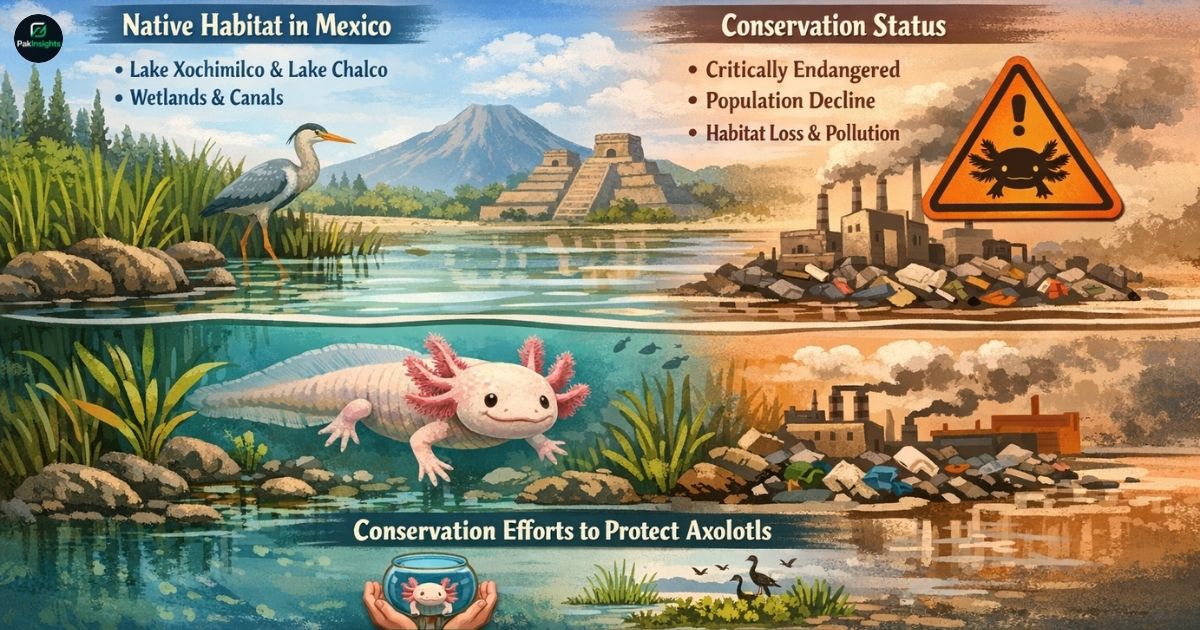
The natural habitat of axolotls is the highland lakes of Mexico, particularly Xochimilco and Lake Chalco. Historically, these lakes were part of a vast network of waterways, supporting large populations of Mexican axolotls. Today, urban expansion and water pollution have drastically reduced these habitats, leaving only fragmented canals in Xochimilco. Invasive species such as tilapia and carp prey on young axolotls and compete for food, worsening the decline. Oxygen levels in the water are often low due to contamination, creating oxygen-poor water that stresses the remaining populations. Conservationists are trying captive breeding and habitat restoration projects to save the species.
Despite these challenges, the axolotl has attracted attention worldwide for its role in scientific research and culture. Laboratory axolotls are bred for studies on limb regeneration and neural tube closure, and some are being reintroduced into restored waterways. Efforts in the USA and Mexico aim to combine education, science, and public awareness to preserve the species. The population in the wild remains critically endangered, but careful monitoring, pollution control, and the removal of invasive species can help stabilize their numbers.
Axolotls as Pets – Care, Diet, and Environment
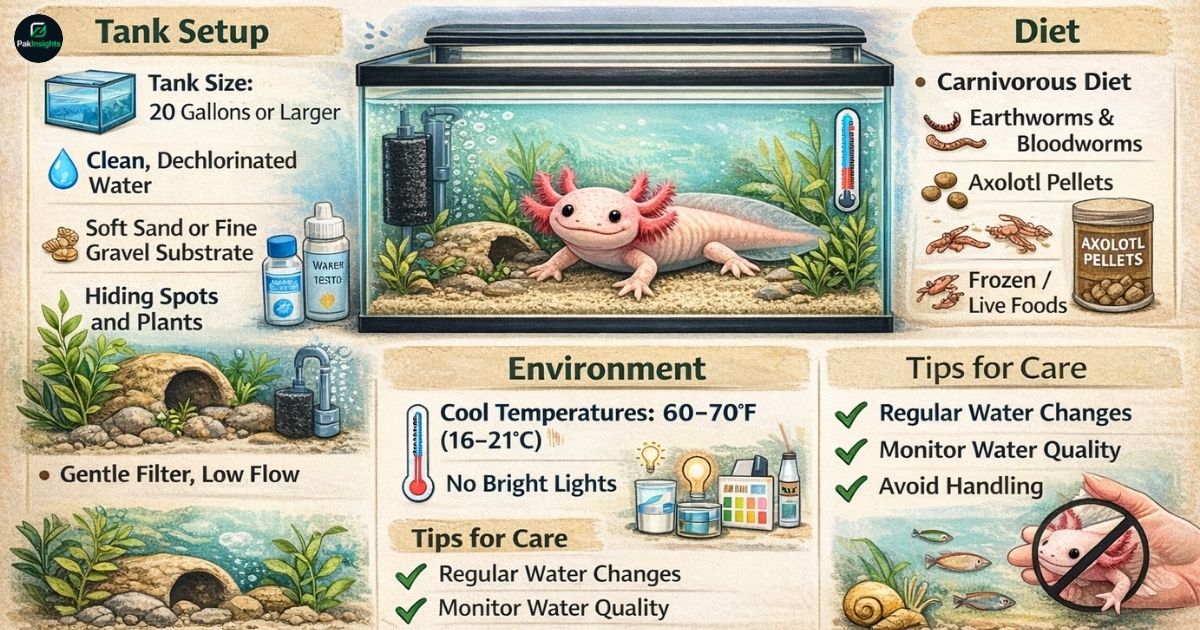
Caring for a Mexican axolotl requires a well-maintained aquarium with stable temperature and clean water. They thrive at 16–18°C, and water above 24°C can stress them. Substrate should be smooth sand to prevent ingestion, and decorations should avoid sharp edges. Many aquarium pets exhibit vibrant color morphs, including leucistic, albino, melanistic, and xanthic, which are popular in the US pet trade. Captive populations are bred specifically for pet and research purposes, ensuring genetic diversity while also easing pressure on wild populations.
Feeding axolotls involves a diet of worms, bloodworms, small pellets, and occasional feeder fish. Unlike other amphibians, they rarely hunt live prey actively, relying on suction feeding to pull food into their mouths. Water quality is essential, as poor conditions lead to infections and stress. Hobbyists in the USA often follow strict axolotl care in captivity routines, including weekly water changes, monitoring for signs of disease, and avoiding overcrowding. Proper care allows these paedomorphic salamanders to thrive, live long lives, and showcase their incredible regenerative abilities.
Table: Common Axolotl Color Morphs
| Color Morph | Description | Popularity in USA Pets |
|---|---|---|
| Leucistic | Pale pink body, black eyes | Very popular |
| Albino | White or pink, red eyes | Popular |
| Melanistic | All black or dark blue | Moderate |
| Xanthic | Yellow or grey with black eyes | Rare |
Frequently Asked Questions
Q1: What is an axolotl?
An axolotl is a paedomorphic salamander from Mexico that keeps its juvenile traits, like external gills, throughout life.
Q2: Why are axolotls critically endangered?
They face habitat loss, water pollution, and invasive species like tilapia and carp in Xochimilco and Lake Chalco.
Q3: Can axolotls regenerate limbs?
Yes, they can regrow limbs, tails, and even parts of their heart and brain using blastema formation.
Q4: Are axolotls good pets?
Yes, if kept in clean, cool water with proper diet and care, they thrive as aquarium pets.
Q5: Do axolotls undergo metamorphosis?
Most stay aquatic due to neoteny, but thyroid hormones can induce metamorphosis in captivity.