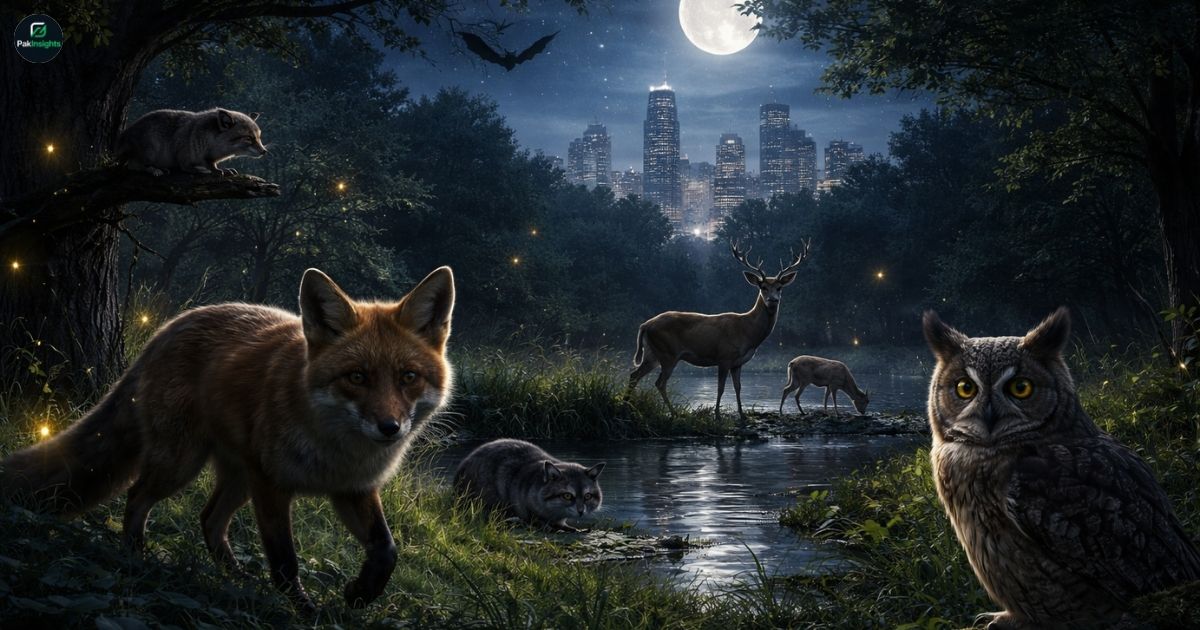
When the city sleeps, a whole new world awakens. Urban wildlife emerges from hidden corners to explore, feed, and survive. You might not notice them at first, but nocturnal animals like foxes, hedgehogs, and bats move silently through streets, parks, and canals. Night creatures have adapted to thrive under the cover of darkness, showing incredible animal behavior at night that many people rarely see. Observing them offers a unique way to understand wildlife in cities and the urban ecosystem that surrounds us. In the USA, cities like New York, Chicago, and San Francisco are home to surprising populations of nocturnal mammals and nocturnal birds, showing how adaptable wildlife can be.
By studying feeding patterns, roosting sites, and nocturnal movement, scientists and citizen observers can learn about these animals’ secret lives. Even in dense urban areas, you might spot pipistrelle bats, noctule bats, or barn owls on their nocturnal flights. Some moths, like the elephant hawk moth, grey pug moth, and red underwing moth, come out at night, visiting parks and gardens. Wildlife observation at night gives insight into how animals adapt to cities, and it helps maintain a healthy nocturnal ecosystem balance.
How Cities Transform the Behavior of Nocturnal Animals
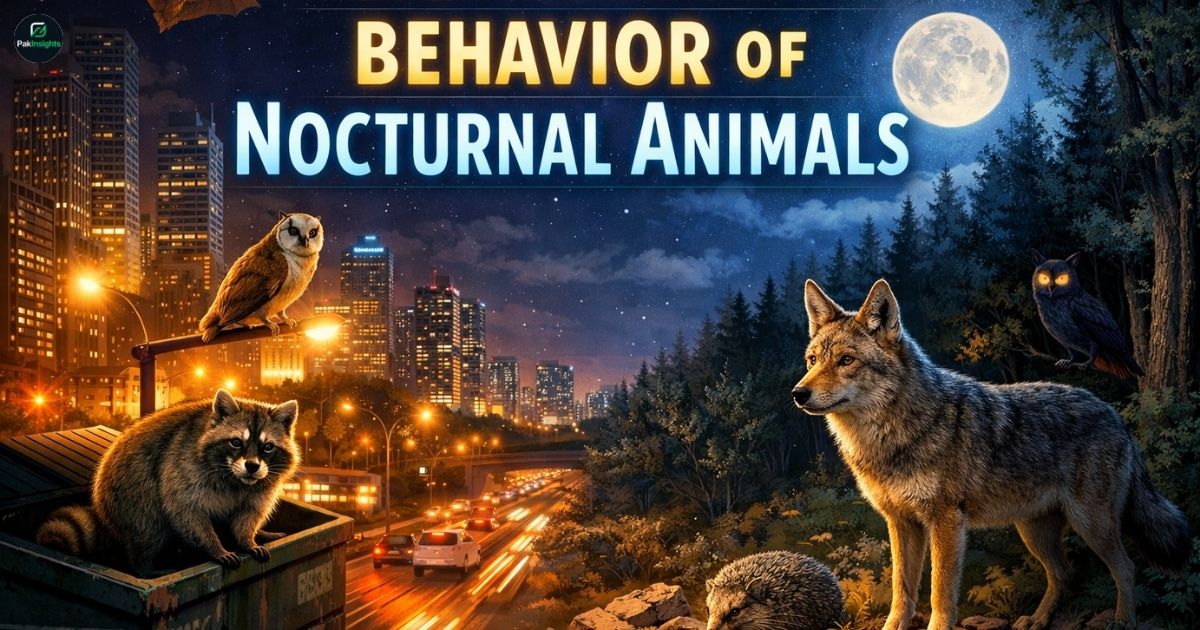
Cities dramatically change how nocturnal animals behave. Light pollution effects alter natural rhythms, forcing animals to shift their activity patterns. Foxes at night may hunt near streets instead of forests, and hedgehogs’ nocturnal habits might adjust to avoid humans. Many urban animals now use parks, canals, and woodland habitats in cities as refuges, showing amazing urban wildlife adaptation. Even bats in urban areas have learned to navigate streetlights while finding insects to eat, using their echolocation calls to hunt efficiently in dim conditions.
Urban areas also create new opportunities. Garbage bins, gardens, and street trees provide food and shelter. This results in more frequent foraging in darkness and unusual activity in unexpected places. Researchers track animal tracks and signs, like paw prints or droppings, to monitor populations. Observers can also use infrared cameras for wildlife, light traps for insects, and torches for observation to study species safely. The city, while challenging, has reshaped the way nocturnal creatures survive, showing remarkable resilience.
Common Nocturnal Visitors in Our Neighborhoods
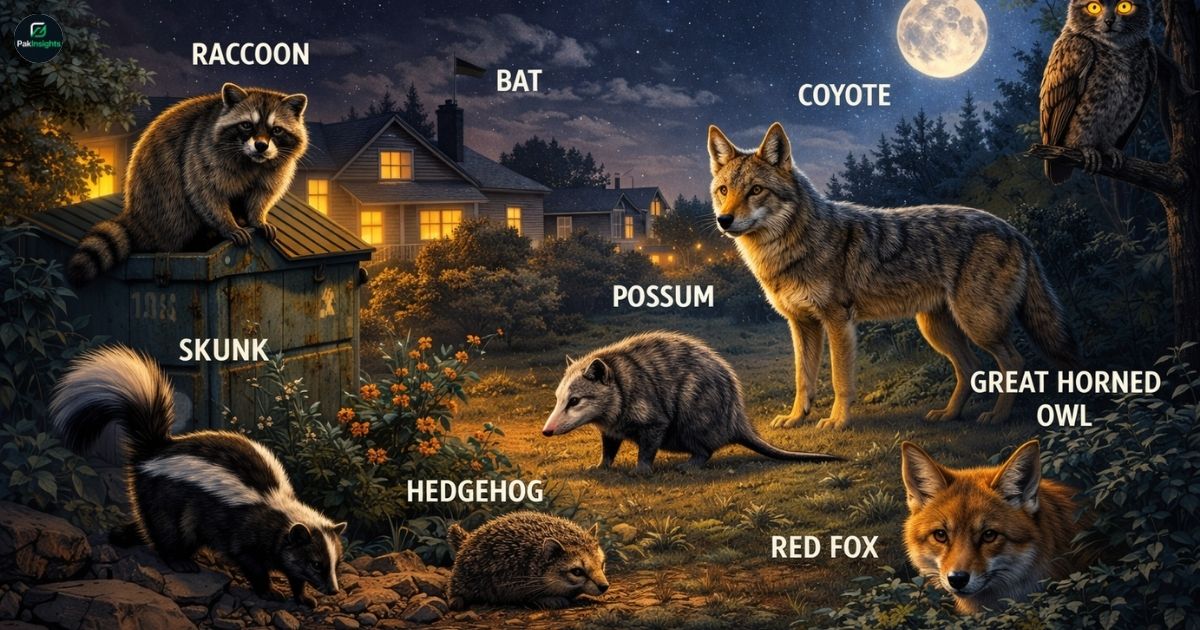
In most American neighborhoods, urban wildlife thrives quietly after sunset. Raccoons, skunks, opossums, and bats in urban areas are common. Birds like owls and nightingales also become more active, with barn owls’ nocturnal flights being especially noticeable in parks or near rivers. Gardens and small green spaces attract moths at night, including the elephant hawk moth, grey pug moth, and red underwing moth, offering both food and shelter. Even snuffling hedgehogs leave subtle signs like droppings or tracks, revealing their nightly journeys.
You can safely observe these animals by respecting their space. For example, bat walks organized by local wildlife groups allow you to learn about species and their roosting sites. Creating night gardens in your backyard can boost garden wildlife attraction, inviting nocturnal birds, moths, and bats. Observing feeding patterns and sounds, like the mating calls of foxes, adds depth to your experience. Here’s a simple table of some common US nocturnal visitors:
| Species | Night Activity | Habitat | Signs to Look For |
|---|---|---|---|
| Raccoon | Foraging | Parks, streets | Overturned trash, footprints |
| Hedgehog | Snuffling | Gardens, green spaces | Round droppings, tracks |
| Pipistrelle Bat | Hunting insects | Bridges, trees | Rapid flight silhouettes, echolocation |
| Barn Owl | Silent hunting | Woodlands, parks | Pale flight against dark trees |
| Elephant Hawk Moth | Feeding | Gardens, canals | Flowers visited at night |
The Challenges and Threats Urban Wildlife Faces
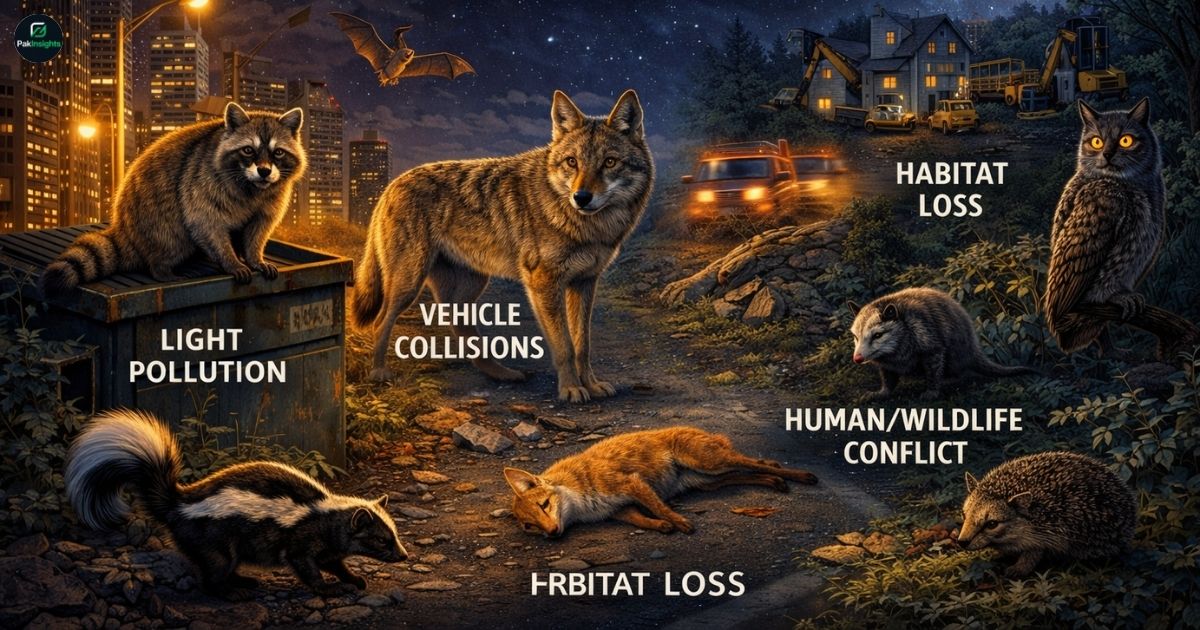
Despite their success, urban wildlife faces major threats. Habitat fragmentation and loss of urban green spaces reduce available food and shelter. Light pollution effects disrupt sleep and hunting patterns, while roads increase mortality for nocturnal mammals. Even small human actions, like leaving pets outside, can disturb natural nocturnal movement and feeding patterns. Cities must balance development with the needs of wildlife to preserve a healthy urban ecosystem.
Pollution, chemicals, and invasive species further challenge nocturnal creatures. Citizens can help by creating night gardens, installing bat boxes, or leaving safe corridors through parks and canals. Ethical wildlife photography and citizen science for nocturnal animals programs allow observers to study without harm. With thoughtful planning, cities can maintain a nocturnal ecosystem balance where wildlife in cities continues to thrive, proving that even in human-dominated landscapes, the night belongs to nature.
Frequently Asked Questions
Q1: What does “wildlife thrives at night” mean?
It means many nocturnal animals become active after sunset, feeding, hunting, and exploring in cities while humans sleep.
Q2: Which animals are common in US cities at night?
Common visitors include raccoons, hedgehogs, foxes, bats, barn owls, and moths at night in parks and gardens.
Q3: How do city lights affect nocturnal wildlife?
Light pollution effects can disrupt feeding patterns, sleep, and the natural nocturnal movement of urban wildlife.
Q4: How can I safely observe nocturnal animals?
Use infrared cameras for wildlife, attend bat walks, or create night gardens while keeping a safe distance.
Q5: What can I do to help urban wildlife thrive at night?
Provide safe urban green spaces, bat boxes, and garden wildlife attraction plants to support local nocturnal animals.