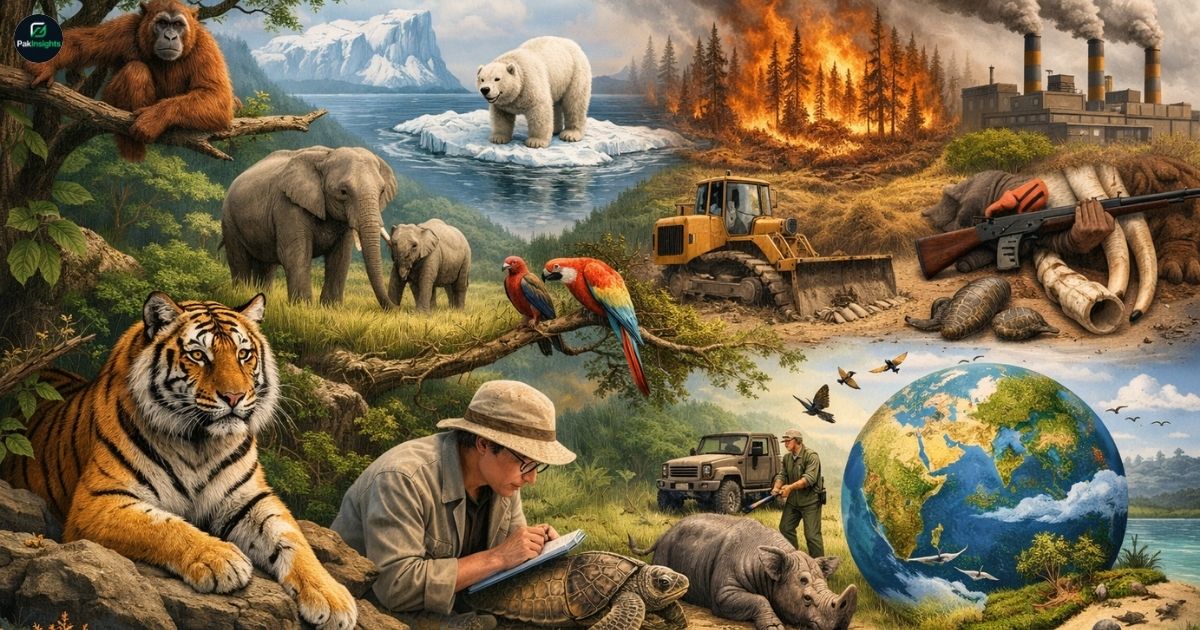
Endangered species are more than rare animals. They are warning signs. When a species begins to vanish, nature is telling us something is wrong. In the United States, concern about endangered species has grown because biodiversity loss threatens food systems, water quality, and even economic stability.
Around the world, experts track conservation status to measure risk. Some animals are listed as threatened species, others as critically endangered, and some are already extinct in the wild. If action fails, the chain of life weakens. That is why endangered species matter to you.
What Are Endangered Species? Meaning, Classification, and IUCN Red List Categories
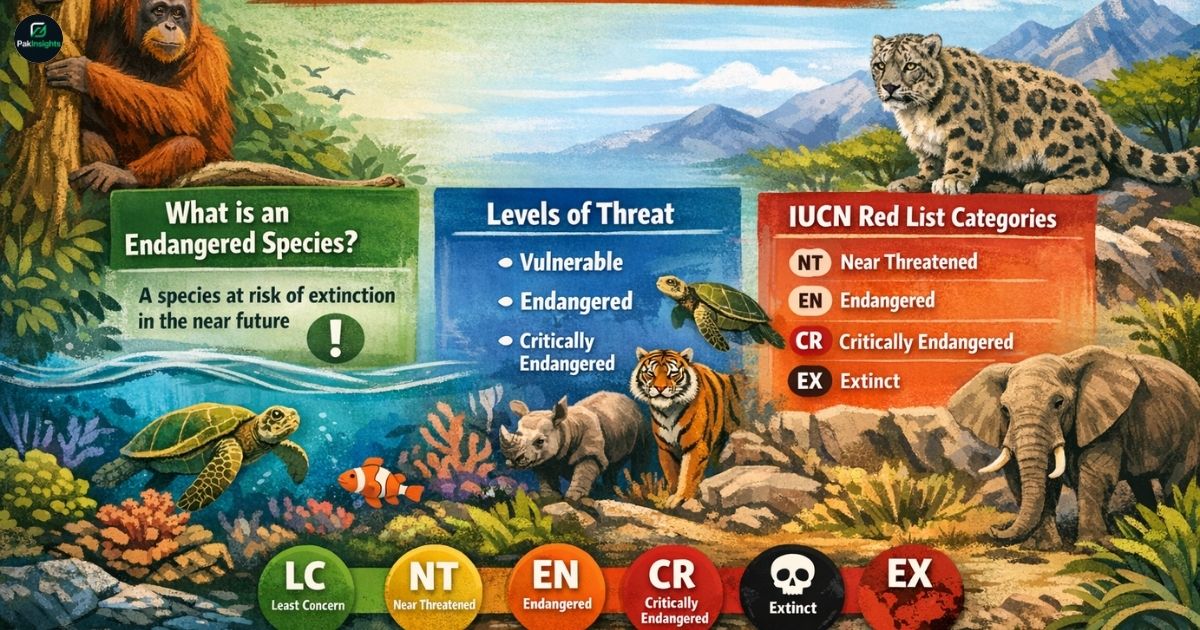
An endangered species faces a high risk of extinction soon. The International Union for Conservation of Nature manages the IUCN Red List, which ranks species by risk level. Categories include vulnerable species, critically endangered, near-threatened species, and data-deficient species. Many people ask about the difference between endangered and threatened species. Endangered means immediate danger. Threatened means likely to become endangered.
In the United States, agencies such as the US Fish and Wildlife Service and the National Marine Fisheries Service decide listings under the Endangered Species Act of 1973. Globally, groups like NatureServe add regional data. Below is a simplified classification table.
| Category | Meaning | Risk Level |
|---|---|---|
| Vulnerable | High risk | Serious concern |
| Endangered | Very high risk | Immediate action needed |
| Critically Endangered | Extreme risk | Near extinction |
| Extinct in the Wild | Survive only in captivity | No wild population |
Understanding how the IUCN classifies endangered species helps you see how science guides policy.
Major Causes of Species Endangerment: From Habitat Loss to Climate Change
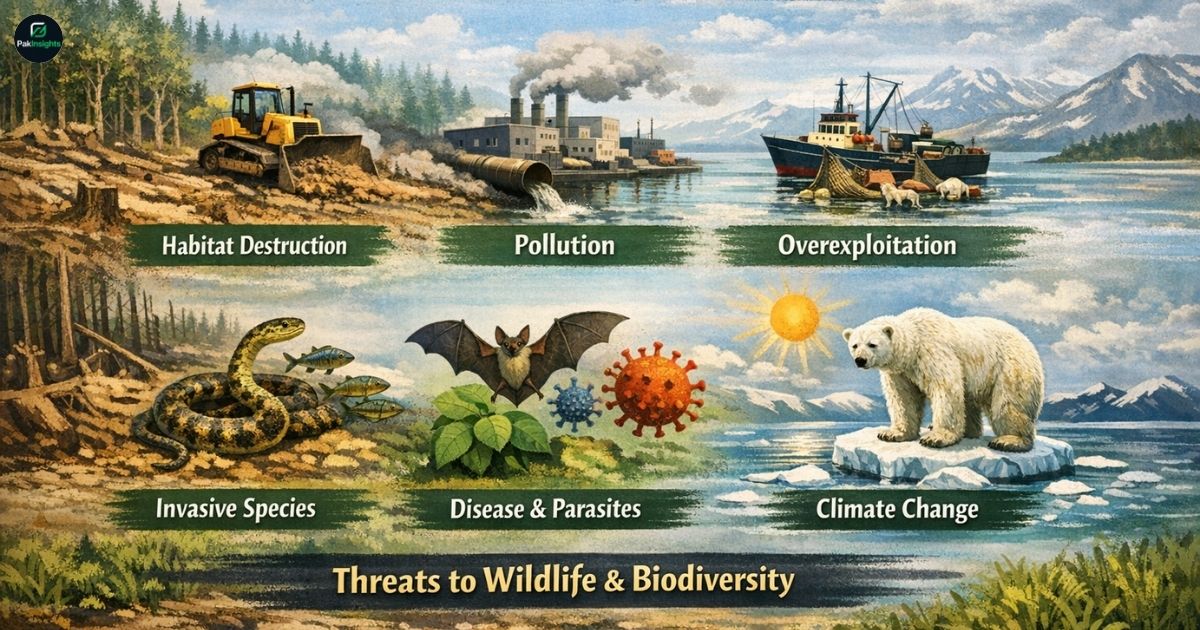
Habitat is everything. Habitat destruction, deforestation, and habitat fragmentation shrink living space. Growing cities and farms increase the impact of human population growth. Forest clearing in the Amazon Rainforest, Atlantic Forest, and Cerrado shows how land change drives population decline. When land breaks apart, genetic variation drops. Weak genes mean weak survival odds.
Climate adds pressure. The climate change impact and global warming effects melt ice, dry wetlands, and heat oceans. Many ask, how does climate change affect endangered animals? Rising seas harm the Hawaiian monk seal. Ocean acidification threatens coral systems and hurts marine conservation goals. Overfishing pushes the Southern bluefin tuna toward collapse. Meanwhile, invasive species cause ecosystem disruption. The effects of invasive species on biodiversity often surprise communities too late. Add illegal poaching, wildlife trafficking, and black market wildlife trade, and you see the deep impact of poaching on wildlife populations.
Laws and International Agreements Protecting Endangered Species
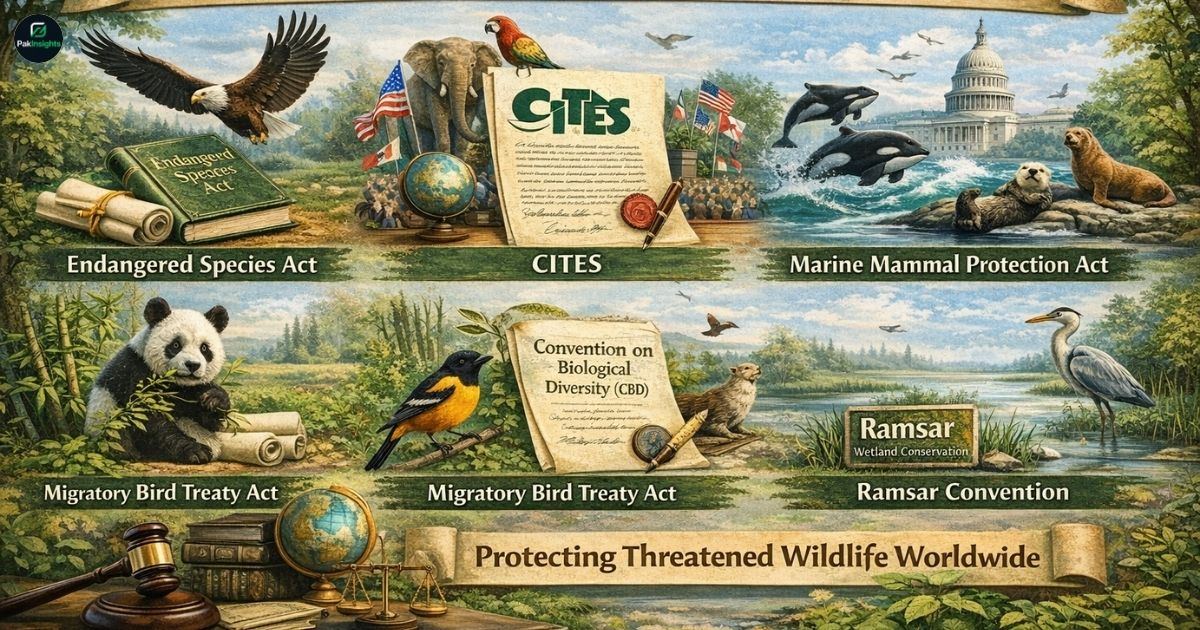
Strong laws create hope. The Endangered Species Act of 1973 remains one of the most powerful environmental protection laws in the world. It requires species recovery plans, protects protected areas, and enforces a strict recovery strategy. The National Park Service also safeguards habitats like Yellowstone National Park, where the Gray wolf made a comeback. Many people search for laws protecting endangered species in the United States, and this Act leads the list.
Globally, cooperation matters. The Convention on International Trade in Endangered Species limits global wildlife trade. The International Whaling Commission protects whales from hunting. Countries like Canada use the Species at Risk Act, while India enforces its Wildlife Protection Act. Large NGOs such as the World Wide Fund for Nature design Biodiversity Action Plans to slow biodiversity loss. Without international unity, conservation would fail.
Conservation Strategies That Help Prevent Extinction
Action changes outcomes. Wildlife conservation today blends science and community work. Captive breeding programs and the Species Survival Plan (SSP) run by the Association of Zoos and Aquariums rebuild numbers for animals like the California condor. Some species become conservation-dependent species, meaning they need long-term care. Careful breeding protects ecological balance.
Real success stories inspire hope. The Bald eagle recovered after the DDT ban. The American bison rebounded from near extinction. The Mexican wolf returned to protected lands. The Golden lion tamarin in Brazil survived through forest restoration. Below is a comparison table showing progress.
| Species | Past Status | Current Trend |
|---|---|---|
| Bald eagle | Critically low | Stable growth |
| Gray wolf | Regionally extinct | Reintroduced |
| Black rhinoceros | Severe decline | Gradual recovery |
| Hawksbill sea turtle | Critically endangered | Protected nesting |
Frequently Asked Questions About Endangered Species
What are endangered species?
Endangered species are plants or animals at very high risk of extinction in the near future.
What is the difference between endangered and threatened species?
Endangered species face immediate extinction risk, while threatened species may become endangered soon if conditions worsen.
What causes species to become endangered?
Main causes include habitat destruction, climate change impact, illegal poaching, pollution, and invasive species.
How does the IUCN Red List classify species?
The IUCN Red List ranks species by conservation status such as vulnerable, endangered, critically endangered, or extinct in the wild.
What laws protect endangered species in the United States?
The Endangered Species Act of 1973 protects endangered wildlife through habitat protection and recovery plans.