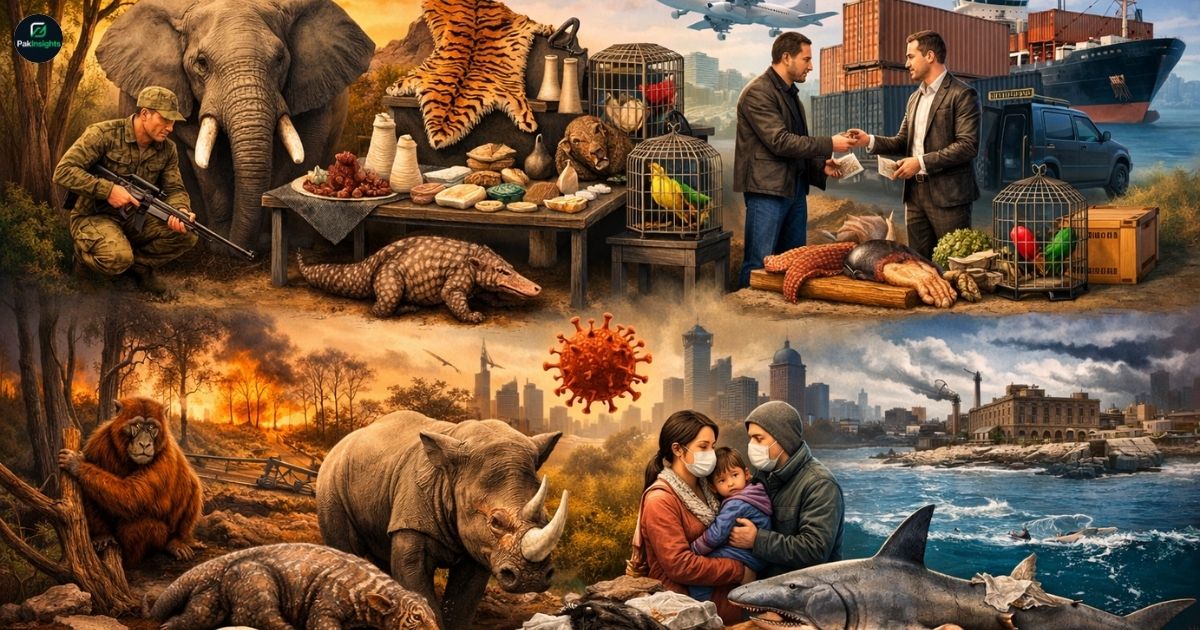
The illegal wildlife trade is a shadowy industry that threatens wild animals and entire ecosystems. From sharks in the oceans to rhinos on African plains, criminals exploit species for profit. Every year, millions of shark species fall victim to shark finning, while rhino horn is hacked from living rhinos, leaving them to die slowly. Even elephants face the grim reality of poachers harvesting elephant ivory for luxury goods and status symbols. The consequences reach far beyond the forests and oceans—they impact biodiversity, local economies, and even public health. With demand high for shark fin soup, pangolin scales, and exotic animals, the wildlife black market thrives in biodiversity-rich regions across Africa, Latin America, and Southeast Asia.
In the United States, the market for exotic pets, hardwood flooring, and wildlife-derived jewelry connects Americans directly to this global crisis. Smugglers ship bulk shipments of contraband wildlife products from Kinshasa, DRC, Brazil, or Cambodia to Seattle, Washington, USA, and other ports. Criminal gangs and organized crime run sophisticated trafficking networks, exploiting weak enforcement in remote tropical forests. Every piece of wildlife contraband you might see—be it Totoaba macdonaldi, box turtles, or pangolin scales—has a story of poaching, suffering, and environmental destruction behind it.
The Scale and Mechanics of Wildlife Trafficking
The scale of illegal wildlife trafficking is staggering. It is estimated that this wildlife crime generates between $7.8 billion and $10 billion annually. Poachers target high-value species such as spider monkeys, sea cucumbers, and Amur leopards, supplying exotic animals to black market consumers worldwide. In poaching hotspots like Ecuador, Malaysia, and Ghana, roads into forested areas accelerate deforestation and make large mammals easy prey. Techniques like shark finning, tranquilizing, and hacking rhino horn illustrate the brutality behind the illegal wildlife trade.
In practice, smuggling operations use underground trade networks and the internet to sell wildlife-derived products such as dried hummingbird carcasses (“chuparosas”), pangolin scales, and elephant ivory. Law enforcement agencies, including Homeland Security Investigations (HSI) and U.S. Fish and Wildlife Service (FWS), regularly conduct raids and undercover operations in cities like Seattle, Washington, USA. Despite their efforts, the global supply chain remains resilient due to consumer demand for status symbols, traditional medicine, and luxury goods.
Environmental, Economic, and Human Costs
The environmental impact of the illegal wildlife trade is catastrophic. Overfishing, habitat destruction, and poaching push endangered wildlife like Siberian tigers and rhinos toward extinction. Ecosystems lose keystone species, causing marine ecosystem collapse or forest loss, which leads to floods, landslides, and forest fires. The disappearance of large mammals also reduces nutrient cycling and destabilizes local biodiversity.
Economically, the illegal timber trade, wildlife-derived products, and bushmeat industry deprive rural communities of income. Black market value for products like shark fins, rhino horn, and ivory diverts money away from legitimate markets, hurting local livelihoods. Poachers often risk violence, while communities near poaching hotspots face additional threats. The wildlife economy suffers, and consumer demand in global markets like the U.S. continues to fuel illegal harvesting and environmental degradation.
| Species | Threat | Market Use |
|---|---|---|
| Sharks | Overfishing, shark finning | Shark fin soup |
| Rhinoceros | Poaching | Rhino horn, traditional medicine |
| Elephants | Poaching | Ivory, luxury goods |
| Pangolins | Poaching | Pangolin scales |
| Spider monkeys | Poaching | Exotic pets |
| Siberian tigers, Amur leopards | Habitat loss, poaching | Wildlife contraband |
Global Efforts, Laws, and Innovative Solutions
The fight against illegal wildlife trafficking relies on strong laws and global collaboration. Treaties like CITES (Convention on International Trade in Endangered Species) and U.S. legislation like the Lacey Act and Migratory Bird Treaty Act (MBTA) form the backbone of federal enforcement. Agencies such as HSI, FWS, CBP, and the Coast Guard conduct criminal investigations, arrests, and seizures to disrupt trafficking networks.
Innovation also plays a key role. Tools like DNA forensics, AI monitoring, and satellite surveillance track poachers and smuggling operations across deforestation areas and tropical forests. Community-led conservation programs empower locals to protect endangered species while reducing dependence on poaching. Campaigns like #EndWildlifeTrafficking raise global awareness, encouraging reducing demand and promoting public-private partnerships. These combined efforts show that protecting wildlife is possible when international cooperation and enforcement operations work together.
Frequently Asked Questions
Q1: What is illegal wildlife trade?
It is the unlawful buying, selling, or smuggling of wild animals and wildlife-derived products for profit.
Q2: Which species are most affected by poaching?
Sharks, rhinoceros, elephants, pangolins, spider monkeys, Siberian tigers, and Amur leopards are heavily targeted.
Q3: Why is shark finning so harmful?
Shark finning kills sharks unnecessarily, disrupts marine ecosystems, and drives some shark species toward extinction.
Q4: How does illegal wildlife trade affect humans?
It threatens local livelihoods, spreads diseases, and funds organized crime networks in transnational trafficking.
Q5: What laws protect wildlife in the U.S.?
Key laws include the Lacey Act, Migratory Bird Treaty Act (MBTA), and enforcement by HSI and FWS.