
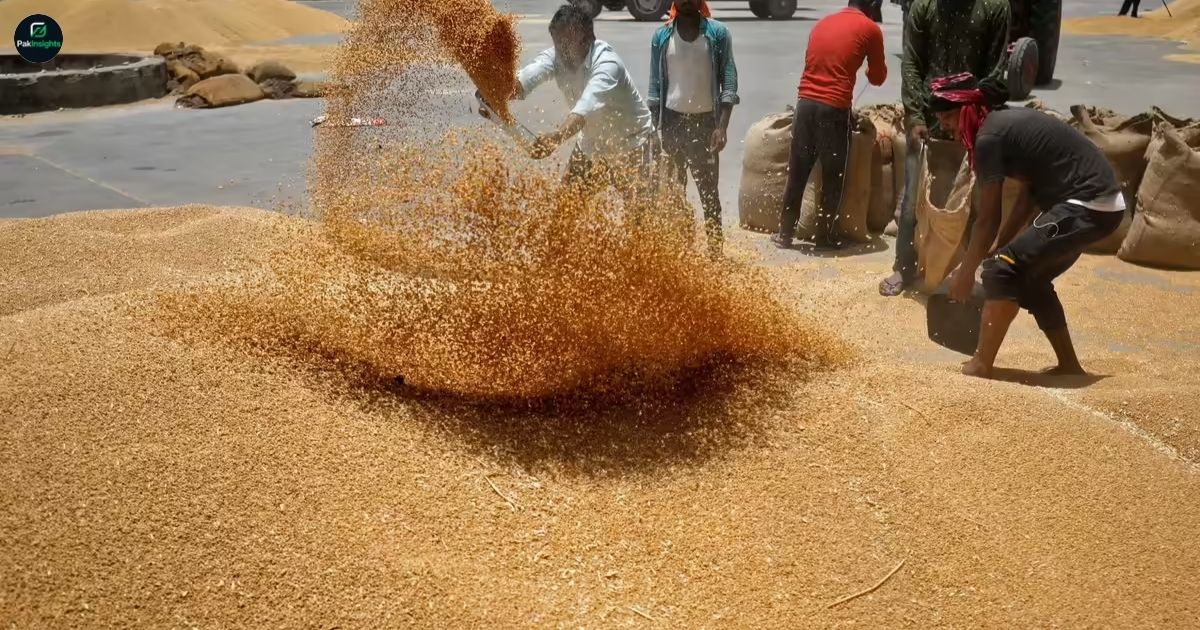
Punjab wheat procurement has come under pressure as the provincial government struggles to meet its 3 million ton target for the 2026-27 season. Authorities are now increasing reliance on private sector buyers to bridge the widening gap in wheat collection.
Officials have convened an urgent meeting to expand procurement quotas for private aggregators after early figures showed that existing arrangements are insufficient. Out of 35 approved aggregators, only 10 are actively participating in the process. Together, they have committed to procure around 1.8 million tons of wheat, leaving a significant shortfall against the official target.
The situation has raised concerns over supply chain stability, especially as harvesting is already more than 50 percent complete in parts of South Punjab and continues in central regions.
Private aggregators step in as gap widens
To address the shortfall, the Punjab government is encouraging private aggregators to increase their procurement beyond allocated quotas. According to officials, several large players have shown interest in scaling up their purchases.
Two aggregators have reportedly committed to buying 1 million tons each, while another has pledged around 0.5 million tons. These commitments could help reduce pressure on the procurement system if fully implemented before the June 15 deadline.
However, challenges remain. The limited number of active buyers has created an uneven procurement environment. Many approved aggregators are either inactive or operating below capacity, mainly due to financial constraints and uncertainty in market conditions.
Banks have also been reluctant to extend financing to new entrants, further restricting participation. This has slowed down the procurement process at a critical time when farmers are expecting timely purchases of their produce.
Government incentives and farmer concerns
In an effort to stabilize the situation, both provincial and federal authorities have introduced financial safeguards for private buyers. The government has agreed to absorb price fluctuations and guarantee the purchase of unsold wheat stocks, reducing market risk for aggregators.
Officials have also offered profit margins ranging from 10 percent to 16 percent, depending on the procurement month. In addition, discussions are underway to ease bank cash margin requirements to improve liquidity for buyers.
Despite these measures, concerns continue to grow among farmers. Many have criticized delays in procurement and inconsistent policy execution. They argue that the official support price of Rs. 3,500 per 40kg is increasingly difficult to justify under current production and input cost conditions.
Farmers also fear that delays in procurement arrangements could disrupt the supply chain and force them to rely on middlemen, potentially reducing their income. With harvesting progressing rapidly, timely intervention is seen as critical to avoid market distortions.
Agriculture experts note that wheat procurement remains one of the most sensitive policy areas in Punjab’s economy. Any disruption not only affects farmers but also has wider implications for food security and price stability across the country.
As the June 15 deadline approaches, the success of Punjab wheat procurement efforts will largely depend on whether private sector participation expands quickly enough to close the existing gap.