Home / Health / How Chronic Stress Affects Brain Health, Memory, and Sleep

How Chronic Stress Affects Brain Health, Memory, and Sleep

How Chronic Stress Affects Brain Health, Memory, and Sleep

Stress is something everyone feels in modern life, especially in the USA, where work pressure and fast routines never slow down. But here’s the truth: stress is not just emotional; it changes your brain structure and function in powerful ways. In this article, we explore stress and brain health in a simple, science-based way so you can understand what is really happening inside your head.

What Happens in Your Brain During Stress? (The Neuroscience Explained Simply)

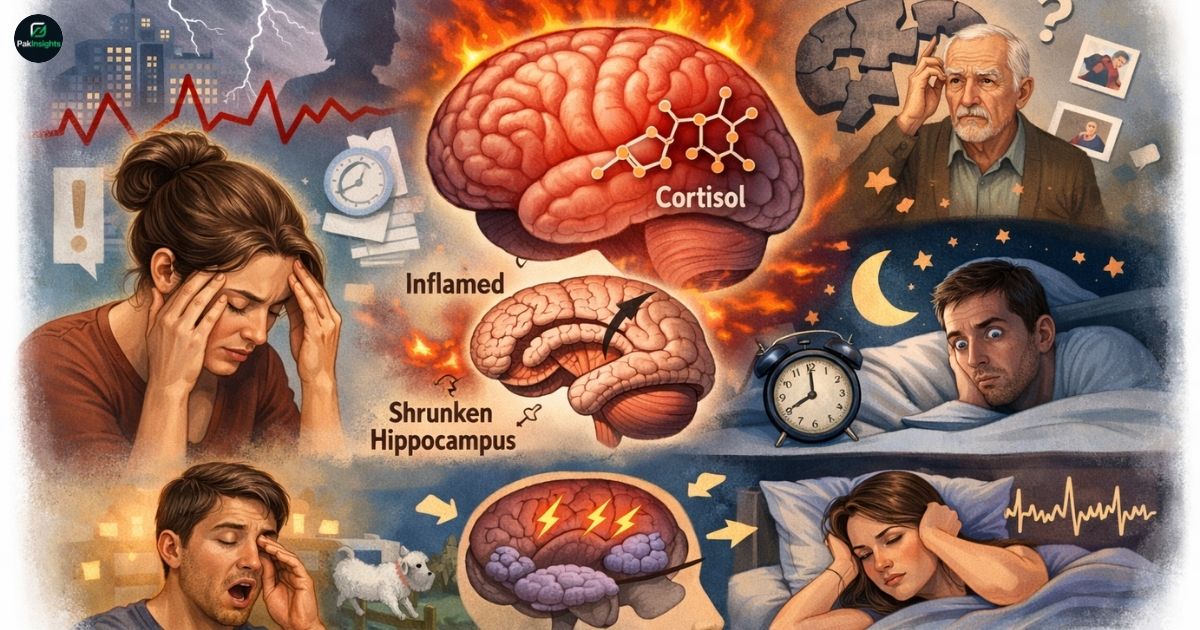
When stress begins, your brain quickly activates survival mode. This is called the acute stress response, and it starts in the amygdala, the brain’s alarm system. It sends signals that release stress hormones like cortisol and adrenaline. This is where the role of cortisol in stress response becomes very important because it prepares your body for action, even if the danger is just emotional pressure, not physical threat.

However, this reaction is not designed for long-term use. When stress continues daily, it turns into chronic stress effects that disrupt normal brain communication. The prefrontal cortex, which controls logic and decision-making, slows down. This leads to stress and decision-making problems and weaker emotional control. That is why how stress impacts focus and concentration becomes obvious in work and daily life.

The process also involves norepinephrine function, which increases alertness but can overwork the brain if constantly active. Over time, this creates brain function and stress imbalance, affecting clarity and memory.

In simple terms, your brain stays stuck in “danger mode” even when there is no real danger.

Key Brain Changes During Stress

Brain AreaEffect of Stress
AmygdalaOveractive fear response
Prefrontal CortexReduced decision power
HippocampusMemory weakening
HypothalamusHormone imbalance

Stress also increases brain alertness and stress, which feels like anxiety, restlessness, and mental overload. This constant state drains energy and leads to mental fatigue and stress, making even simple tasks feel difficult.

As stress continues, you may also experience stress and memory problems and early signs of cognitive slowdown. This is the foundation of what happens to your brain during stress in real life.H2: Long-Term Effects of Chronic Stress on Brain Health and Mental Performance

Long-term stress is far more dangerous than short-term stress. It directly impacts cognitive function decline, emotional stability, and even physical health. Studies show strong links between metabolic syndrome and stress, hypertension and stress, and weakened immunity due to immune system suppression.

When stress continues for months or years, the brain starts shrinking in areas responsible for memory. This leads to serious chronic stress effects, including poor concentration, forgetfulness, and emotional instability. That is why chronic stress is harmful and becomes a critical question for long-term health.

Sleep also suffers deeply. The strong connection between stress and sleep problems creates a cycle where poor sleep increases stress and stress reduces sleep quality. This leads to sleep deprivation effects, which damage brain repair systems.

The brain has a cleaning system called the glymphatic system, also known as the brain detox system. It removes toxins like amyloid and tau proteins. But stress blocks this process. That is why sleep is important for brain detox, which becomes essential for brain survival.

Long-Term Risks of Chronic Stress

Health AreaImpact
MemoryDecline and confusion
MoodAnxiety and depression
HeartHigh blood pressure
Brain AgingFaster deterioration

Research also shows a possible link between stress and Alzheimer’s disease. Long-term stress increases the risk of neurodegenerative diseases, making the brain age faster than normal.

Stress is also connected to headaches and migraines. Many people experience stress triggers headaches, and researchers confirm a strong stress and migraine connection. This raises the question: can stress cause migraines? The answer is yes, especially when stress suddenly drops or spikes.

More serious conditions like neurological disorders and stress also appear in long-term cases, including PTSD brain changes. People with trauma history often show higher stress vulnerability factors, especially when combined with childhood trauma effects.

This proves how deeply stress affects both brain and body over time.

How to Protect and Heal Your Brain from Stress Damage (Science-Backed Strategies)

The good news is that the brain can recover. Thanks to neuroplasticity, it can heal if you follow the right habits. The first step is understanding how to manage stress naturally and breaking the cycle of overload.

One powerful method is improving sleep and brain recovery. Good sleep activates the glymphatic system and clears toxins. This is why the importance of sleep in stress management is one of the strongest recovery tools available.

Exercise also plays a huge role. It reduces stress hormones and improves mood balance. Regular movement supports exercise and stress reduction, helping the brain reset naturally. Even 20 minutes of walking can improve the effectiveness of stress management techniques.

Science-Backed Brain Recovery Methods

MethodBrain Benefit
SleepDetox and repair
ExerciseHormone balance
MindfulnessEmotional control
RoutineStability

Mindfulness practices improve mindfulness for stress relief and help calm overactive brain signals. Simple breathing exercises reduce cortisol levels and support relaxation and brain health. This improves emotional control and focus.

A stable daily routine and stress control system also protects the brain. Eating at regular times, sleeping on schedule, and reducing screen overload help reset internal rhythms.

Nutrition, hydration, and social connection also support recovery. These habits improve cognitive function under stress and protect against long-term damage.

Most importantly, early action matters. Learning how to protect your brain from stress damage can prevent serious long-term conditions.

Frequently Asked Questions (FAQs)

What happens to your brain during stress?

During stress, the brain activates the amygdala and releases cortisol, putting your body in survival mode. This affects focus, memory, and emotional control.

How does chronic stress affect brain health?

Chronic stress can damage memory areas, reduce cognitive performance, and increase risks of anxiety, depression, and long-term brain disorders.

Can stress cause memory loss?

Yes, long-term stress disrupts the hippocampus, which is responsible for memory formation and recall, leading to forgetfulness and confusion.

Does stress affect sleep quality?

Stress interferes with sleep cycles and reduces deep sleep, which is essential for brain recovery and toxin removal.

Can stress lead to serious brain diseases?

Research links chronic stress with higher risks of Alzheimer’s disease and other neurodegenerative conditions over time.

Leave a Reply

Your email address will not be published. Required fields are marked *