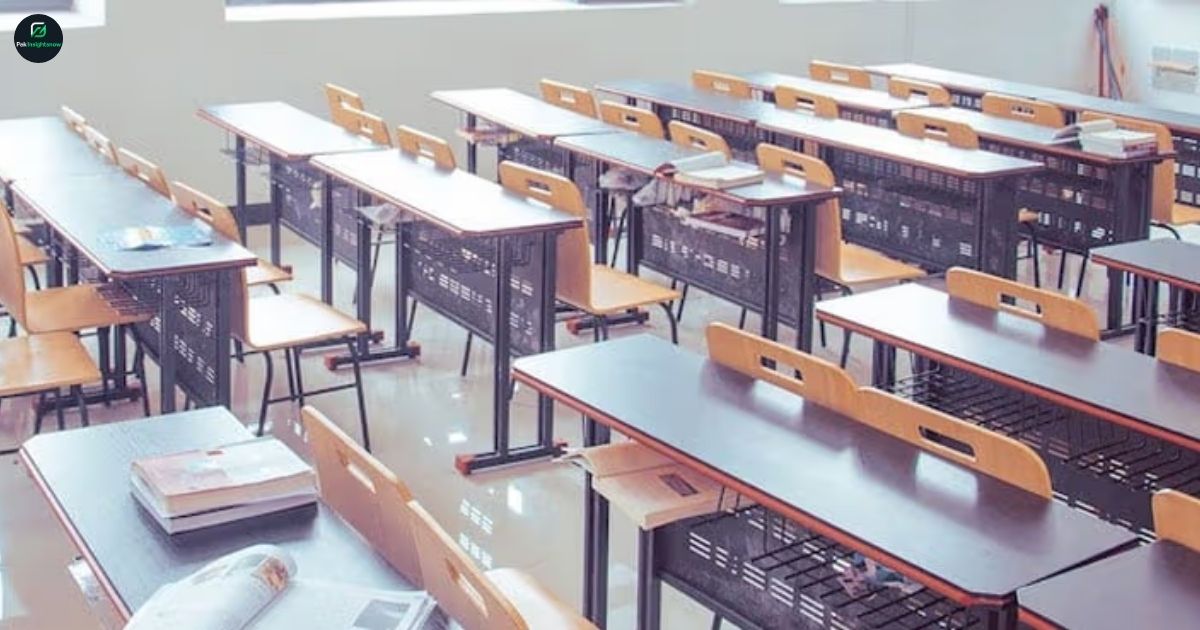
The pre-primary enrolment figures for Pakistan have shown a worrying decline, according to the Economic Survey 2025–26. The report highlights that early childhood education is shrinking even as other levels of schooling show mixed but mostly improving trends across Pakistan.
Officials say pre-primary enrolment dropped by 9.9% in 2023–24, falling from 11.77 million to 10.61 million children. This decline raises concerns about early learning access, especially in rural and low-income areas where foundational education plays a critical role in long-term academic success.
At the same time, the survey shows contrasting progress in higher levels of education, suggesting uneven development in Pakistan’s education system.
Key findings from the Economic Survey 2025–26
The Economic Survey presents a detailed snapshot of education indicators across the country. While some sectors are improving, early education remains under pressure.
Pre-primary enrolment recorded a sharp drop of nearly one-tenth within a single year. Officials estimate the number may further decline slightly to around 10.4 million in the next cycle.
In contrast, primary school enrolment rose by 3.1%, reaching over 25 million students. Middle school enrolment also increased by 14.9%, while secondary education saw a 13% rise. Higher secondary education recorded the strongest growth at 27%.
Higher education institutions also continued to expand. Pakistan currently has 239 universities with nearly 1.96 million students enrolled. Technical and vocational training institutions have also increased in number, reflecting policy efforts to promote skill-based education.
Despite these improvements, the report shows that the foundation level of education is weakening, creating a gap in early childhood learning opportunities.
Out-of-school children and literacy trends
One of the most significant findings in the report is the reduction in the proportion of out-of-school children. The figure dropped from 38% in 2023 to 28% in 2025.
However, experts warn that this improvement is uneven across regions. In Balochistan, nearly 45% of school-age children are still out of school, making it the most affected province in the country.
The literacy rate for people aged 10 years and above has improved slightly, rising to 63% in 2025. Punjab leads with a 68% literacy rate, while Balochistan remains the lowest at 49%.
Girls’ education continues to face structural challenges, particularly in underdeveloped regions. In some areas, enrolment at the matric level remains extremely low, reflecting persistent gender and access gaps.
Why pre-primary enrolment is declining
Education experts suggest several possible reasons behind the decline in pre-primary enrolment in Pakistan.
Economic pressure on households remains a major factor. Many families prioritize immediate income or skip early education due to costs associated with transportation, uniforms, and informal schooling fees.
Another issue is the limited availability of quality early childhood education centers, especially in rural districts. Public sector investment in pre-primary education remains relatively low compared to primary and secondary levels.
Awareness also plays a role. In many communities, early childhood education is still not seen as essential, even though research shows it strongly impacts cognitive development and long-term learning outcomes.
Experts warn that a continued decline in this sector could affect future learning performance across all levels of education.
Education outlook and policy concerns
While the overall education indicators show some improvement, the weakening trend in early education raises long-term concerns. Analysts say Pakistan’s education system may struggle to achieve balanced growth unless pre-primary enrolment improves.
The government is expected to focus more on foundational learning in upcoming reforms. Strengthening early childhood education infrastructure and increasing awareness campaigns are likely to be key policy priorities.
For now, the mixed trends highlight a system moving forward unevenly—expanding in higher education while struggling at its base.