
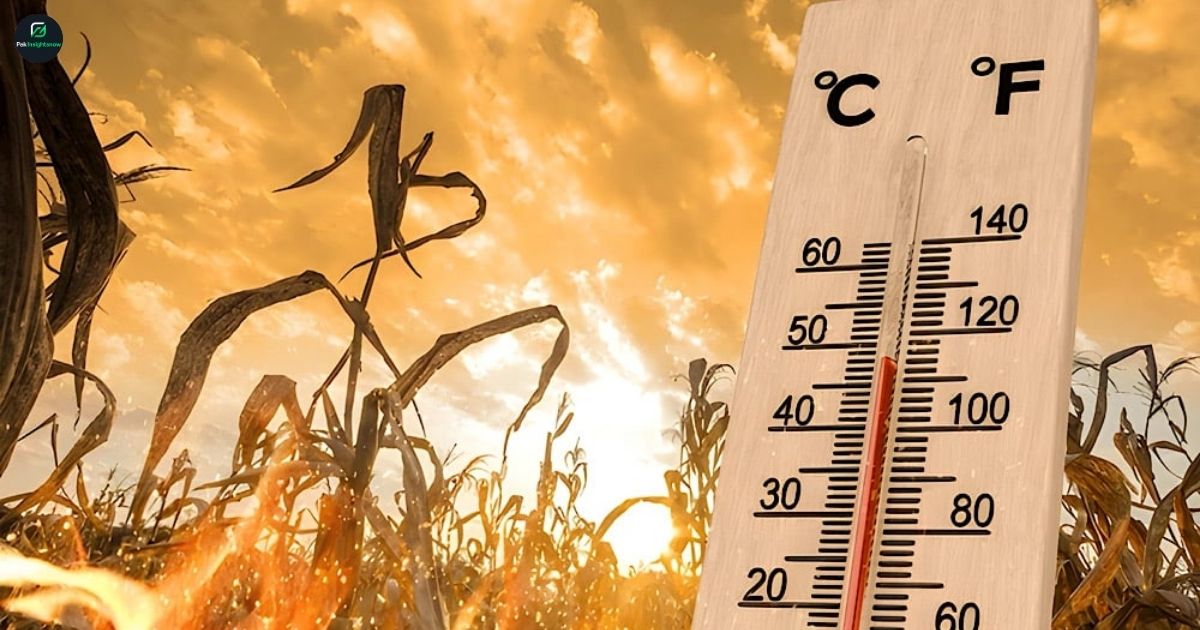
Pakistan recorded its second warmest year in 65 years in 2025, highlighting a growing Pakistan heat record that reflects rising climate pressures across the country. The findings were shared in the Pakistan Economic Survey 2025–26, which reviewed key environmental and economic trends of the year.
The report shows that Pakistan’s national annual mean temperature reached 23.9°C in 2025. This makes it one of the hottest years since records began, ranking just below the highest-ever recorded year in the past six and a half decades. Experts say the trend signals a steady rise in long-term warming across the region.
Rising temperatures across Pakistan in 2025
The Economic Survey highlights that 2025 stood out for consistently higher-than-normal temperatures across multiple regions of Pakistan. The heat was not limited to a single season. Instead, it affected large parts of the year.
Urban centers experienced stronger heat intensity, especially during summer months. Cities like Karachi and Lahore faced prolonged hot spells, increasing energy demand, and pressure on public services.
The report notes that Pakistan’s climate pattern continues to shift. Warmer winters and longer summers are becoming more common. This pattern contributes directly to the growing Pakistan heat record, which has raised concerns among climate observers and policymakers.
Experts believe that these temperature trends are linked to global climate change, combined with local environmental factors such as deforestation, urban expansion, and water stress.
Rainfall remained below average
Along with rising temperatures, Pakistan also experienced below-normal rainfall in 2025. The Economic Survey reports that rainfall remained around 3 percent lower than the long-term national average.
This combination of higher heat and reduced rainfall created challenging conditions for agriculture and water management. Farmers in several regions reported stress on major crops due to uneven weather patterns and dry spells during critical growing stages.
Lower rainfall also contributed to water shortages in some areas. Reservoir levels and groundwater systems faced additional pressure, especially in regions already vulnerable to water scarcity.
Climate experts warn that such conditions can affect food production if they continue over time. Reduced rainfall combined with rising temperatures increases evaporation rates, which further limits water availability for farming and daily use.
A growing climate concern for Pakistan
The 2025 data adds to a wider trend of rising temperatures in Pakistan over recent decades. The country has already experienced multiple extreme weather events in recent years, including heatwaves, floods, and irregular rainfall patterns.
Environmental analysts say Pakistan is among the countries most vulnerable to climate change. The latest figures strengthen concerns that heat-related risks may increase in the coming years.
Health experts also point out that extreme heat can affect public health, especially among outdoor workers, elderly citizens, and children. Higher temperatures increase the risk of dehydration, heatstroke, and other heat-related illnesses.
At the same time, energy consumption continues to rise during hotter months as households and businesses rely more on cooling systems. This adds pressure to the national power grid.
What does the data mean going forward?
The Economic Survey’s findings suggest that Pakistan will need stronger climate adaptation strategies. These may include improved water management, climate-resilient agriculture, and better urban planning to reduce heat impacts.
Experts emphasize the importance of long-term planning rather than short-term responses. As the Pakistan heat record continues to rise, climate resilience is becoming a national priority.
The 2025 figures serve as a reminder that climate trends are shifting steadily. Without effective measures, rising temperatures and inconsistent rainfall may become more frequent in the years ahead.