
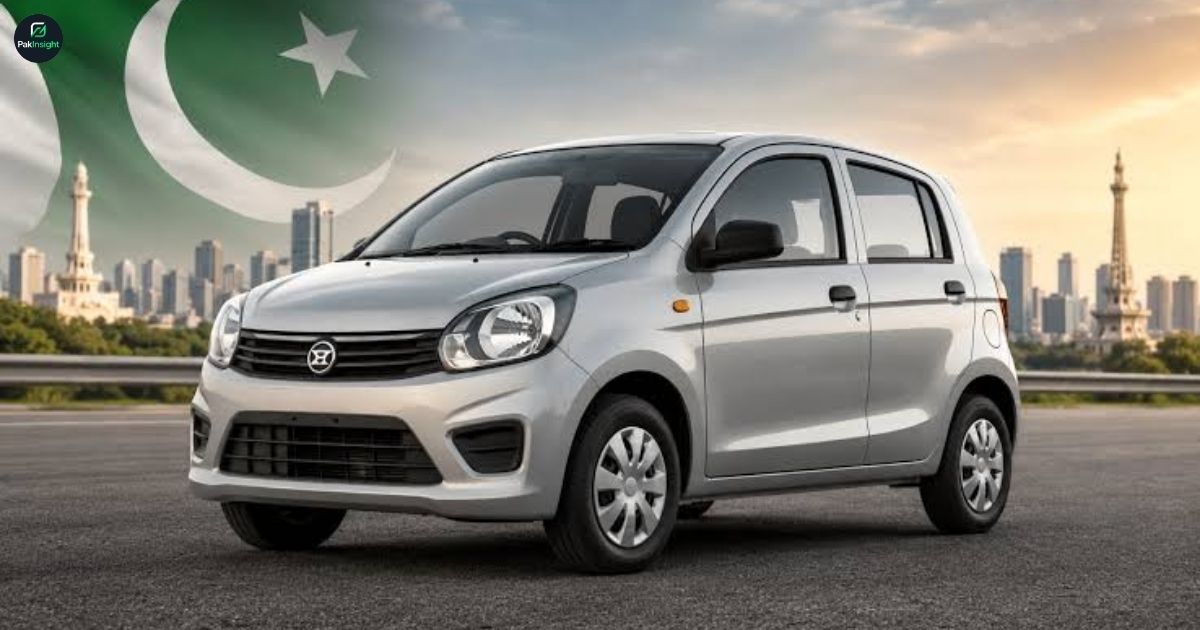
Pakistan is considering the introduction of a new Pakistan small cars category aimed at making four-wheel transport more affordable for low and middle-income households. The proposal is part of a broader reform under the draft New Auto Industry Development & Export Policy (AIDEP) 2026–31.
Officials say the plan focuses on creating a new entry-level vehicle segment that sits between motorcycles, three-wheelers, and existing small cars. The goal is to improve access to safer and cheaper urban transport options.
Sources familiar with the proposal say the government is reviewing the introduction of L6 and L7 vehicle categories. These small cars would be compact, lightweight, and designed mainly for city use.
Bridging the affordability gap in the auto market
Pakistan currently lacks a true low-cost four-wheel vehicle option. Most entry-level cars, including 660cc models, are considered expensive for a large portion of the population.
As a result, many families rely on motorcycles despite safety concerns. The proposed Pakistan small cars category aims to fill this gap by offering a more affordable and safer alternative.
The new category is expected to target motorcycle users looking to upgrade, first-time car buyers, and lower-middle-income households who cannot afford standard cars.
Officials believe this shift could significantly expand vehicle ownership in the country while improving road safety.
What L6 and L7 vehicles could look like
Under the proposal, L6 and L7 vehicles would be designed as small urban cars. They are expected to be fuel-efficient, compact, and easy to maintain.
These vehicles may include basic features suitable for daily commuting in cities. Industry experts suggest they could resemble micro-cars already seen in some international markets.
The focus will likely remain on affordability, low running costs, and local manufacturing.
If implemented, the category could encourage local auto companies to invest in new production lines tailored for small vehicles. It may also attract international manufacturers looking to enter Pakistan’s budget vehicle segment.
Boost for local manufacturing and economy
Policy experts say the introduction of a Pakistan small cars category could support local industrial growth. It may create opportunities for small-scale auto assembly units and parts suppliers. The government is also expected to encourage localization of components. This step could reduce dependency on imports and help stabilize prices over time.
In addition, the new segment could generate employment in manufacturing, assembly, and distribution networks.
Officials believe that expanding the auto market with affordable options will also improve financial inclusion.
More citizens could gain access to documented transport ownership.
Urban mobility and safety improvements
Pakistan’s growing cities face increasing traffic pressure. Motorcycles remain the most common form of transport due to cost limitations.
However, safety concerns continue to rise, especially in high-density urban areas.
The proposed small car category could offer a safer alternative for daily commuting. Experts say even low-speed compact cars provide better protection compared to two-wheelers.
If adopted, the policy may also help reduce congestion risks by promoting structured vehicle usage in urban planning.
Still under review, no final approval yet
Officials have clarified that the proposal is still under review within the draft auto policy framework. No final decision has been made yet.
Discussions are ongoing between policymakers, automotive stakeholders, and industry representatives. Key factors include pricing structure, safety standards, and manufacturing feasibility.
Once finalized, the policy could mark a major shift in Pakistan’s auto industry by officially creating a new affordable vehicle segment.
For now, the idea remains in the planning stage, but it has already sparked interest in the automotive sector and among potential buyers.