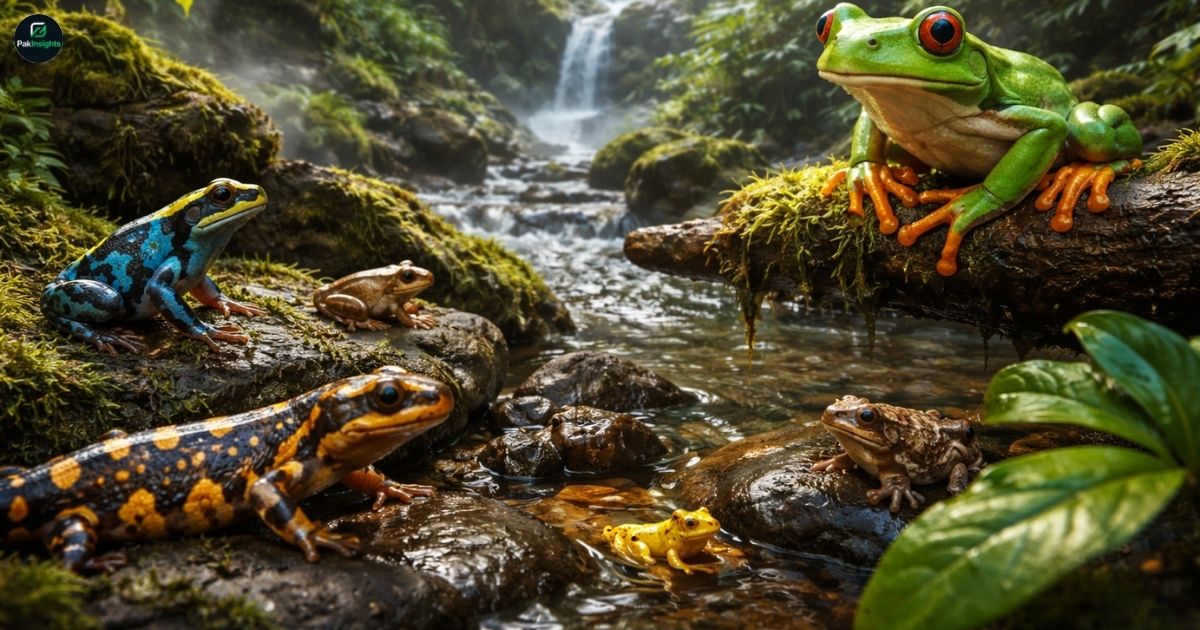
Amphibians are disappearing worldwide faster than many people realize. Frogs, salamanders, and caecilians face an amphibian extinction crisis that threatens not only their survival but also the health of entire ecosystems. Amphibians play a vital role in controlling insects, recycling nutrients, and supporting food chains. When their numbers drop, ecosystem imbalance occurs, and humans feel the effects too. According to the Global Amphibian Assessment (GAA), over 40% of amphibian species are at risk, making them the most threatened vertebrates on Earth. Amphibian population decline is a warning sign for biodiversity loss that affects forests, wetlands, and rivers globally.
Across the USA and worldwide, scientists observe species extinction trends showing alarming reductions in amphibian numbers. Research shows that even protected areas are not safe. Amphibian disease outbreaks, climate shifts, and human activities create a perfect storm. By studying endangered amphibians worldwide, including Critically Endangered species, experts hope to understand why amphibians are disappearing and how to act before it is too late. The stakes are high, and urgent action is needed for wildlife habitat protection and sustainable conservation policies.
The Global Decline of Amphibians: Understanding the Growing Biodiversity Crisis
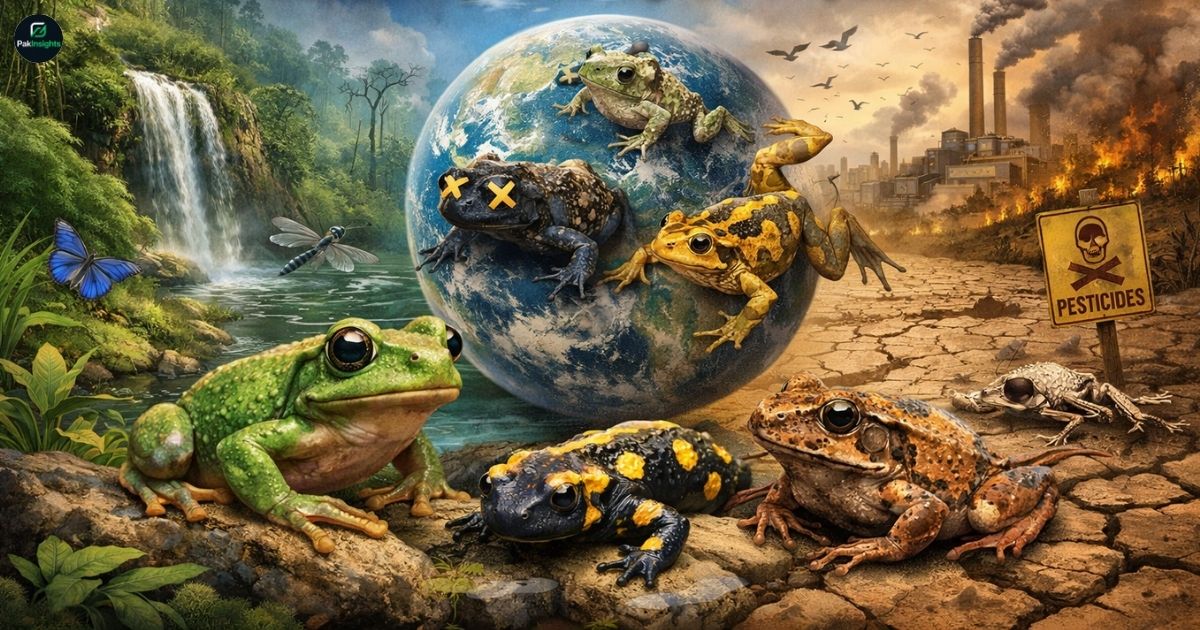
The global amphibian crisis is one of the clearest indicators of biodiversity loss. Amphibians are disappearing worldwide due to combined pressures like habitat loss and degradation, pollution, and climate change. Many species are highly sensitive to environmental changes because their skin absorbs chemicals and water directly from their surroundings. Scientists tracking amphibian population monitoring have found that populations of frogs, salamanders, and caecilians in amphibian biodiversity hotspots are shrinking rapidly. For example, Neotropical amphibians in Central and South America show significant declines linked to deforestation and agricultural expansion.
The table below summarizes some key findings from recent amphibian research studies:
| Factor | Impact on Amphibians | Example |
|---|---|---|
| Habitat destruction | Loss of breeding and feeding sites | Wetland drainage in Florida threatens native frogs |
| Climate change impacts on amphibians | Altered breeding cycles, heat stress | Salamanders in Appalachian forests show reduced survival |
| Amphibian chytrid fungus (Batrachochytrium dendrobatidis) | Skin infections leading to mass die-offs | California mountain yellow-legged frogs affected |
| Pollution | Developmental deformities and mortality | Pesticides in Midwestern rivers reduce tadpole survival |
| Amphibian habitat fragmentation | Isolated populations | Fragmented forests in Oregon limit salamander dispersal |
These factors explain why scientists consider amphibians as sentinels of environmental health. Understanding the main causes of amphibian extinction helps inform global conservation strategies and guides wildlife conservation planning to prevent further losses.
Major Causes Behind the Rapid Disappearance of Amphibians
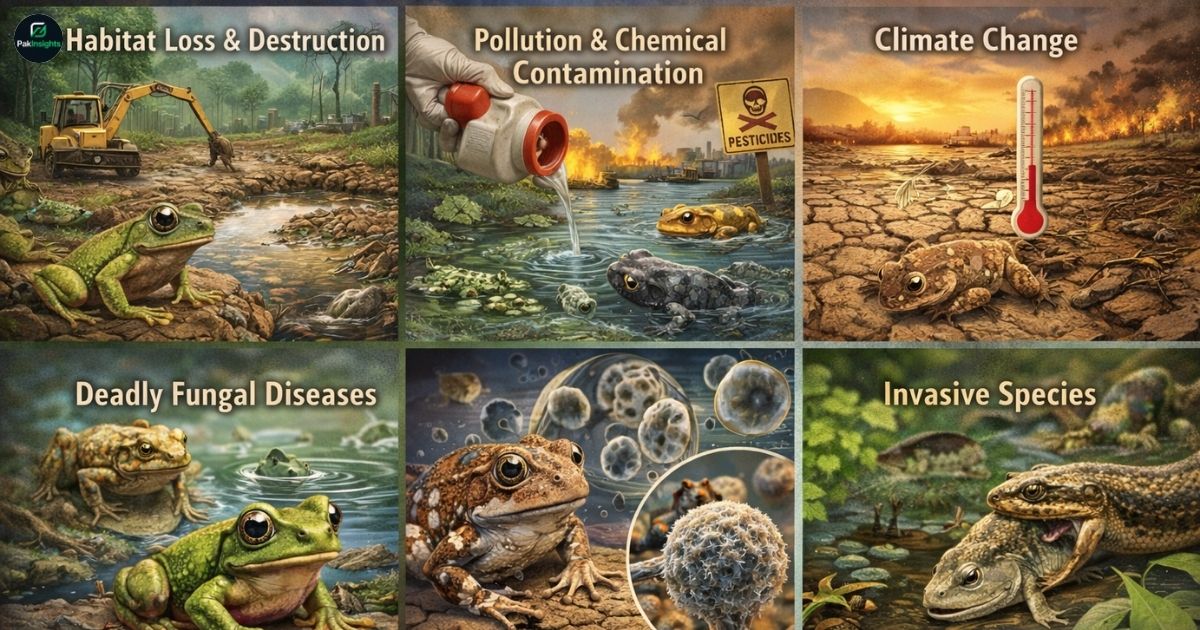
The causes of why amphibians are disappearing worldwide are complex. Habitat loss and degradation remain the top threats, with forests cleared for agriculture, urbanization, and infrastructure. When wetlands are drained or streams are polluted, amphibian habitat destruction occurs, leaving frogs and salamanders with nowhere to breed. In addition, amphibian climate vulnerability makes them sensitive to even small temperature and rainfall changes. Species that rely on cool, moist habitats struggle as heatwaves, droughts, and changing rainfall patterns intensify.
Another key factor is disease. Amphibian chytrid fungus, including Batrachochytrium salamandrivorans and Batrachochytrium dendrobatidis, causes chytridiomycosis infections that wipe out entire populations. Combined with pollution, habitat loss, and invasive species, the disease creates a deadly combination. Many endangered salamanders and frogs now face amphibian extinction risk. Agricultural expansion threats also worsen the problem, introducing pesticides, fertilizers, and fragmented habitats that limit survival. This shows that multiple human-induced factors, together with disease, drive the ongoing amphibian population decline.
Conservation Efforts and How We Can Protect Amphibians From Extinction
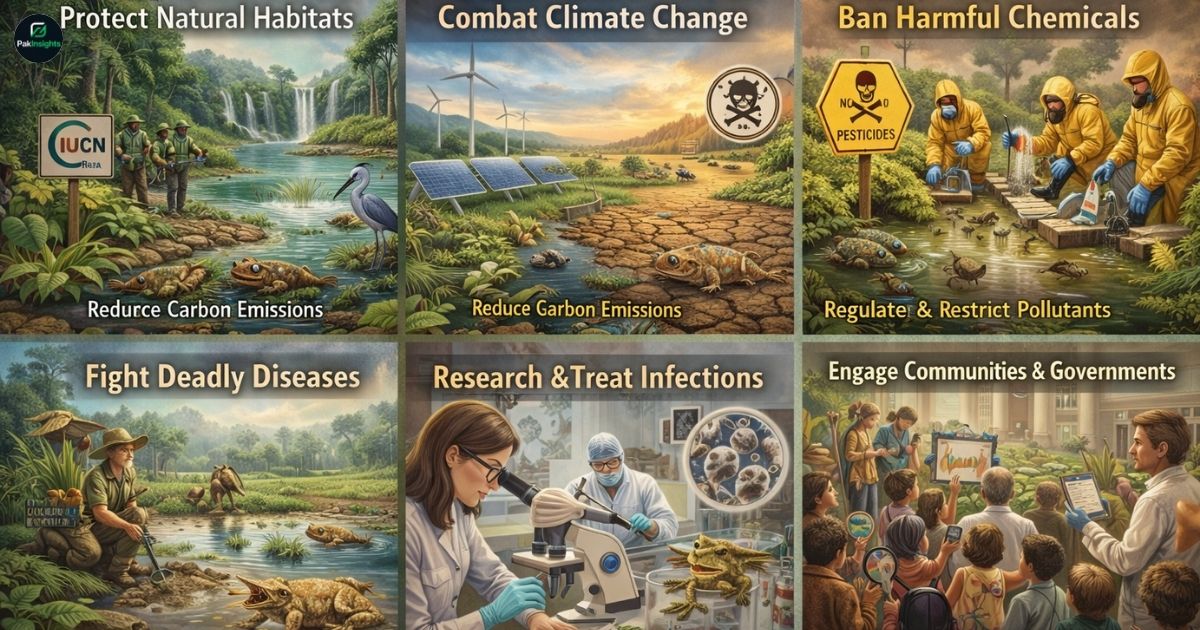
Despite the challenges, amphibian conservation efforts are making a difference. Scientists implement wildlife disease management to slow chytrid fungus outbreaks and breed endangered species in captivity. Programs focusing on amphibian breeding strategies use both larval developers and direct developers to boost survival rates. Protecting amphibian habitat fragmentation hotspots ensures that frogs and salamanders can move safely between habitats, which is crucial for species population monitoring and long-term survival.
Global initiatives like the amphibian conservation action plan, ecosystem conservation policies, and wildlife habitat protection aim to preserve biodiversity hotspots and reduce human impacts. In the USA, wetland restoration projects, pollution control, and climate adaptation strategies are improving outcomes for most threatened amphibian species in the world. By supporting these programs, participating in species population monitoring, and spreading awareness, everyone can contribute to saving amphibians from extinction. The future of amphibian biodiversity depends on urgent action, combining science, policy, and community engagement to reverse alarming trends.
Frequently Asked Questions
Q1: Why are amphibians disappearing worldwide?
Amphibians are disappearing worldwide due to habitat loss and degradation, climate change, pollution, and deadly diseases like amphibian chytrid fungus.
Q2: What is the most significant threat to amphibians?
The top threat is habitat destruction, which reduces breeding sites and fragments populations, combined with amphibian disease outbreaks.
Q3: How does climate change affect amphibians?
Amphibian climate vulnerability causes disrupted breeding, heat stress, and reduced survival, especially in sensitive amphibian biodiversity hotspots.
Q4: Which diseases are killing amphibians globally?
The fungi Batrachochytrium dendrobatidis and Batrachochytrium salamandrivorans cause chytridiomycosis, wiping out frogs and salamanders worldwide.
Q5: Are there endangered amphibians in the USA?
Yes, species like the California mountain yellow-legged frog and several endangered salamanders and frogs face severe amphibian extinction risk.