The natural world is full of secret messages that most humans never notice. Every chirp, flash of color, or subtle gesture is part of a hidden language of animals. From the loud roaring of lions across the savanna to the synchronized dancing of flamingos at the San Antonio Zoo, these signals help animals survive, socialize, and thrive. Scientists have discovered that understanding this hidden language of animals gives us a window into their intelligence, emotions, and strategies. Watching wildlife in their natural habitats reveals how animal signals, vocalizations in wildlife, body language of animals, and visual signals in nature create complex conversations invisible to the casual observer.
This hidden language is not just fascinating. It is essential. Animals rely on chemical communication, gestures and postures, and sound to convey mating signals, predator warnings, and instructions for hunting coordination. Observing mockingbirds mimicking sounds or frogs creating frog choruses at night demonstrates how animal behavior studies uncover clever survival strategies. Even in zoos, watching animals in zoos shows us how communication influences group dynamics, emotional expressions, and social bonding.
The Different Ways Animals Convey Messages
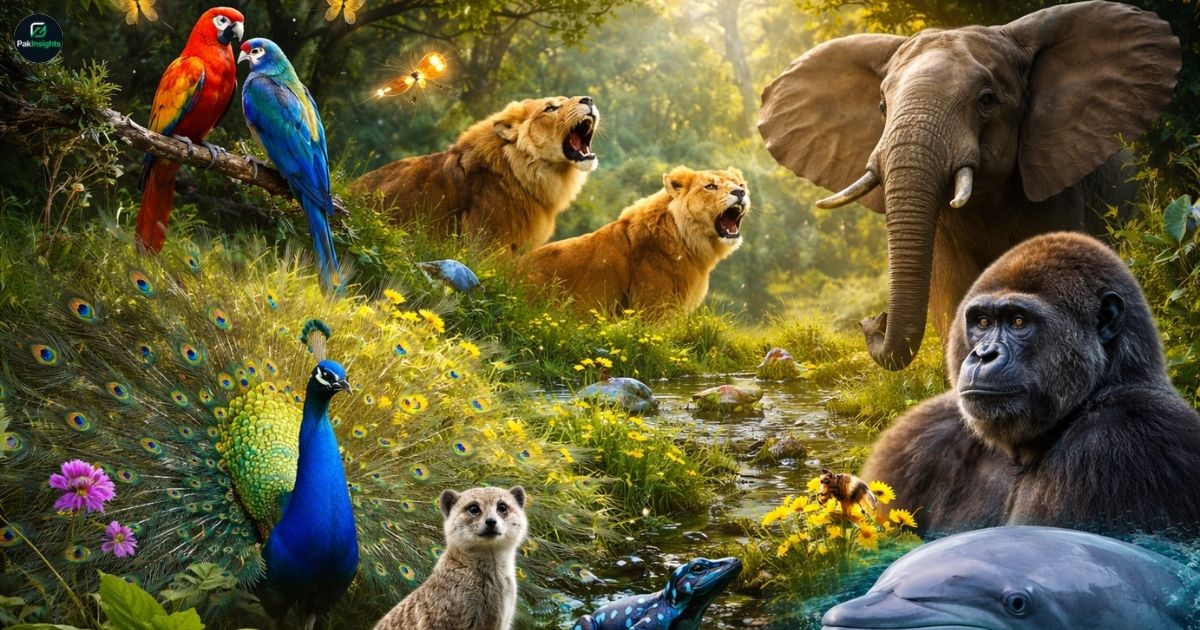
Animals use many methods to share information. Some roaring of lions travels miles across the savanna, warning rivals or calling family members. Bird songs are another example. Mockingbirds can mimic other birds or even human-made sounds. These vocalizations in wildlife serve multiple purposes: territory marking, attracting a mate, or confusing predators. In underwater environments, dolphin echolocation helps navigate and communicate, while tropical fish flash colors to signal danger or readiness to mate. Even tiny creatures like honeybees use the waggle dance, a form of gesturing, to give exact directions to food sources.
Color and visual signals in nature are just as important. Peacocks perform peacock displays, spreading dazzling feathers to impress potential mates. Chameleons rely on chameleon color changes to express mood or signal intentions. Poison dart frog colors warn predators to stay away. Cuttlefish light patterns in underwater environments create mesmerizing communication that blends color, movement, and posturing. These signals show that the hidden language of animals is clever, adaptable, and multi-layered.
Why Communication is Vital for Survival
Communication is not just decoration—it saves lives. Elephant trunk gestures and ears flaring can warn a herd of danger. Meerkat lookouts stand tall while others feed, signaling threats with synchronized sounds and postures. Even wolves use wolf pack coordination, howling, and tail positions to coordinate hunts and maintain social structure. Without these signals, survival strategies would fail, and social species would struggle to thrive.
Animals also use communication for mating signals and territory marking. Birds of paradise perform elaborate dancing and calling routines to impress potential partners. Frogs rely on frog choruses, with louder frogs often chosen by females. These vocalizations in wildlife and gestures and postures show that communication is directly linked to reproductive success. Understanding these systems reveals how animals are intelligent, creative, and highly adaptable to their environments.
Unique and Fascinating Communication Strategies
Some animals use extraordinary methods that seem magical. Cuttlefish light patterns combine color and posturing to confuse predators. Dolphin echolocation lets them navigate murky waters while communicating precise messages to their pod. Honeybees use waggle dance movements, showing a remarkable understanding of distance and direction, a level of intelligence that humans can study. Even peacocks use peacock displays to combine color, motion, and sound, turning mating into an art form.
Birds, frogs, and mammals often mix methods. Flamingos perform synchronized displays to strengthen social bonding, while wolves howl, gesturing with body positions to coordinate hunts. This shows that animals rarely rely on just one method. They combine animal signals, vocalizations in wildlife, and visual signals in nature to create messages that are bold, fascinating, and sometimes hidden to human eyes.
Human Understanding of Animal Communication
Humans are only beginning to decode this hidden language of animals. Researchers conduct animal behavior studies, decoding animal signals through careful observation, sound analysis, and video tracking. Studying gorillas, elephants, and meerkats has revealed complex emotional expressions, while underwater research on dolphins and tropical fish shows clever survival strategies. Zoos like the San Antonio Zoo allow visitors to witness these behaviors firsthand, from parrots calling to flamingos dancing.
Understanding this communication is essential for conservation. By observing interactions in natural habitats, scientists learn how to protect endangered species and preserve ecosystems. Every chirp, flash of color, or gesturing action contributes to the broader survival strategies of the species. Learning this hidden language of animals enriches our appreciation for wildlife and reminds us that communication in nature is as complex and beautiful as human speech.
Table: Examples of Animal Communication Methods
| Animal | Communication Method | Purpose |
|---|---|---|
| Lions | Roaring | Territory, family coordination |
| Mockingbirds | Mimicking | Territory, confusing predators |
| Frogs | Frog choruses | Attracting mates |
| Peacocks | Peacock displays | Attracting mates |
| Chameleons | Changing color | Mood signaling, mating |
| Dolphins | Echolocation | Navigation, communication |
| Honeybees | Waggle dance | Warning: social bonding |
| Elephants | Trunk gestures | Warning, social bonding |
| Cuttlefish | Light patterns | Predator confusion, signaling |
| Wolves | Howling & posture | Hunt coordination, pack cohesion |
Frequently Asked Questions
Q1: What is the hidden language of animals?
It is the combination of animal signals, body language of animals, vocalizations in wildlife, and visual signals in nature that animals use to communicate, survive, and interact.
Q2: How do animals communicate without sound?
Animals use flashing colors, gestures, and postures, and chemical communication to send messages, warn predators, or attract mates.
Q3: Why is animal communication important for survival?
Communication helps with hunting coordination, social bonding, predator warnings, and mating signals, which are essential for a species to thrive.
Q4: Can humans understand animal communication?
Through watching animals in zoos, wildlife observation, and animal behavior studies, humans can decode many signals and gestures, gaining insights into emotions and social structures.
Q5: Which animals have the most unique communication strategies?
Dolphins, cuttlefish, peacocks, honeybees, and birds of paradise use clever combinations of colors, sounds, and gestures that are fascinating and often complex.