
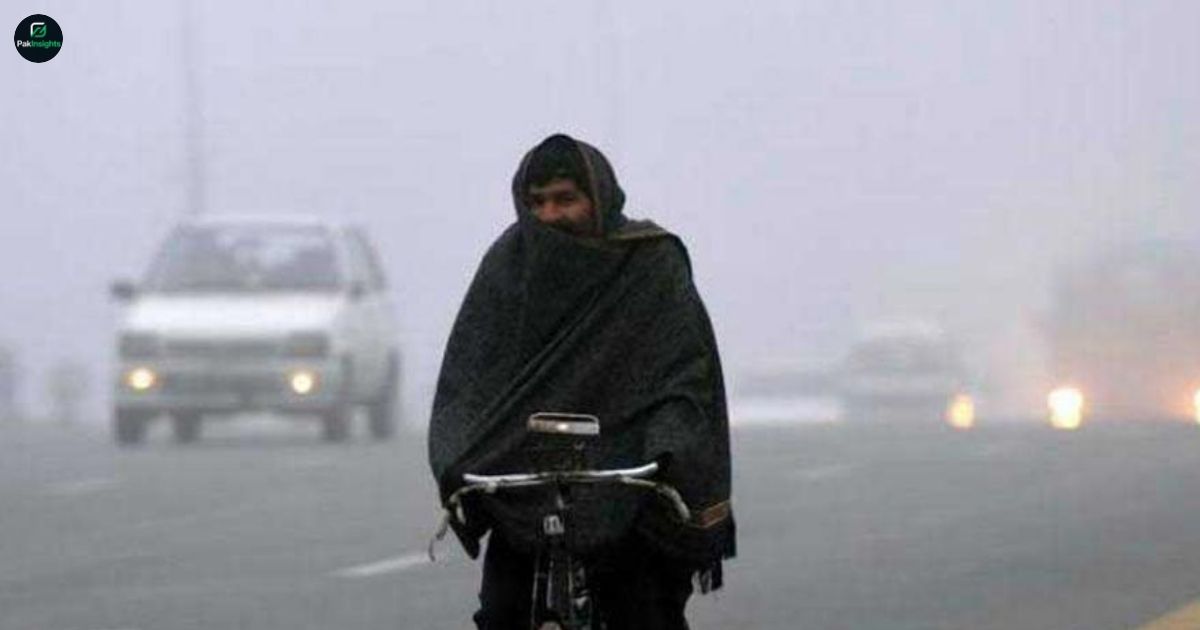
Temperatures drop in Pakistan Amid Intensifying Cold Wave, affecting major cities like Lahore, Karachi, and Islamabad. The cold spell continues to bring freezing temperatures and icy winds, making daily life challenging. According to the Pakistan Meteorological Department (PMD) forecast, the cold wave is expected to persist until January 18, 2026. Humidity levels and chilly winds increase the severity of the cold, while smog and dense fog reduce visibility in several areas.
In Lahore, temperatures have dropped to a minimum of 4°C, with humidity at 98 percent. Residents report feeling colder due to icy winds, and air quality remains poor with an Air Quality Index (AQI) of 189, making outdoor activities risky. Similarly, Karachi’s temperature has declined to 10–12°C because of cold northeastern winds influenced by Quetta’s weather patterns. Humidity in Karachi stands at 45 percent, and air pollution levels make it the 10th most polluted city globally.
Meanwhile, Islamabad’s temperature has reached a low of 3°C, with daytime highs around 15°C. Winds blow at 9 km/h, adding to the discomfort. Dense fog in Islamabad and surrounding areas reduces visibility, and PMD warns of continued cold and dry weather. Citizens are urged to follow precautionary measures, avoid unnecessary travel, and protect vulnerable groups like children and the elderly.
The Winter 2026 Pakistan season is marked by severe cold conditions, icy winds, and public discomfort due to reduced temperatures in major cities. While no rainfall is expected, the PMD continues to monitor temperature fluctuations and pollution levels. Staying informed about forecasts can help residents stay safe during this extreme cold spell.
Meta Description:
Temperatures drop in Pakistan amid an intensifying cold wave, affecting Lahore, Karachi, and Islamabad with freezing winds and poor air quality.







2 Comments