
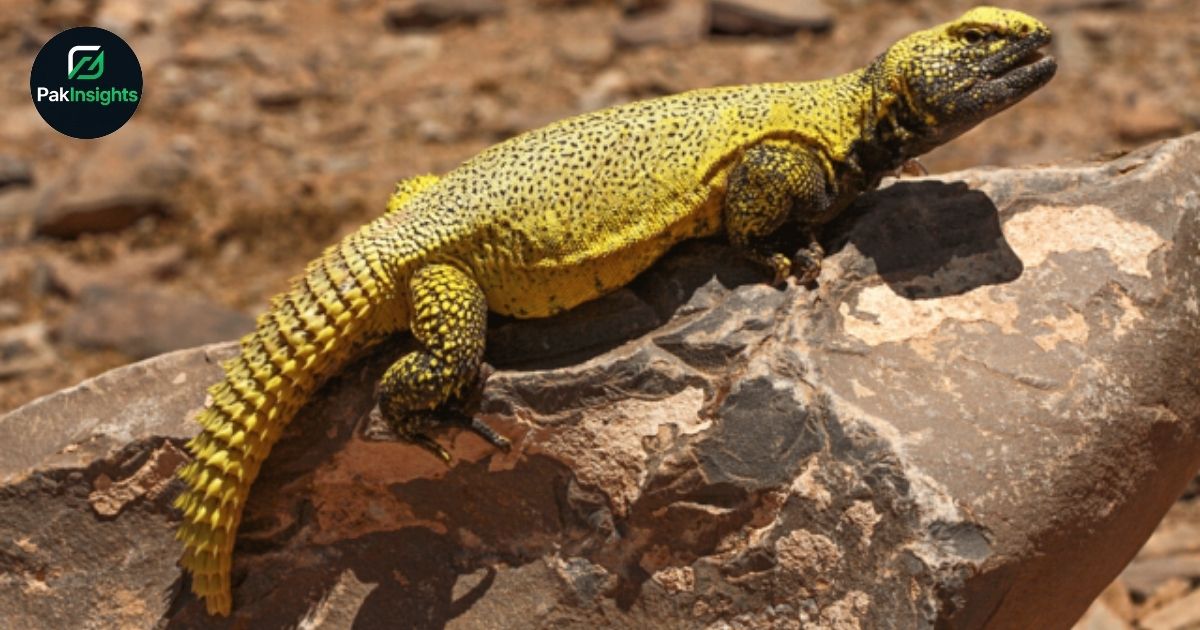
Spiny-Tailed Lizards (Uromastyx): Habitat, Diet, and Behavior explains why these tough reptiles thrive where heat and drought defeat most animals. The Spiny-tailed lizard, also known as the Uromastyx lizard, is admired across the USA by reptile lovers, researchers, and keepers. Species like the Egyptian spiny-tailed lizard, often called the Dabb lizard or Mastigure, belong to the Agamidae family and rank among the most resilient Desert lizards on Earth.
Unlike many Exotic lizard species, these calm Herbivorous reptiles evolved patience, endurance, and remarkable desert intelligence. Spiny-Tailed Lizards (Uromastyx): Habitat, Diet, and Behavior ultimately reveals a survivor shaped by heat, stone, and time. These reptiles remind us that resilience often grows quietly, beneath the desert sun.
Natural Habitat, Geographic Distribution, and Physical Characteristics
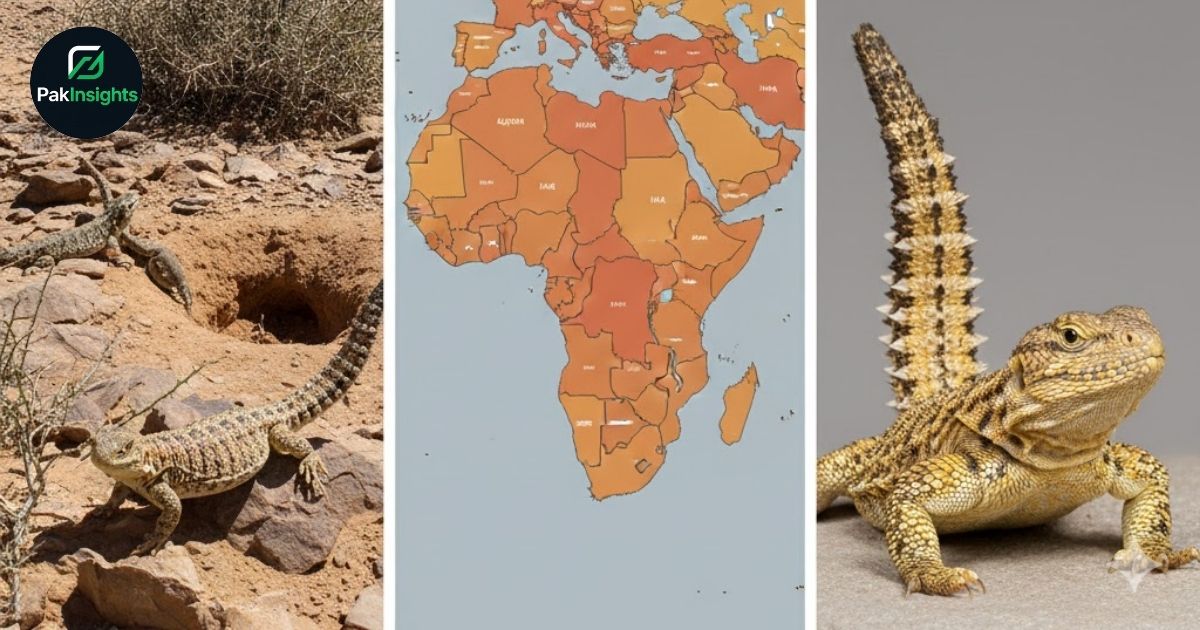
From sun-scorched plains to rugged stone ridges, Spiny-Tailed Lizards (Uromastyx): Habitat, Diet, and Behavior begins in the desert. These reptiles dominate dry zones across Africa and West Asia, especially the Arabian Peninsula, forming an important part of the desert ecosystem biodiversity. Many populations are classified as North African reptiles and vital Middle Eastern wildlife. As Squamata reptiles within the Iguania suborder, they favor a Rocky desert habitat that offers shelter, warmth, and survival advantages.
Physically, the Genus Uromastyx is built like a fortress. Thick scales reduce moisture loss. Their muscular tail forms a powerful Tail-based defense mechanism. This Defensive spiked tail can strike predators with surprising force. Color shifts occur through Seasonal color change in reptiles, controlled by Temperature-based pigmentation. These features help them regulate heat and avoid danger. Among Wild lizard species, few display such specialized desert engineering.
| Feature | Purpose |
|---|---|
| Spiked tail | Defense against predators |
| Thick scales | Reduce water loss |
| Color variation | Heat regulation |
| Strong limbs | Digging Underground burrows |
Diet, Daily Behavior, and Survival Adaptations
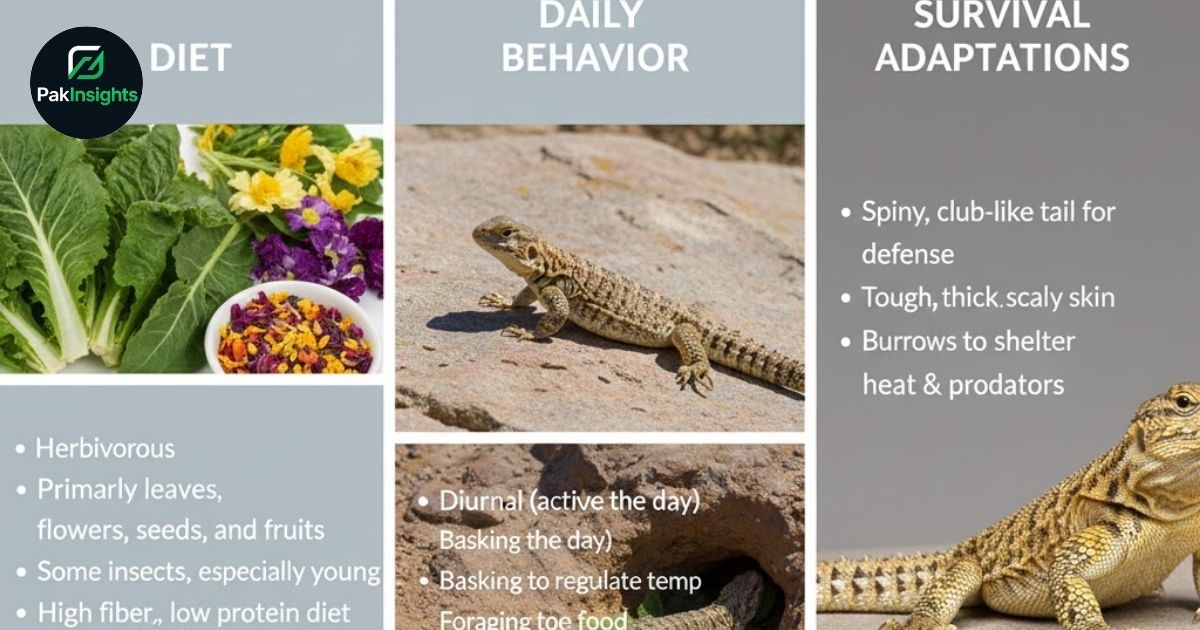
Diet explains much of Spiny-Tailed Lizards (Uromastyx): Habitat, Diet, and Behavior. Unlike many reptiles, these are mostly plant eaters. Their Vegetation-based diet includes seeds, leaves, and flowers. This Herbivorous diet in lizards depends on specialized digestion supported by Gut flora in reptiles. Young hatchlings even consume parental droppings briefly to build healthy digestion. Occasionally, insects supplement nutrition during harsh seasons.
Daily life follows the sun. These Basking reptiles emerge early to absorb heat. As skilled Burrowing lizards, they retreat into deep tunnels by night or when in danger. Activity slows during extreme heat, a smart desert strategy. Their calm movements conserve energy and water. Among Arid climate reptiles, Uromastyx behavior reflects patience rather than speed, a trait that fascinates biologists and reptile keepers alike.
Threats, Human Interaction, and Conservation Efforts
Understanding Spiny-Tailed Lizards (Uromastyx): Habitat, Diet, and Behavior means facing human impact. Habitat loss and Illegal wildlife trade threaten many populations, especially within the Moroccan reptile trade. Despite legal protections, capture for pets and medicine persists. Species like Uromastyx aegyptia and Uromastyx dispar maliensis face shrinking wild numbers across the reptiles of Africa and the Middle East.
Human history with Uromastyx runs deep. Traditional consumption of reptiles exists in desert cultures, shaped by Bedouin food practices. Ancient texts reference these lizards within Religious dietary references (Judaism & Islam), showing their long cultural role. Today, Reptile conservation focuses on habitat protection and ethical ownership. Responsible Pet reptile care reduces wild capture. With proper care, the longevityof captive reptiles can exceed 25 years, proving conservation and education can coexist.
Frequently Asked Questions
What is a Spiny-Tailed Lizard (Uromastyx)?
A Spiny-Tailed Lizard is a desert reptile from the Agamidae family, known for its spiked tail, herbivorous diet, and calm behavior.
Where do Uromastyx lizards live naturally?
They live in rocky deserts across North Africa, the Middle East, and parts of West Asia with extreme heat and low rainfall.
What do Spiny-Tailed Lizards eat?
They mainly eat plants like leaves, seeds, and flowers, with rare insect intake during harsh seasonal conditions.
Why do Uromastyx bask in the sun?
Basking helps them regulate body temperature, digest food properly, and stay active in arid desert environments.
Are Spiny-Tailed Lizards good pets in the USA?
Yes, when legally sourced and properly cared for, they are calm, long-lived, and suitable for experienced reptile keepers.
How do Spiny-Tailed Lizards defend themselves?
They use their heavy, spiked tail to strike predators and block burrow entrances for protection.
Meta Description
Explore the habitat, diet, and behavior of Spiny-Tailed Lizards (Uromastyx). Learn where they live, what they eat, and how they survive.