
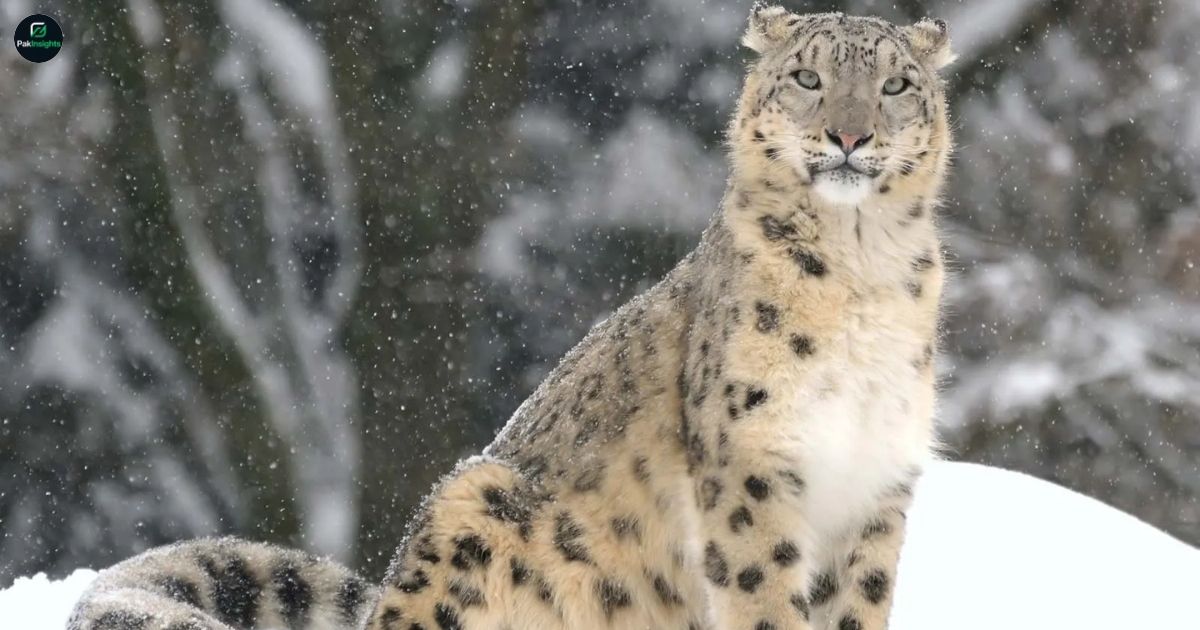
The Snow Leopard (Panthera uncia) is one of the most mysterious and fascinating big cats on Earth. Belonging to the Felidae family in the Mammalia class, it is part of the Genus Panthera but has a unique evolutionary path as a monotypic genus. With its thick fur and stealthy movements, this Carnivora species has adapted to some of the harshest mountain environments. Scientists use binomial nomenclature and phylogenetic analysis to classify it, identifying subspecies such as P. u. uncia, P. u. irbis, and P. u. uncioides. Despite its beauty, the snow leopard is vulnerable (IUCN Red List) and faces many threats to survival.
Researchers study its behavior, genetics, and population through cladograms and records of evolutionary divergence. This cat cannot roar like lions or tigers because of its short vocal folds, but it communicates using meowing, purring, moaning, and prusten. Observing a Snow Leopard (Panthera uncia) in the wild is rare, making it one of the most sought-after animals for wildlife enthusiasts and conservationists alike.
Snow Leopard Habitat and Geographic Distribution
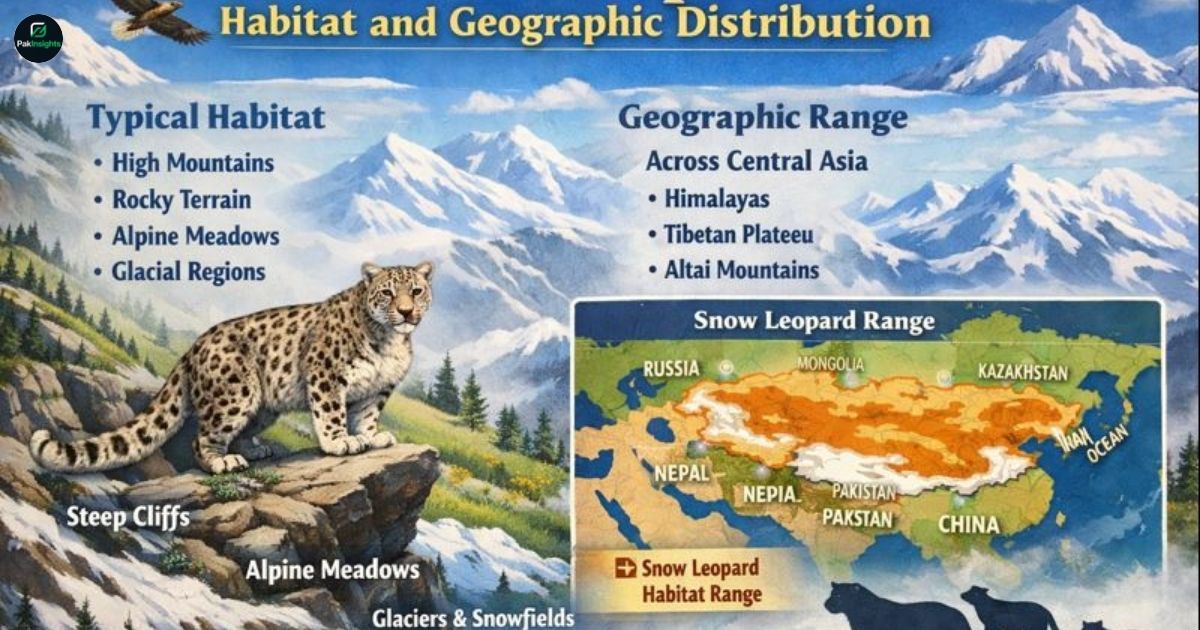
The Snow Leopard (Panthera uncia) lives in the mountain ranges of Central and South Asia, including the Himalayas, Tibetan Plateau, Pamir Mountains, Karakoram, Altai Mountains, and Tian Shan. It also inhabits regions of the Gobi Desert, Mongolia, and Siberia, usually in alpine and subalpine zones at an elevation range of 1,200–6,000 m. These areas provide rocky terrain, alpine meadows, and isolated valleys. The cat avoids heavily populated areas, making its home in places with minimal human interference.
Protected areas like Hemis National Park in India, Khunjerab National Park in Pakistan, and Tost Mountains in Mongolia have helped maintain populations. However, habitat fragmentation and climate change threaten these regions. Snow leopards prefer living above the tree line, using steep cliffs and ridges to stalk prey. Their movement patterns and survival strategies rely heavily on these rugged habitats, which also influence their hunting and social behavior.
| Country | Estimated Snow Leopard Population | Protected Areas Coverage |
|---|---|---|
| India | 718 | 35% |
| Nepal | 301–400 | 28% |
| Mongolia | 1,000 | 30% |
| Pakistan | 250–420 | 20% |
| China | 4,500 | 40% |
Physical Characteristics, Diet, and Hunting Behavior
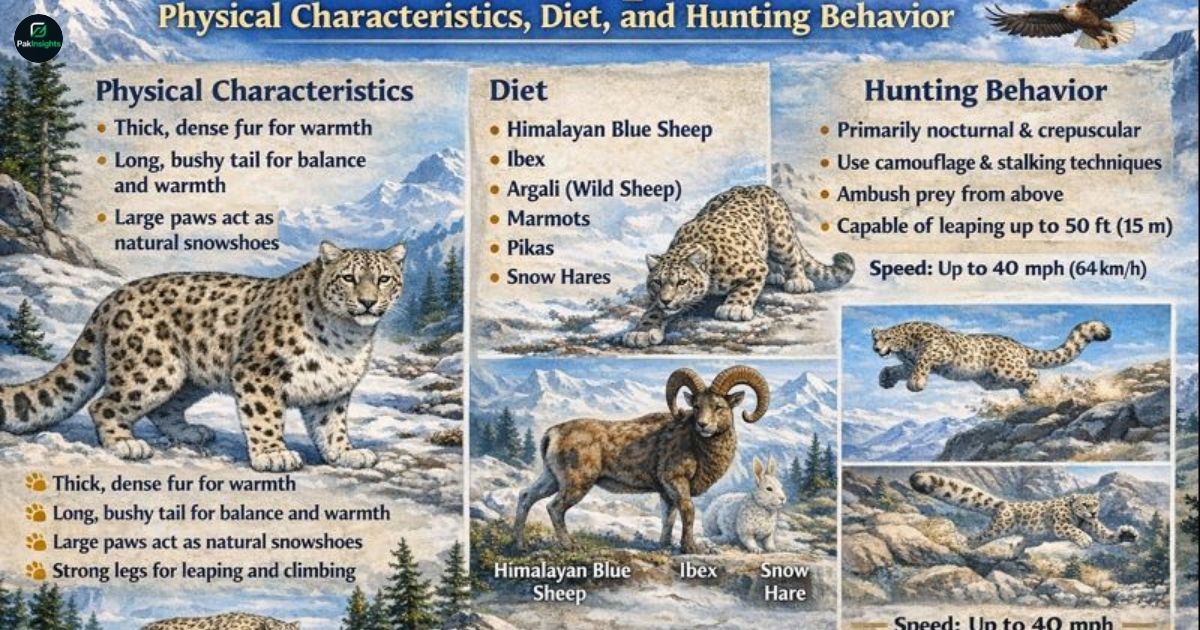
Snow Leopards (Panthera uncia) have thick fur, a whitish-grey coat, and rosettes and spots for camouflage. Their bushy tail provides balance on rocky terrain and warmth during sleep. They have a stocky build, short legs, and large nasal cavities for heat retention in cold mountain air. Broad paws for walking on snow make them perfect for navigating steep slopes, while their canine teeth and skull structure help in killing prey efficiently.
As a carnivore, the snow leopard primarily hunts prey species like Himalayan blue sheep, Siberian ibex, argali, markhor, Himalayan tahr, marmots, pika, and voles. It sometimes targets domestic livestock when natural prey is scarce. Snow leopards use stealth hunting and momentum leaps to chase prey down slopes, often dragging kills to safe locations in a behavior known as kill caching and consumption behavior. Occasionally, they hunt in pairs during mating season to increase hunting success.
Threats to Snow Leopards and Global Conservation Efforts
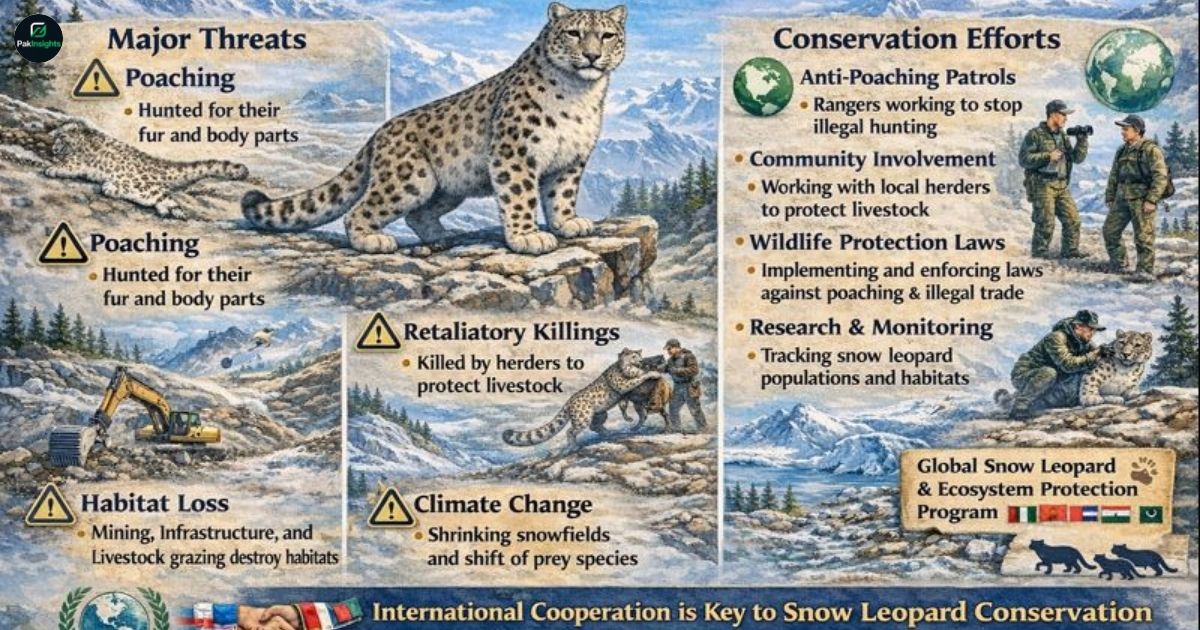
The Snow Leopard (Panthera uncia) is vulnerable (IUCN Red List) due to poaching, illegal wildlife trade, and habitat destruction. Overgrazing by livestock causes loss of prey, and human-wildlife conflict forces the cats to leave their territory. Climate change also pushes the treeline higher, shrinking alpine zones where these cats hunt. Conservationists classify the species under CITES Appendix I, ensuring international protection.
Countries like India, Nepal, China, and Kyrgyzstan have strict wildlife protection laws. Organizations such as the Snow Leopard Trust and initiatives like the Global Snow Leopard Forum work globally to protect habitats and educate local communities. Population estimates vary, with China hosting the largest number and smaller populations in Afghanistan, Bhutan, and Uzbekistan. These programs include community awareness, anti-poaching patrols, and captive breeding to ensure long-term survival.
Cultural Significance and Miscellaneous References
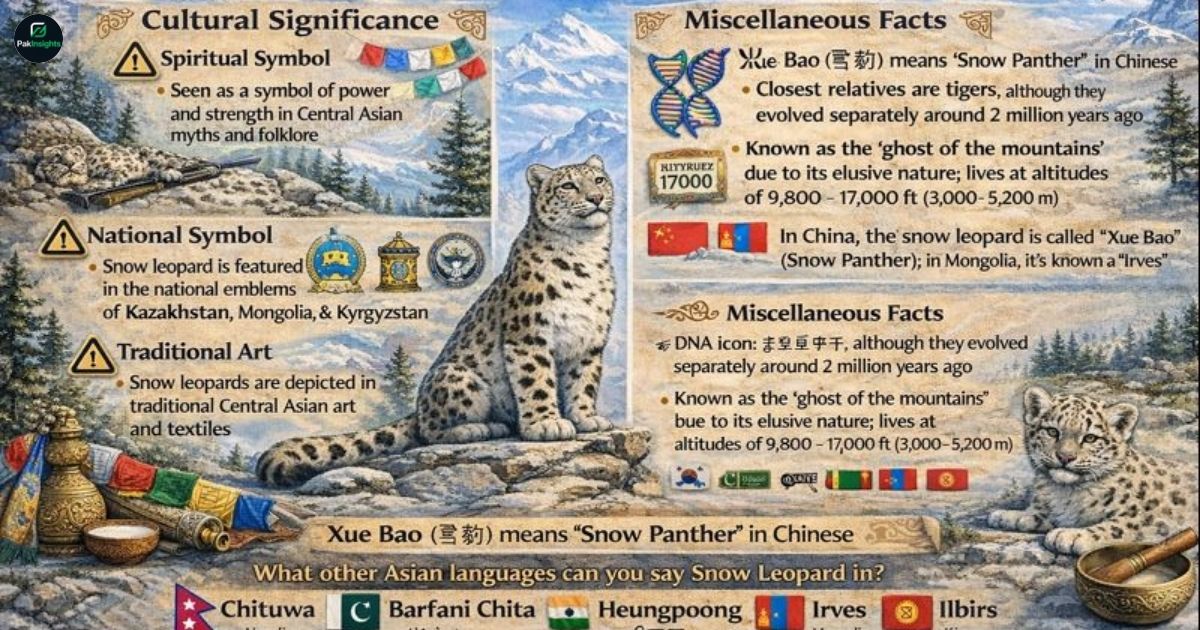
The snow leopard is deeply embedded in Kyrgyz culture and Central Asian symbolism. The Aq Bars (White Leopard) emblem appears on flags, banknotes, and city seals. It also features in heraldry and modern political symbols in Kazakhstan, Tatarstan, and Uzbekistan. The cat is often considered sacred, representing courage and resilience.
In literature, Peter Matthiessen’s book The Snow Leopard describes his spiritual journey in Nepal while tracking this elusive cat. Zoos and species survival plans have helped maintain captive populations, ensuring genetic diversity and public awareness. Captive breeding programs in the United States, Europe, and Asia continue to play a crucial role in global conservation efforts, allowing researchers to study the species closely.
Frequently Asked Questions
Q1: Where do snow leopards live?
Snow leopards live in the mountain ranges of Central and South Asia, including the Himalayas, Tibetan Plateau, and Altai Mountains, often at high elevations of 1,200–6,000 meters.
Q2: What do snow leopards eat?
As a carnivore, snow leopards hunt prey species like Himalayan blue sheep, Siberian ibex, argali, and occasionally domestic livestock.
Q3: Are snow leopards endangered?
Yes, snow leopards are vulnerable (IUCN Red List) due to poaching, habitat loss, and human-wildlife conflict.
Q4: Can snow leopards roar like lions or tigers?
No, snow leopards cannot roar because their vocal folds are short, but they communicate with meows, purrs, and purring.
Q5: How can people help snow leopard conservation?
Supporting organizations like the Snow Leopard Trust, raising awareness, and backing anti-poaching and habitat protection programs helps conserve this species.
Meta Description
Discover the Snow Leopard (Panthera uncia): habitat, behavior, diet, and global conservation efforts for this majestic big cat.





One Comment