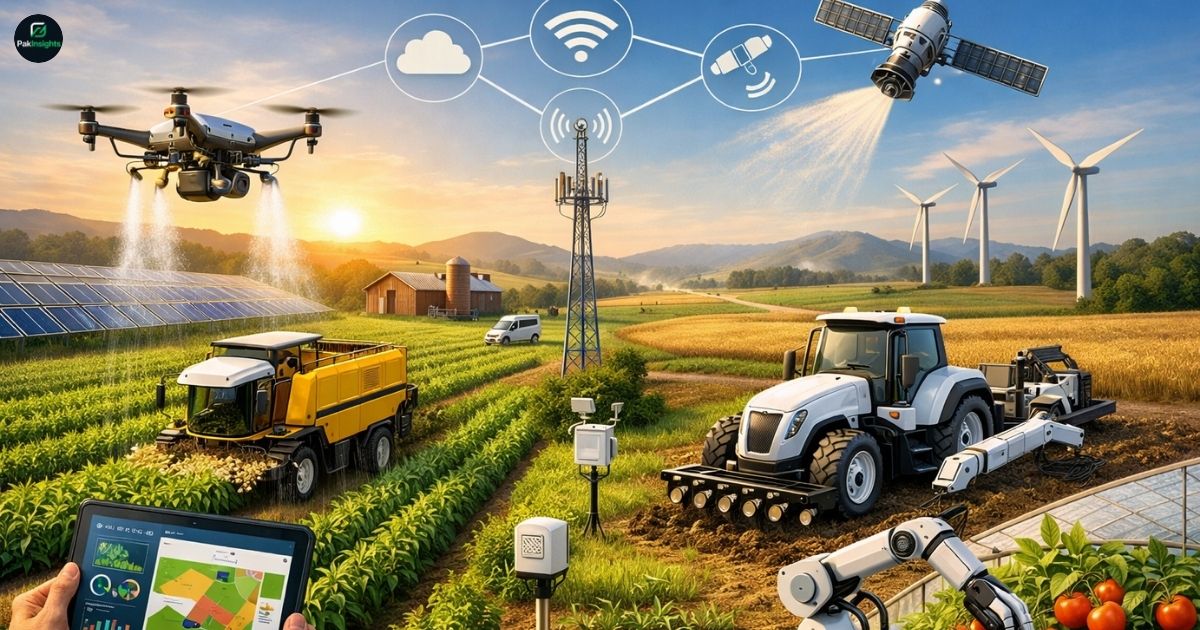
The world is entering a Fourth agricultural revolution, and it’s changing how we farm forever. Smart agriculture is no longer a concept; it is the reality of modern farms in the USA. By combining artificial intelligence in agriculture, precision agriculture, and digital farming tools, farmers are boosting yields while saving resources. The challenge is enormous. Global food demand is growing every year, yet the shrinking agricultural workforce means fewer hands are available to work the land. Digital agronomists now lead the way, using data-driven farming decisions to grow more food efficiently and sustainably.
Farmers today can monitor crops at the micro-zone farming level, adjusting care for individual plants. They use smart irrigation systems, soil sensors and monitoring, and automated farming machinery to make decisions that were impossible a few decades ago. Technology allows them to track soil moisture, nutrient levels, and pest activity in real time. This not only increases crop yield optimization but also helps protect the environment. The combination of farm data analytics, AI-driven crop management, and labor automation in farming is creating a new era where farms are smarter, more precise, and more productive.
How Technology is Transforming Modern Farming
Technology is rewriting the rules of agriculture. Precision farming uses digital farming tools and AI-driven crop management to guide planting, fertilization, and harvesting. Farmers no longer rely solely on experience or guesswork. With yield monitors, simulation modeling (“what if” scenarios), and digital twin farms, they can predict outcomes before taking action. These tools make it possible to experiment with crop rotations, test fertilizer reduction strategies, and simulate climate impacts without risking actual harvests.
Automated farming machinery is another game-changer. Tractors, seeders, and harvesters can now work with minimal human supervision, thanks to automation in planting and harvesting. Farmers can focus on resource optimization, planning, and innovation instead of repetitive labor. The table below shows some popular tools and their impact:
| Tool / Technology | Purpose | Benefit |
|---|---|---|
| Smart irrigation systems | Water management | Conserves water by targeting plants individually |
| Soil sensors and monitoring | Soil health tracking | Optimizes fertilizer and reduces waste |
| AI-driven crop management | Decision-making | Improves agricultural efficiency and crop yield optimization |
| Digital twin farms | Simulation | Tests strategies for climate shocks, pests, and disease |
In the USA, 68% of large farms are already adopting these tools. This shows how digital agronomists are transforming traditional farming into a high-tech, precise, and more profitable operation.
Sustainable Farming Practices Through Innovation
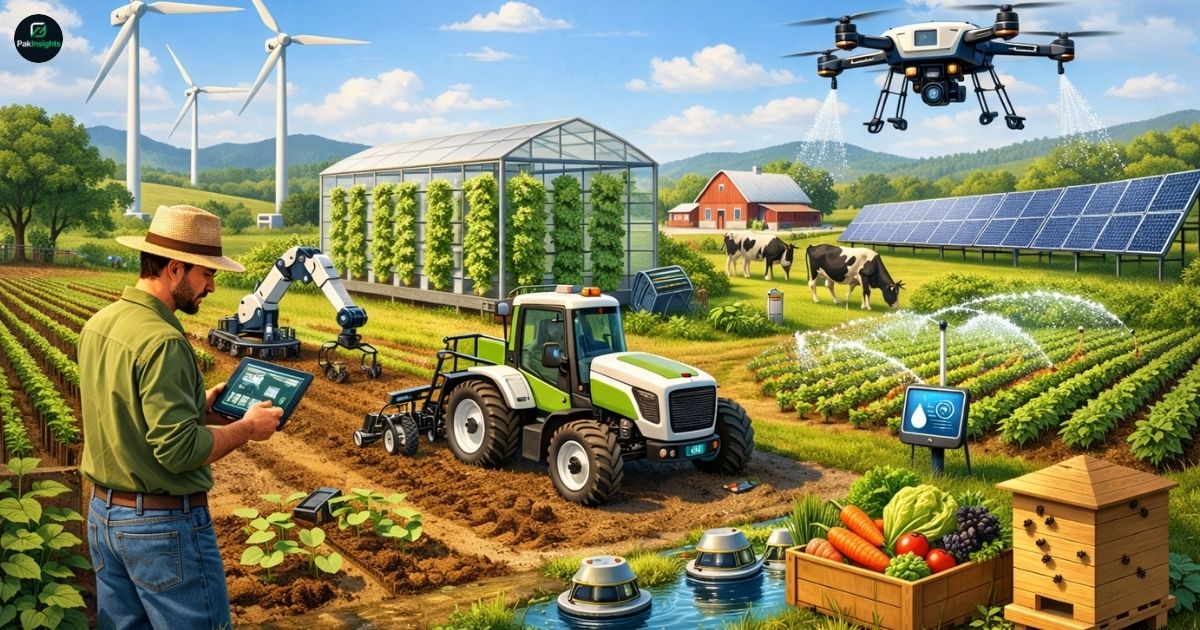
Sustainability is at the heart of smart agriculture. Climate-resilient agriculture combines sustainable farming practices with technology to protect the environment while increasing production. Farmers use plant breeding technology, micro-farming solutions, and closed-loop urban farming to grow food in ways that conserve resources. Soil carbon analysis and crop rotation insights allow them to maintain healthy soils and prevent overuse of fertilizers. This reduces farm-to-fork food loss and minimizes environmental impact.
Innovation also includes hyper-local weather forecasting and AI-assisted irrigation, helping small and large farms prepare for climate shock mitigation. Farmers can reduce water usage and manage pest and fertilizer management more effectively. By using generative AI in agriculture, they optimize planting schedules, experiment with micro-zone farming, and plan for both sustainability and profitability. This ensures farms can meet food security needs while maintaining productivity and sustainability for future generations.
Challenges, Opportunities, and Future Trends
Despite the benefits, smart agriculture faces hurdles. Many farms struggle with technology costs, limited technical skills, and infrastructure gaps. Smallholder farmers often lack access to high-tech equipment, while large-scale agribusiness may face regulatory and financial pressures. Adopting digital twin farms, swarm robotics in agriculture, and advanced labor automation in farming can be expensive initially, but the payoff is enormous in efficiency and yield.
The future looks exciting. Predictive crop insurance, simulation modeling (“what if” scenarios), and AI-driven crop management will allow farmers to anticipate problems before they happen. Automation in planting and harvesting will continue to reduce labor needs while improving efficiency. Urban farms using closed-loop urban farming and micro-farming solutions will help cities produce more food locally. With technology advancing rapidly, U.S. agriculture is becoming smarter, more resilient, and better equipped to meet global food demand, resource optimization, and long-term sustainability goals.
Frequently Asked Questions
Q1: What is smart agriculture?
Smart agriculture is the use of digital farming tools, AI-driven crop management, and precision agriculture to grow food efficiently, sustainably, and profitably.
Q2: How does technology improve farming?
Technology like smart irrigation systems, soil sensors and monitoring, and automated farming machinery helps farmers make data-driven farming decisions and optimize yields.
Q3: What are the benefits of sustainable farming practices?
Sustainable farming improves soil health, reduces farm-to-fork food loss, and supports climate-resilient agriculture while saving water and inputs.
Q4: Can small farms use smart agriculture?
Yes, smallholder farmers can adopt micro-farming solutions, hyper-local weather forecasting, and digital twin farms to increase efficiency and crop yield.
Q5: What is the future of smart agriculture?
The future includes swarm robotics in agriculture, automation in planting and harvesting, and generative AI in agriculture to meet global food demand sustainably.