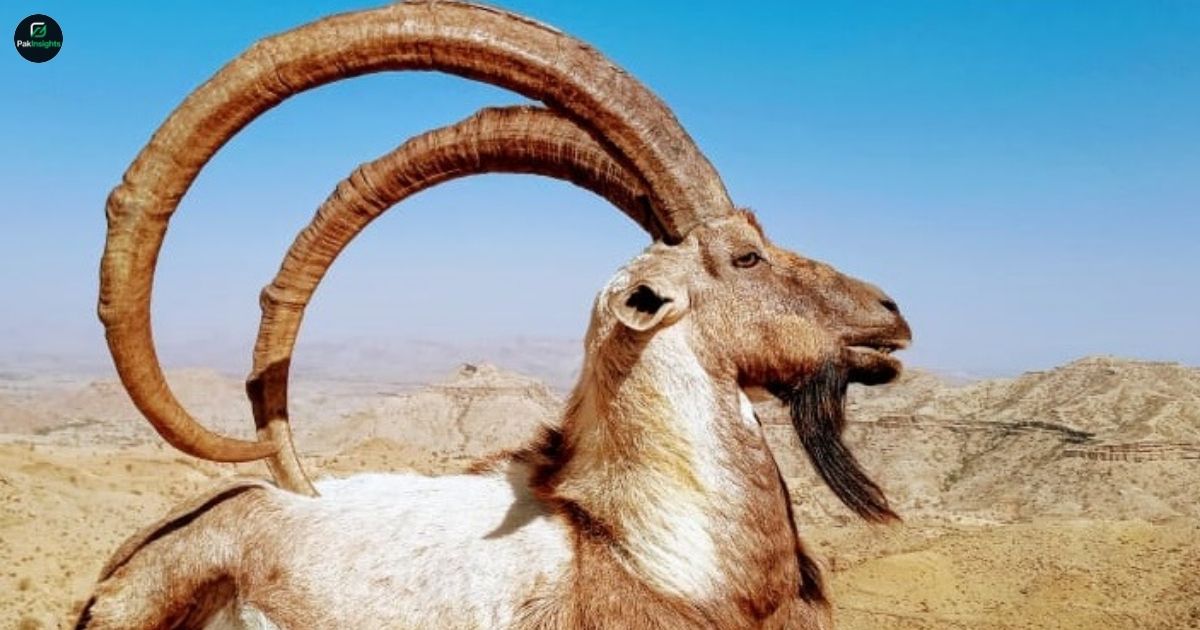
The Sindh Ibex is one of the most fascinating wild goat subspecies in the world. Known locally as Sareh, this animal thrives in the rugged landscapes of the wildlife of Southwest Pakistan and Southeast Iran. Its striking appearance and unique behavior make it a species worth studying for wildlife conservation enthusiasts. The Sindh Ibex is not just a symbol of Pakistan’s mountains; it also plays a crucial role in Pakistan’s mountain ecosystems, supporting both flora and fauna. Understanding this species is essential for anyone interested in global biodiversity and endangered species management.
This mountain goat, classified scientifically as Capra aegagrus blythi, represents a vulnerable subspecies with a limited habitat range. Found mainly in the Kirthar mountains, it is a critical part of the Sindh wildlife species and the Balochistan wildlife. Its survival depends on effective wildlife protection programs and awareness. In recent studies, the Ibex population in Pakistan is estimated to be around 30,000, mostly concentrated in Kirthar National Park, which highlights both hope and urgency in conservation efforts.
What Is the Sindh Ibex? Origin, Physical Traits, and Behavior
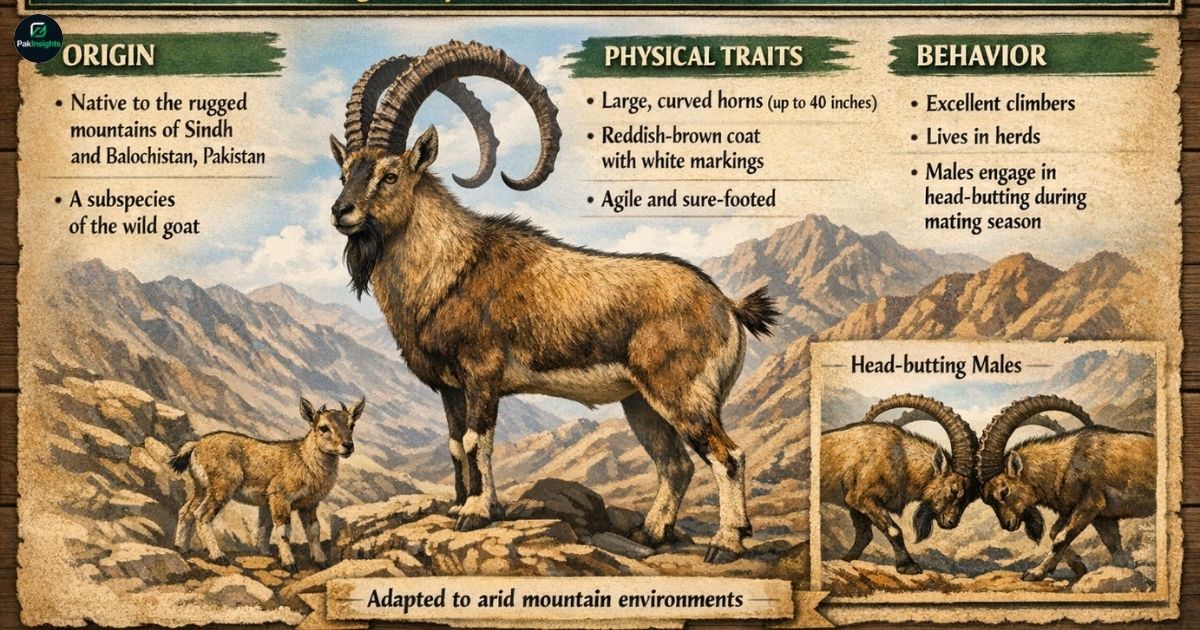
The Sindh Ibex, also called the Turkman wild goat, belongs to the Bovidae family and Caprinae subfamily within the Artiodactyla order. This Mammalia species has evolved to survive in arid and semi-arid habitats, with adaptations like a stocky body structure, thick-set limbs, and broad hooves. Male and female goats show clear sexual dimorphism (male vs female traits). Males boast majestic scimitar-shaped horns, while females are smaller, with subtler horn curves. Their summer coat and seasonal color change help them blend into rocky terrain for safety.
Behaviorally, the Sindh Ibex is gregarious, often forming groups for protection. Their nocturnal grazing habits allow them to feed when predators are less active. They have an impressive sense of balance on rock surfaces, capable of leaping on cliffs with ease. Males engage in male horn clashing behavior during mating season, establishing dominance without fatal injury. This species’ intelligence and agility make it a wonder of the mountain goat species worldwide.
Natural Habitat and Distribution of Sindh Ibex in Pakistan
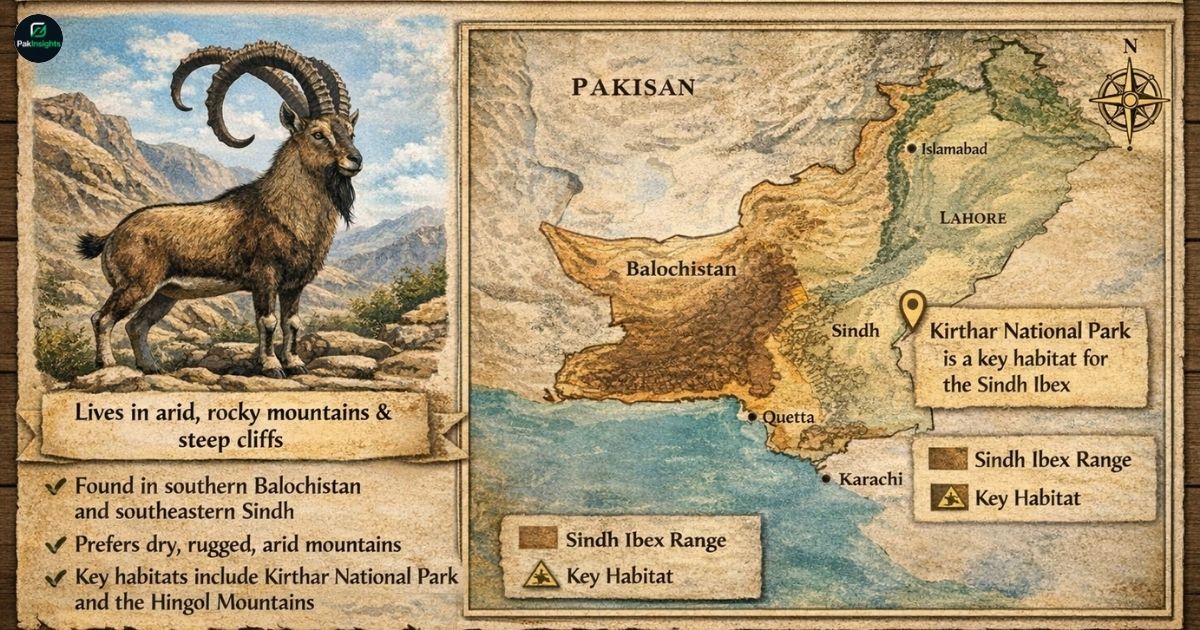
The Sindh Ibex primarily inhabits the Kirthar mountains of Sindh province and stretches into Southwestern Balochistan and the Makran region. These goats thrive in rocky and mountainous terrain, navigating cliffs with unmatched agility. Their habitat includes arid and semi-arid habitats, sparse vegetation, and open ranges, which provide both food and protection from predators. Kirthar National Park remains a critical refuge, safeguarding protected wildlife in Pakistan like the Sindh Ibex while allowing scientific study and eco-tourism.
In addition, the habitat range extends slightly into the Southeast Iran fauna, where smaller populations survive under harsh conditions. These goats adapt to temperature extremes and rocky surfaces, showcasing their resilience. For conservationists and wildlife lovers, observing the Ibex population in Pakistan across these ranges provides key insights into Pakistan’s mountain ecosystems. Tables comparing habitats and population estimates can further help researchers track trends.
Example Table: Sindh Ibex Habitat and Population
| Region | Habitat Type | Estimated Population | Protection Status |
|---|---|---|---|
| Kirthar Mountains | Rocky cliffs, arid hills | 25,000 | Kirthar National Park |
| Southwestern Balochistan | Semi-arid terrain, mountains | 4,500 | Local wildlife reserves |
| Makran Region | Arid plains and rocky ridges | 500 | Minimal protection |
Conservation Status, Threats, and Protection Efforts
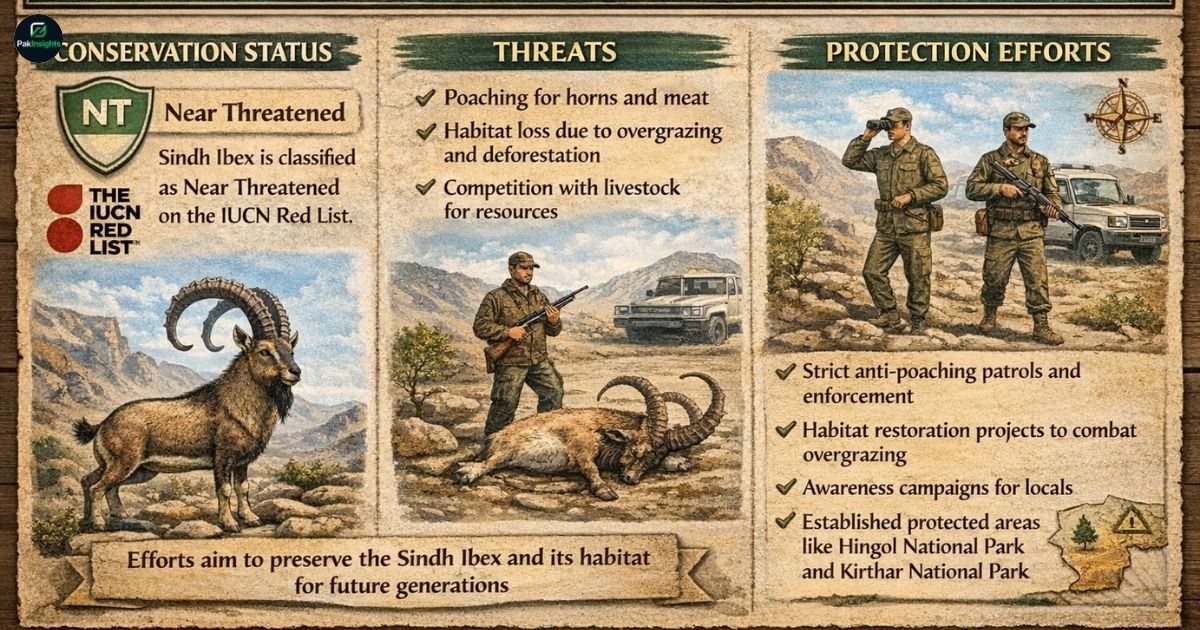
The Sindh Ibex is classified as a vulnerable subspecies due to poaching, habitat destruction, and climate change. Its conservation status requires urgent attention, and authorities in Pakistan have implemented several wildlife protection measures. The establishment of the Kirthar National Park fauna has been pivotal in safeguarding large herds. However, human expansion into Sindh province’s wildlife areas continues to challenge their survival. Educating locals and international wildlife enthusiasts is critical for the protected wildlife initiatives in Pakistan to succeed.
Recent conservation efforts include population monitoring, anti-poaching patrols, and habitat restoration programs. Scientific studies on the Capra genus and Sindh Ibex behavior inform better management strategies. Ecologists stress that protecting mountain goat species like the Sindh Ibex ensures Pakistan’s mountain ecosystems remain balanced. Awareness campaigns, eco-tourism, and global cooperation in wildlife conservation can further secure this endemic species of Pakistan for future generations. The Ibex population in Pakistan will thrive only if humans act responsibly today.
Conclusion
The Sindh Ibex is more than a beautiful wild goat; it represents the fragile balance of Pakistan’s mountain ecosystems. From its scimitar-shaped horns to its agile leaps on rocky and mountainous terrain, this Turkman wild goat is a marvel of evolution. Protecting this endemic species of Pakistan through wildlife protection, national parks, and global awareness ensures it will continue to roam the Kirthar mountains for generations to come.
By understanding its population estimate, habitat range, and behavior, conservationists worldwide can connect with the importance of Southwest Pakistan’s wildlife. Supporting protected wildlife in Pakistan efforts is a way for enthusiasts everywhere to engage in meaningful wildlife conservation. Observing and learning about the Sindh Ibex reminds us that even the most remote mountain goat species play a vital role in biodiversity and ecological balance.
Frequently Asked Questions
Q1: Is the Sindh Ibex endangered?
Yes, the Sindh Ibex is a vulnerable subspecies, and its population is protected under wildlife protection laws in Pakistan.
Q2: Where can the Sindh Ibex be found?
It lives mainly in the Kirthar mountains, Southwestern Balochistan, and the Makran region, with small populations in Southeast Iran.
Q3: What makes the Sindh Ibex unique?
Its scimitar-shaped horns, stocky body structure, and remarkable sense of balance on rock surfaces make it a standout mountain goat species.
Q4: How many Sindh Ibex are left in Pakistan?
The Ibex population in Pakistan is estimated to be around 30,000, mostly in Kirthar National Park and protected areas.
Q5: How is the Sindh Ibex protected?
Through wildlife protection, anti-poaching efforts, habitat conservation, and protected wildlife programs in national parks.