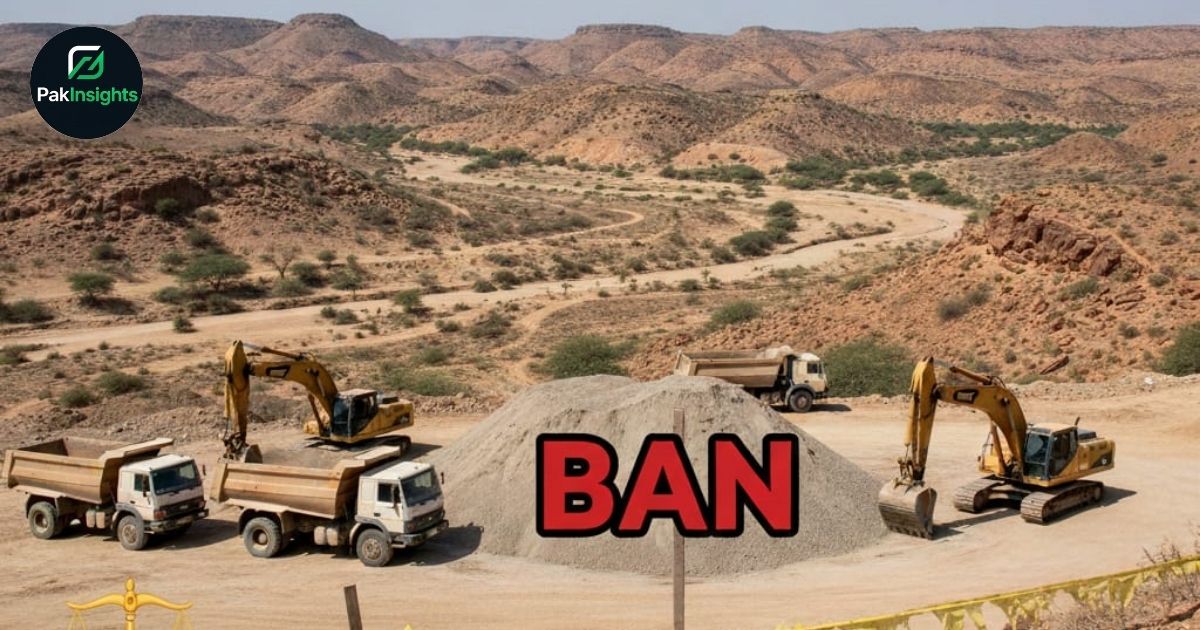
Sindh High Court Upholds Ban on Sand and Gravel Mining in Kirthar National Park, reinforcing environmental protection in the region. The court emphasized that sand and gravel extraction harms biodiversity and endangers rare species. Justice Adnan Iqbal Chaudhry noted the Sindh Wildlife Department’s failure to fully protect the park and warned against illegal mining activities.
Kirthar National Park, one of Pakistan’s largest protected areas, is home to over 270 species, including mammals, reptiles, and birds. It serves as a key habitat for endangered species such as the Sindh urial and ibex. The SHC’s decision strengthens land allotment restrictions and ensures habitat preservation across the Kirthar Protected Areas.
Petitioners highlighted the ecological impact of mining, including deforestation, river erosion, silting, and topsoil loss. These activities also reduce water retention capacity and increase flood and heatwave risks in surrounding areas. Despite prior warnings, commercial leases of mines continued illegally, further threatening wildlife sanctuaries and game reserves.
The Sindh Wildlife Department must now submit a detailed report on conservation efforts over the past decade. Authorities are required to enhance wildlife protection and prevent poaching in Pakistan. The SHC’s ruling reinforces environmental law in Pakistan, emphasizing biodiversity conservation and protection of historical places and graveyards within the park.
This decision sends a strong message that ecological preservation outweighs short-term commercial gains. By curbing sand and gravel mining, the Sindh High Court ensures long-term sustainability of Kirthar National Park and safeguards Pakistan’s natural heritage.
Meta Description
Sindh High Court upholds ban on sand and gravel mining in Kirthar National Park, promoting wildlife protection and biodiversity conservation.