
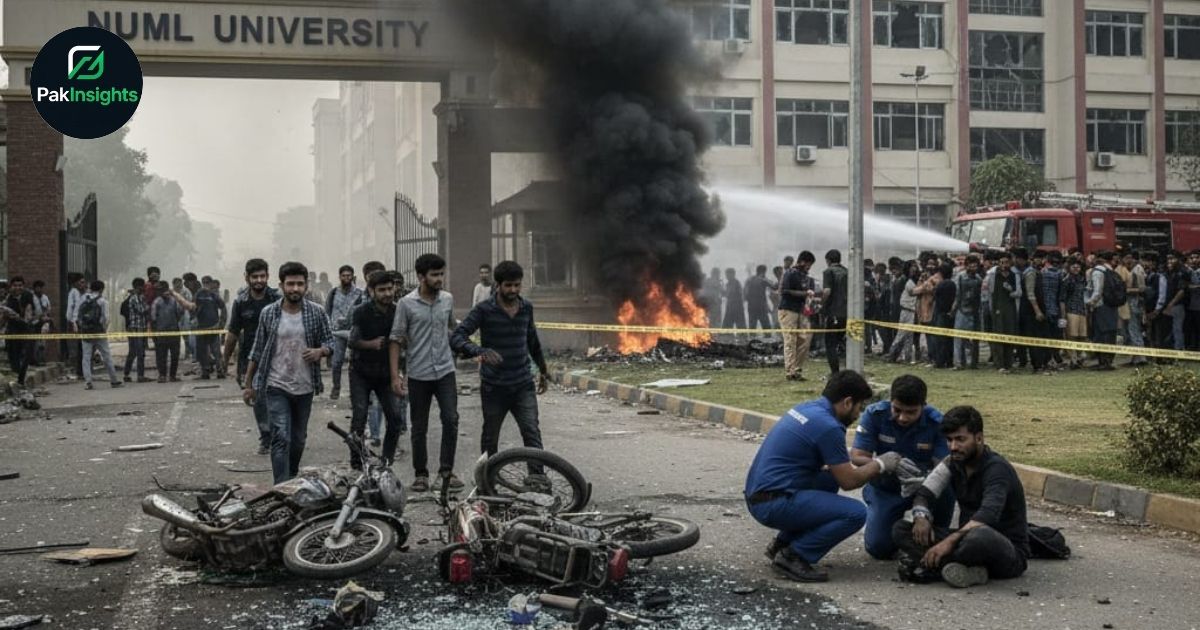
The tragic NUML Islamabad incident has once again raised urgent questions about campus safety in Pakistan. On a quiet Tuesday afternoon, a sudden NUML university explosion shook the campus, leaving seven people injured, including students and staff, a naib qasid, and a clerk, one of whom suffered severe burn injuries from the explosion. The blast was triggered by a gas leakage in a small prayer area and clerical office, ignited by an electrical short circuit explosion, highlighting glaring gaps in safety oversight.
Immediate action by Islamabad Police and emergency teams ensured that most victims were treated quickly and declared out of danger, but the incident has left a lasting impression on everyone involved. This tragedy has sparked a nationwide debate on student safety, prompting the NUML administration and government authorities to introduce strict policy interventions, including gas line inspection, technical assessment of gas systems, and enhanced campus emergency response procedures. The focus now is on preventing future disasters while ensuring that students and staff can study and work in a safe, secure environment.
How the NUML Explosion Unfolded and What It Means for Student Safety
The NUML University explosion demonstrated how quickly a simple gas supply restoration can turn dangerous if safety compliance is overlooked. The enclosed space filled with gas became highly volatile, leading to an explosion triggered by an electrical short circuit. Emergency services arrived promptly, conducting a thorough investigators examined the site procedure to ensure no further risks remained. The incident damaged the prayer area and parts of the clerical office, underscoring the urgent need for comprehensive campus emergency response strategies. This disaster has become a case study for educational institutions globally, including universities in the USA, emphasizing the importance of proactive safety audits.
Experts stress that gas line inspection, winter gas restoration procedures, and adherence to SOPs followed during investigation are crucial for preventing future mishaps. Authorities at NUML administration are now reviewing all internal gas connections, verifying every safety valve, and educating students and staff on emergency protocols. Lessons from the NUML Islamabad incident suggest that regular drills, improved monitoring, and faster reporting mechanisms can significantly reduce risks associated with gas leakage blasts in Islamabad and other potential hazards in educational settings.
Policy Interventions and Campus Safety Measures
Following the NUML Islamabad incident, government and university authorities have introduced strict policy interventions. A comprehensive technical assessment of gas systems is underway, ensuring that gas line inspection is completed campus-wide. The administration has temporarily shut down all gas connections and mandated compliance with modern safety standards. This move reflects a larger nationwide student safety debate, highlighting gaps in current safety protocols and advocating for reforms in campus safety in Pakistan.
Authorities, including IGP Syed Ali Nasir Rizvi and Islamabad Police, are coordinating with NUML administration to prevent future disasters. Their approach involves continuous monitoring, staff training, and updating safety protocols at educational institutions. The incident has raised awareness about preventive measures, such as electrical safety audits and proper emergency treatment readiness. Experts suggest that universities in the USA and Pakistan can learn from the NUML university explosion, emphasizing that preventive policies are as vital as response strategies to protect students and staff.
Frequently Asked Questions
Q1: What caused the NUML Islamabad incident?
The NUML university explosion happened because of a gas leakage that built up in an enclosed space filled with gas, which was then ignited by an electrical short circuit.
Q2: How many people were injured in the blast?
Seven people were hurt, including students and staff, a naib qasid, and a clerk. One victim suffered burns on 65 percent of body, while most others were out of danger.
Q3: What immediate response was taken after the explosion?
The Islamabad Police and emergency teams quickly arrived for campus emergency response, provided emergency treatment, and ensured safety by shutting down the NUML campus gas supply.
Q4: What safety measures are being implemented after the blast?
The NUML administration is conducting a technical assessment of gas systems, gas line inspection, and enforcing strict safety protocols at educational institutions to prevent future incidents.
Q5: Has the government intervened in campus safety policies?
Yes, policy interventions are now in place nationwide to enhance campus safety in Pakistan, including regular checks of winter gas restoration procedures, emergency drills, and investigations examined the site protocols.
Meta Description
NUML blast sparks nationwide debate on student safety as policy interventions and campus reforms take center stage.