
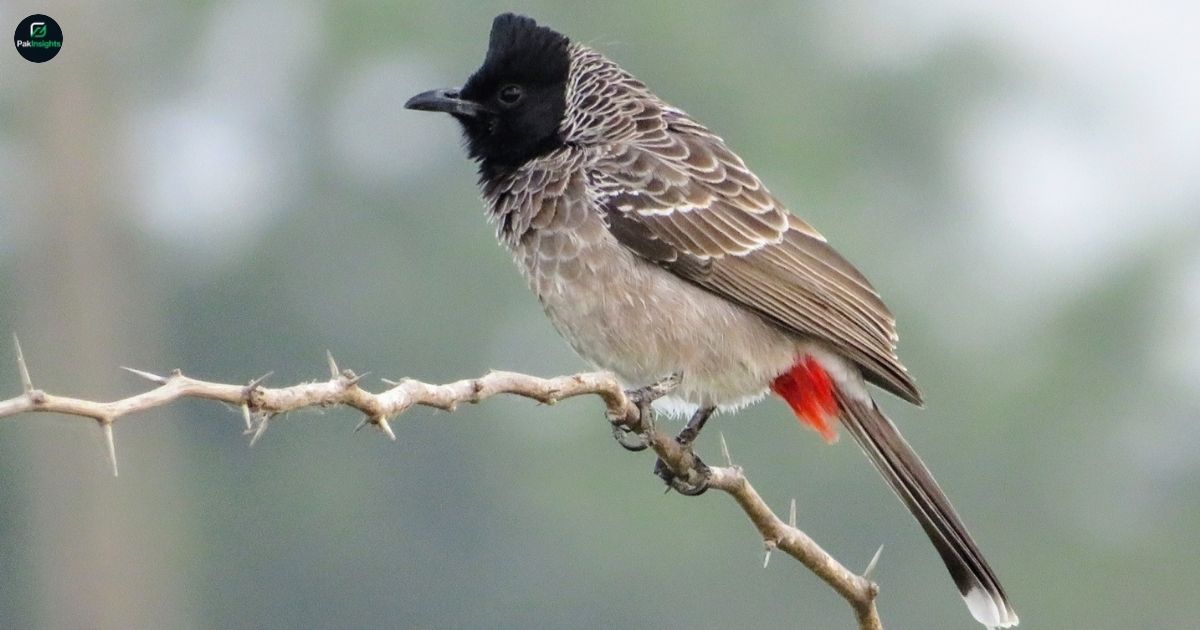
The Red-vented Bulbul is a lively and adaptable bird that instantly catches attention. Many birdwatchers in the USA now search for the Red-vented Bulbul because this passerine bird has expanded far beyond its native range. Known scientifically as Pycnonotus cafer, this bird belongs to the bulbul family and remains one of the most studied tropical bird species due to its intelligence and adaptability.
Taxonomically, the Red-vented Bulbul bird falls under Animalia, Chordata, Aves, and Passeriformes, within the family Pycnonotidae and genus Pycnonotus. Using binomial nomenclature, the name reflects classic Linnaeus taxonomy and modern zoological nomenclature, making it a textbook example of subspecies classification among bulbul species.
Physical Characteristics, Calls, and Easy Identification
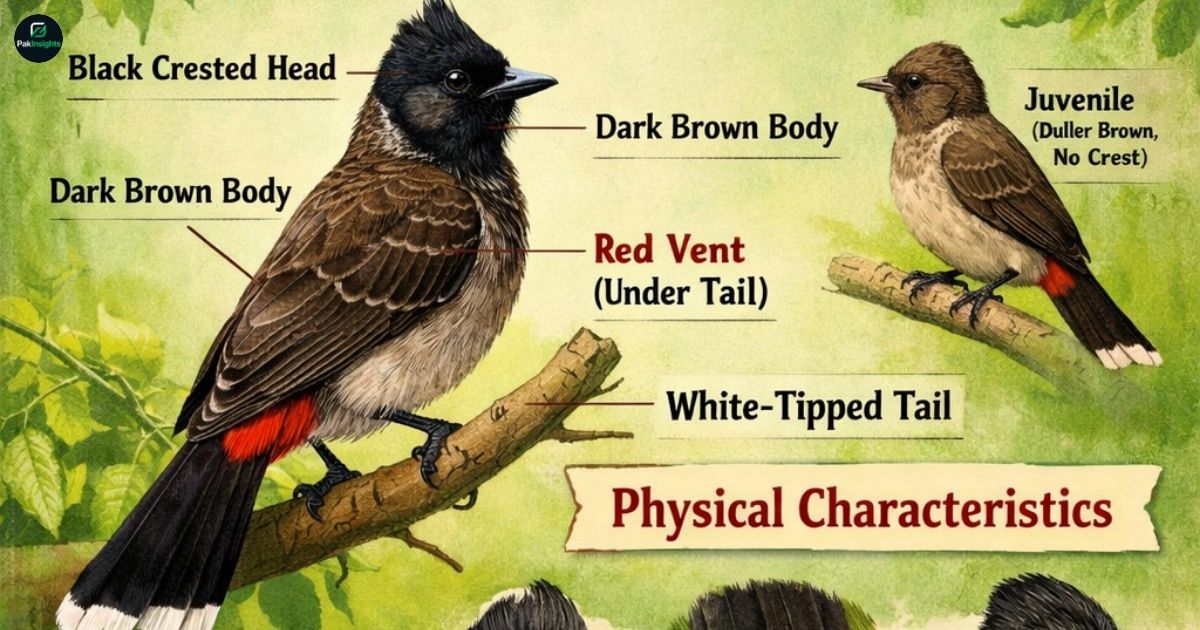
Spotting a Red-vented Bulbul becomes easy once you know its traits. This black crest bird shows dark brown plumage with a clear scaly body pattern, a white rump, and striking red vent feathers. A long black tail with white tips helps with fast recognition. Both male and female bulbul look similar, while a juvenile bulbul appears duller, which helps with bird crest identification.
Sound also plays a key role. The Red-vented Bulbul produces sharp bird calls, rhythmic bulbul vocalization, and loud alarm calls that warn other birds. Soft contact calls maintain group bonds, while rich songbird sounds reflect complex communication in birds. These vocal patterns make the common garden bird easy to identify even before it appears.
Natural Habitat, Distribution, and Daily Behavior
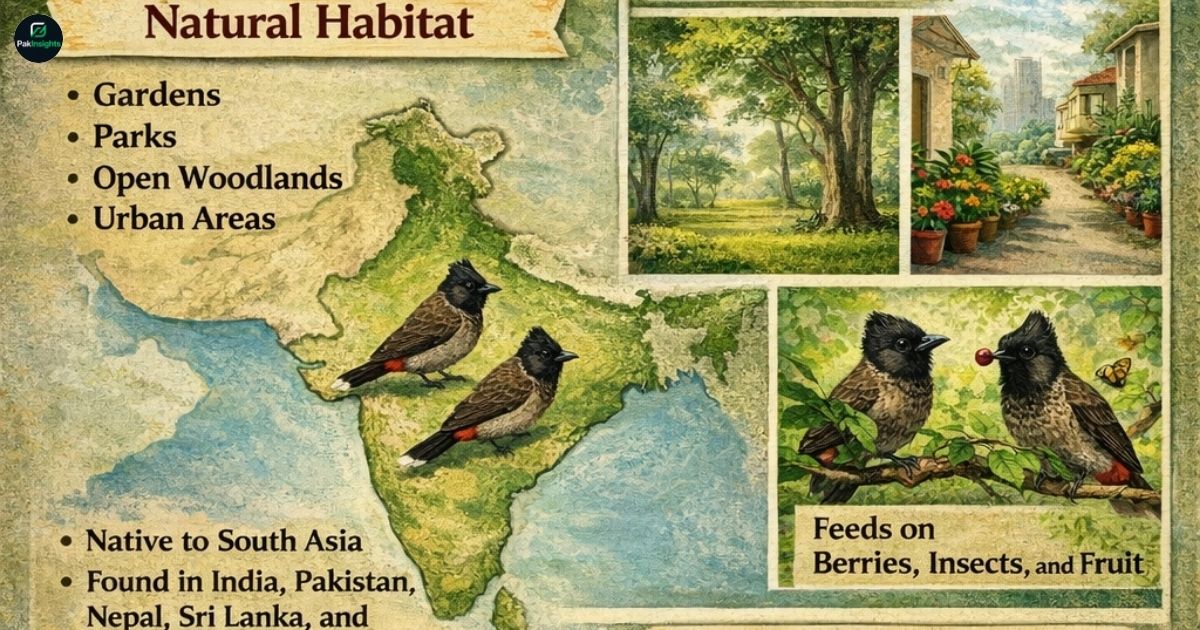
The Red-vented Bulbul originated in South Asia bird distribution zones including India, Pakistan, Sri Lanka, Bangladesh, Nepal, and Myanmar (Burma). Over time, global bird introductions led to invasive populations in Fiji, Tonga, Samoa, New Zealand, and parts of the USA. Today, it thrives as an introduced species across many climates.
Daily life stays busy. This bird prefers dry scrub habitat, open forest zones, cultivated lands, and lowland habitat near people. As an urban bird species, it adapts fast. Its bulbul feeding habits include fruits, insects, and nectar. This mix supports frugivorous birds, nectar-feeding birds, and an insectivorous diet, reinforcing its ecological role as one of nature’s most efficient seed dispersal birds.
Breeding, Conservation Status, and Ecological Importance
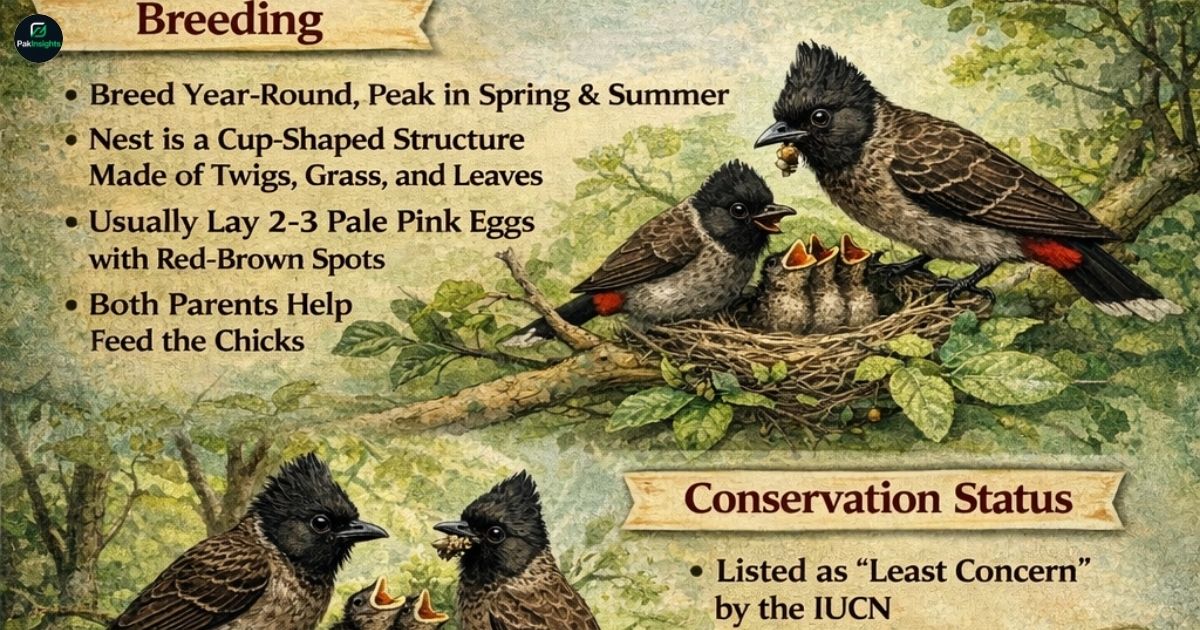
Breeding showcases fascinating bird nesting behavior. The breeding season usually runs from breeding season June to September. Nests appear in bushes or buildings. The typical clutch size holds two or three eggs. The egg incubation period lasts around two weeks. Strong parental care in birds helps survival, although fledgling mortality increases due to predators and weather. Rare cases of brood parasitism involve the pied crested cuckoo, and some pairs raise multiple clutches yearly.
From a conservation view, the Red-vented Bulbul holds IUCN Least Concern status. Yet it ranks among invasive alien species in some regions. Farmers label it an agricultural pest due to fruit crop damage and crop damage bird patterns. It spreads plants like Lantana camara seed dispersal and Miconia calvescens, causing ecological imbalance. Wildlife agencies rely on invasive species management, and past extermination campaigns highlight their impact. Still, culturally, traditions like bird fighting tradition, cage birds in India, Assamese culture, the Bihu festival, traditional bird sports, and colonial-era bird keeping show how deeply humans connect with this bird. Studies even explore vitamin C synthesis in birds, coccidian parasites, avian ectoparasites, Danaus plexippus butterfly interactions, and hybridization in bulbuls, proving the Red-vented Bulbul remains one of the most scientifically valuable birds today.
Quick Reference Table
| Feature | Details |
|---|---|
| Scientific Name | Pycnonotus cafer |
| Bird Type | Asian songbird, passerine bird |
| Status | IUCN Least Concern |
| Diet | Fruits, nectar, insects |
| Key Regions | USA, India, Sri Lanka, Pakistan |
“The Red-vented Bulbul proves how intelligence and adaptability can reshape ecosystems worldwide.”
Frequently Asked Questions
What is a Red-vented Bulbul?
The Red-vented Bulbul is a medium-sized passerine bird from the bulbul family, scientifically known as Pycnonotus cafer, famous for its red vent and black crest.
Is the Red-vented Bulbul found in the USA?
Yes, the Red-vented Bulbul has appeared in parts of the USA as an introduced and sometimes invasive bird species, though populations are controlled.
How can you identify a Red-vented Bulbul easily?
Look for red vent feathers, a white rump, dark brown plumage, and a short crest, which makes it a clear black crest bird.
What does the Red-vented Bulbul eat?
It feeds on fruits, nectar, and insects, showing classic bulbul feeding habits of frugivorous birds with an insectivorous diet.
Is the Red-vented Bulbul endangered?
No, it is listed as IUCN Least Concern, meaning its global population remains stable.
Meta Description
Red-vented Bulbul guide covering habitat, behavior, identification, calls, and conservation facts for bird lovers and beginners.