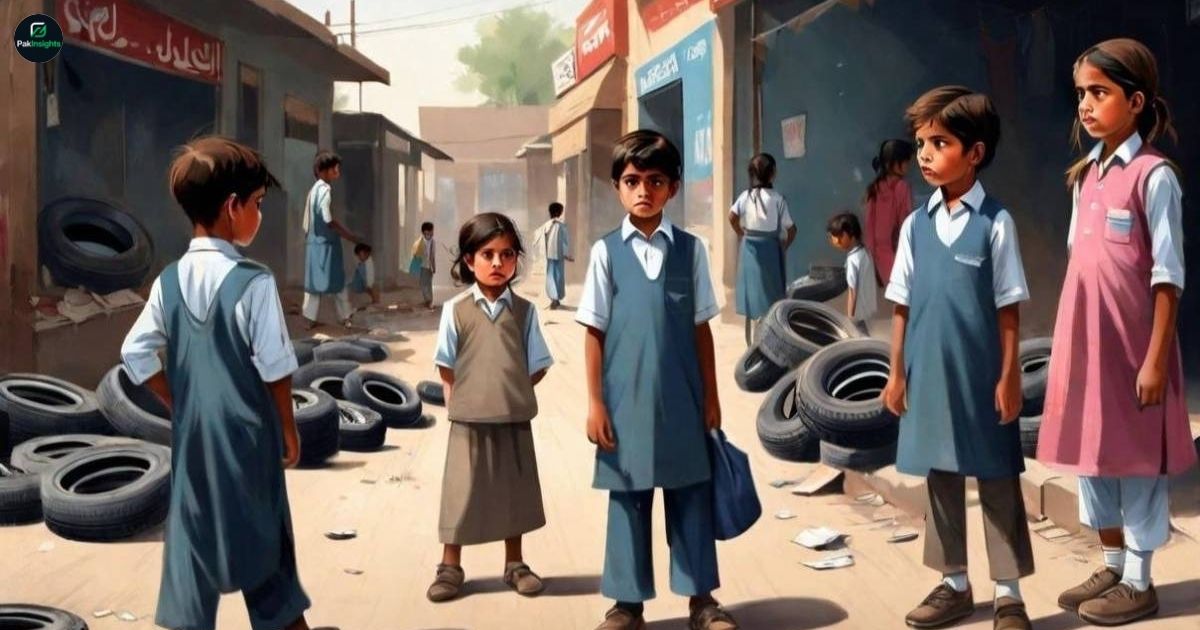
Pakistan’s 26 Million Out-of-School Children: Statistics, Challenges reveal a critical education crisis. According to the GESTR report 2023-24, 25.37 million children aged 5–16 are not enrolled. This includes 13.41 million girls out of school and 11.96 million boys out of school. The situation affects literacy, social development, and economic growth across the country.
Punjab has the highest number of out-of-school children at 9.6 million, followed by Sindh with 7.82 million. Khyber-Pakhtunkhwa accounts for 4.92 million, and Balochistan has 2.94 million. Even Islamabad faces 90,000 children out of school. These provincial education statistics highlight the uneven access to education nationwide.
Enrollment declines sharply at each successive stage. While over 20 million children attend primary school, only 2.8 million reach intermediate level, and 718,000 enter university programs. Limited school infrastructure in Pakistan worsens the issue. Although 96 percent of schools have permanent buildings and 82 percent provide drinking water, only 19 percent have digital devices, and 23 percent offer accessibility ramps for students with disabilities.
Budget constraints for education also hinder progress. Education’s share in the national budget has dropped from 13 percent to 11 percent, with 94 percent spent on salaries. This limits development spending and expansion of school facilities. Despite efforts by the Federal Minister for Education, much work remains to improve enrollment trends and girls’ education in Pakistan.
Addressing these challenges requires stronger policies, investment in digital learning tools, and community programs. Scholarships and awareness campaigns can also help reduce the number of out-of-school children. Improving education infrastructure and supporting both boys and girls will benefit the country’s future.