
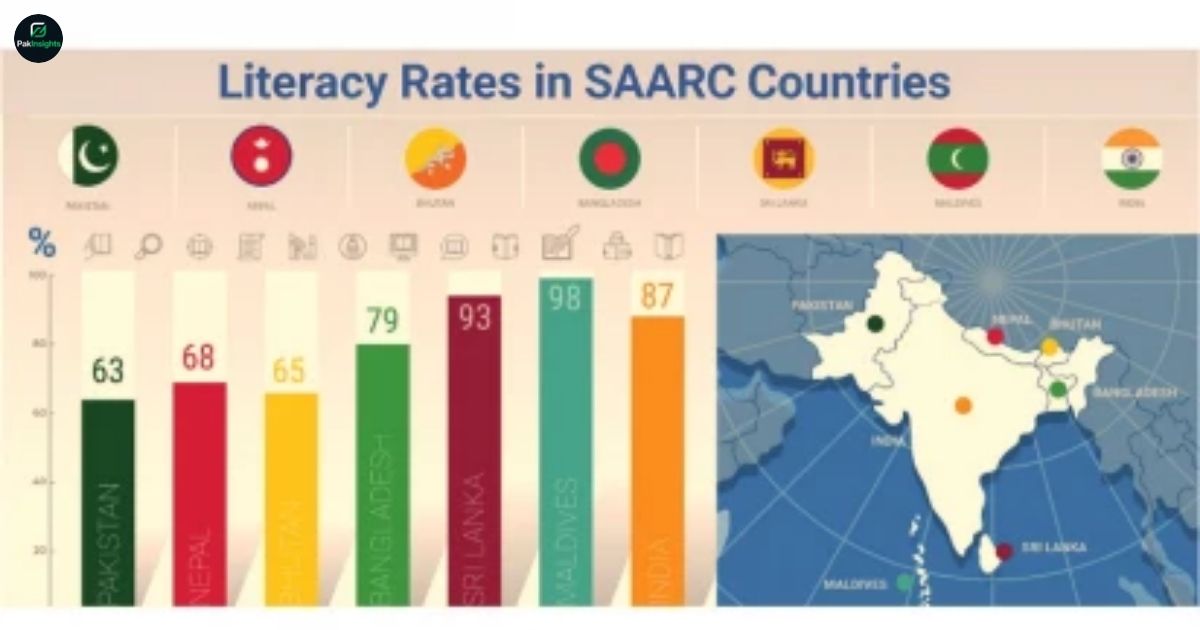
Pakistan Records Lowest Literacy Rate in South Asia: Says FAFEN, revealing alarming figures from the latest analysis. According to the FAFEN literacy report, Pakistan’s overall literacy rate stands at just 63 percent, the lowest in South Asia. Despite efforts, literacy improvement since 2018 has remained marginal, showing slow progress in the education sector in Pakistan. The Free and Fair Election Network (FAFEN) and Pakistan Bureau of Statistics (PBS) stress that urgent reforms are necessary.
The report highlights stark gender disparity in literacy. Male literacy reaches 73 percent, but female education in Pakistan lags at 54 percent. Provincial differences are also concerning. Punjab records the highest literacy rate at 68 percent, while Balochistan has the lowest at 49 percent. Youth literacy stands at 77 percent, offering some hope, but adult literacy remains at 60 percent. These statistics show that access to education is uneven, and education inequality remains a significant challenge.
Compared to other South Asian countries, Pakistan is far behind. Maldives leads with a 98 percent literacy rate, Sri Lanka at 93 percent, India at 87 percent, and Bangladesh at 79 percent. The regional literacy average is 78 percent, highlighting Pakistan’s underperformance. FAFEN urges policymakers to prioritize education reforms needed to address these disparities. The report also references Article 25-A of the Constitution and the Sustainable Development Goals (SDGs), stressing the state’s responsibility for free and compulsory education.
Immediate action is essential to improve the literacy rate. Education policy implementation must focus on reducing the gender gap, increasing adult literacy, and ensuring quality education nationwide. Addressing regional disparities and investing in education reforms in Pakistan will help the country catch up with its South Asian peers and meet global education targets.