
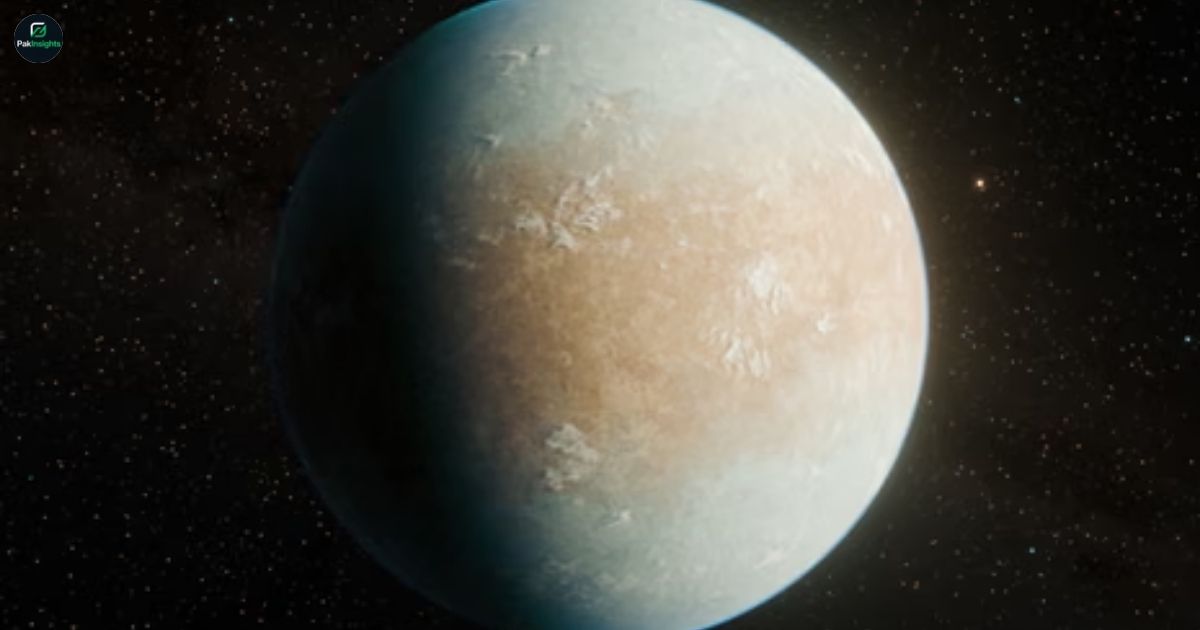
A new Earth-like planet found 146 Light-Years from Earth has astronomers excited about potential life beyond our solar system. The planet, named HD 137010 b, is an Earth-sized exoplanet orbiting a sun-like star. It is about 6% larger than Earth and completes an orbit every 355 days, closely resembling Earth’s year.
Scientists discovered this planet using 2017 data from NASA’s Kepler Space Telescope. The detection came through planet transit detection, where the planet passes in front of its star, causing a slight dimming. This method has become key in modern astronomical observation and exoplanet discovery.
The planet sits in the habitable zone, but its star is cooler than our sun. This could result in a Mars-like temperature, with surface conditions potentially very cold. Experts suggest it might even resemble a super snowball planet, covered in ice or frozen water. Despite this, it remains a candidate planet, needing more observations for confirmation.
This discovery is significant for future space research because it is one of the closest Earth-like planets yet found. Dr. Chelsea Huang from the University of Southern Queensland noted that the planet’s proximity, just 146 light-years away, makes it easier to study than other distant candidates. The lead author, Dr. Alexander Venner, first noticed the signal through a citizen science astronomy project.
Researchers published the findings in the Astrophysical Journal Letters, adding to the growing knowledge of icy worlds and planetary science breakthroughs. While traveling there is currently impossible, this discovery pushes the limits of our understanding. Scientists hope to study its atmosphere and potential habitability with future telescopes.
Meta Description
New Earth-Like Planet Found 146 Light-Years from Earth; a potentially habitable planet discovered by NASA’s Kepler Space Telescope.