
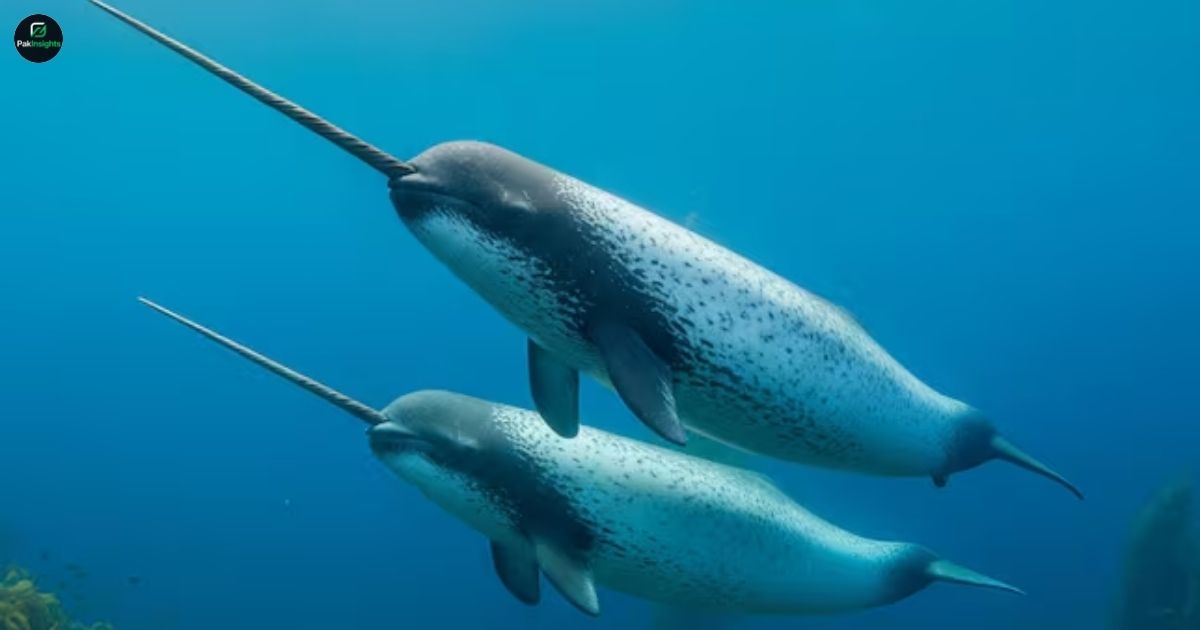
The Narwhal is one of the most mysterious creatures in the Arctic. Many people in the USA first ask what a narwhal is when they see its spiral tusk. It looks like fantasy, yet it is a real Arctic whale species living in frozen oceans. Scientists also call it Monodon monoceros facts because of its unique biology and deep Arctic survival skills.
People often describe it as a unicorn of the sea, but its life is far more complex. It survives in harsh ice, travels long distances, and depends on fragile ecosystems. Today, the Narwhal: The “Unicorn of the Sea” Facing Climate Change Threats story has become a symbol of ocean change and global concern.
What Is a Narwhal? Habitat, Physical Features, and Unique Tusk
A narwhal is a medium-sized whale found in icy Arctic waters. Many readers ask where narwhals live, and the answer lies in the narwhal habitat, the Arctic Ocean, mainly around Canada and Greenland. This species belongs to Arctic marine mammals and thrives in frozen seas where few animals can survive.
Its most famous feature is the tusk, leading to questions like narwhal tusk explained and why do narwhals have a tusk. Scientists believe the tusk helps with sensing and social behavior. It is deeply connected to the narwhal tusk meaning, which may include dominance and communication. Narwhals are part of the deep-diving whales, often reaching extreme depths to find food.
Narwhals also play a key role in the Arctic marine biodiversity. They depend on the Greenland halibut diet, along with squid and shrimp. This makes them important in maintaining ocean ecosystem balance, supporting food chains, and Arctic stability.
Key Physical Facts
| Feature | Detail |
|---|---|
| Scientific Name | Monodon monoceros |
| Length | About 17 ft |
| Weight | Around 4,200 lbs |
| Lifespan | 40–50 years |
These narwhal facts for students help explain how special they are. Many also wonder if narwhals have two tusks, but most males have only one.
Why Narwhals Are Near Threatened: Population Trends and Major Threats
The narwhal conservation status is currently considered stable but at risk. Scientists still ask whether narwhals are endangered, and the answer depends on climate trends. The narwhal population in 2026 is estimated to be around 80,000, but numbers are uneven across regions like the Baffin Bay narwhal population and the Davis Strait whales.
Climate change is the biggest danger. As sea ice-dependent species, narwhals struggle with shrinking ice cover. This is part of the wider climate change Arctic wildlife disruption. Ice loss affects feeding, breeding, and protection from predators like orcas, increasing killer whale predation on narwhals.
Human activity also harms them. Many ask about the effects of oil drilling on whales and the impact of oil and gas on marine life. Increased shipping creates ocean noise pollution for whales, disturbing communication and navigation. These pressures change the Arctic ecosystem and reduce survival chances.
Narwhals face several threats in the wild, including hunting, pollution, and warming seas. Understanding why sea ice is important for whales is key, because ice is both shelter and a hunting ground.
Conservation Efforts and Why Narwhals Matter to the Ecosystem
Global efforts aim to protect the Narwhal: The “Unicorn of the Sea” Facing Climate Change Threats through research and policy. Organizations support whale conservation efforts, focusing on safer oceans and reduced human disturbance. Programs like marine mammal protection programs help track and secure populations.
Scientists use whale satellite tracking research to study movement and behavior. This includes satellite tagging whales, how it works, and where small devices are attached to monitor migration. These studies reveal whale migration patterns in the Arctic, helping protect feeding and breeding areas.
International cooperation is also important. The International Whaling Commission protection policies regulate hunting and promote conservation. Groups like WWF run WWF narwhal conservation programs, supporting awareness and research.
Narwhals are essential to Arctic life. They support the Arctic food chain predators and maintain balance in fragile ecosystems. Their survival reflects the health of the ocean itself.
Why Narwhals Matter Today
Narwhals are more than rare animals. They represent fragile Arctic survival and environmental warning signs. They also highlight Arctic marine ecosystem facts, showing how deeply life depends on ice stability.
Many people in the USA are now asking deeper questions like how narwhals survive Arctic ice, what do narwhals eat, and the impact of narwhal climate change. These questions matter because their future reflects global climate health.
Protecting them also supports the awareness of endangered Arctic animals and strengthens global conservation action. The story of narwhals is a reminder that ocean life is changing fast, and every action matters.
Frequently Asked Questions
What is a narwhal?
A narwhal is a medium-sized Arctic whale known for its long, spiral tusk. It lives in icy waters around Canada and Greenland.
Narwhal tusk explained?
The tusk is actually a long tooth that grows from the upper jaw. It may help in sensing the environment and social behavior.
Why do narwhals have a tusk?
Scientists believe it helps with communication, dominance, and possibly detecting changes in water conditions.
Where do narwhals live?
Narwhals live in the Arctic Ocean, mainly in Baffin Bay, Davis Strait, and nearby icy regions.
Are narwhals endangered?
They are not fully endangered yet, but they are considered near threatened due to climate change and human activity.