
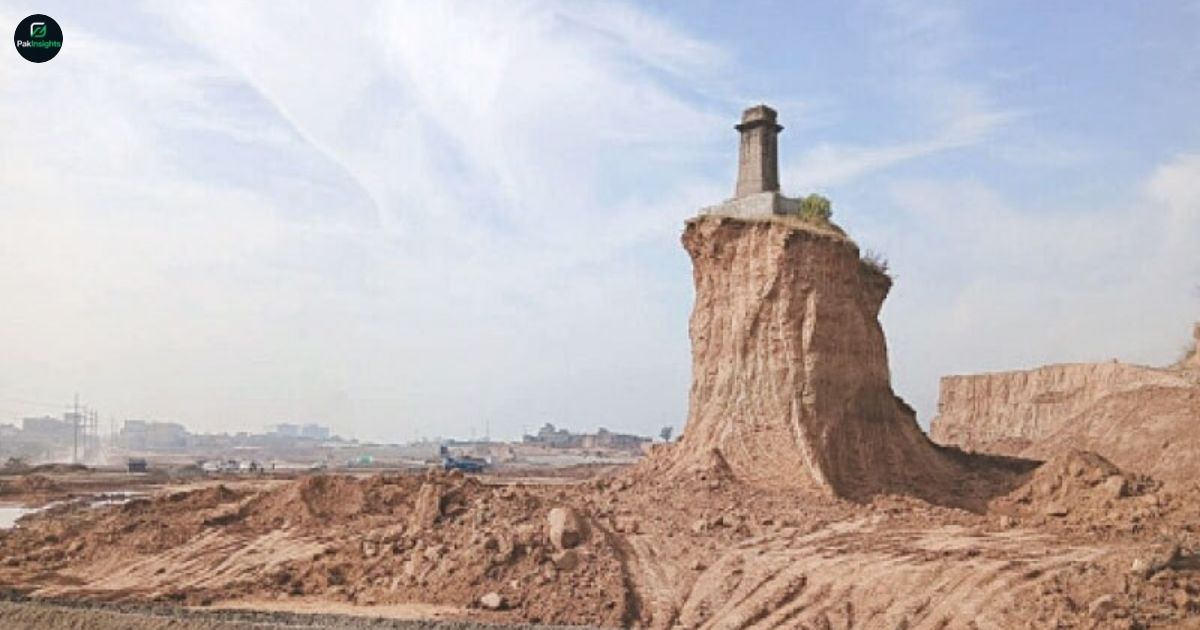
Islamabad loses Mughal-era ruins after World War I memorial demolition, shocking historians and residents. The Mughal-era ruins near Rehara village were completely destroyed. This 16th-century building, once one of Islamabad’s oldest historical landmarks, was located near a British-era obelisk. Officials said the demolition followed the removal of the World War I memorial for a private housing scheme.
The Department of Archaeology and Museums (DOAM) confirmed the site included an above-ground arch and main chamber built from limestone and sandstone. The structure measured roughly 8 by 4.5 meters with thick walls, showing Mughal Emperor Akbar’s architectural style. Archaeological excavation earlier had highlighted its historic importance, but urban development vs heritage conflicts led to its loss.
Local historians criticized the demolition of heritage sites, calling it Pakistan’s heritage demolition. They noted that Mughal-era ruins demolished near the World War I memorial were irreplaceable cultural assets. Islamabad’s archaeological site in Rehara village once attracted researchers studying Mughal architecture remains and the oldest historical ruin in the region.
Experts emphasize the need for historic ruins preservation. Without proper government heritage oversight, more historic structures in Islamabad could face destruction. Heritage site destruction in Islamabad signals urgent reforms, balancing urban growth and cultural heritage protection. Preservation advocates suggest stricter laws and early documentation of archaeological sites to prevent similar losses.
The demolition of these Mughal-era ruins highlights Pakistan’s cultural heritage loss. Protecting remaining sites and enforcing historical site protection is critical. Urban development must respect historical landmarks and prioritize cultural preservation for future generations.