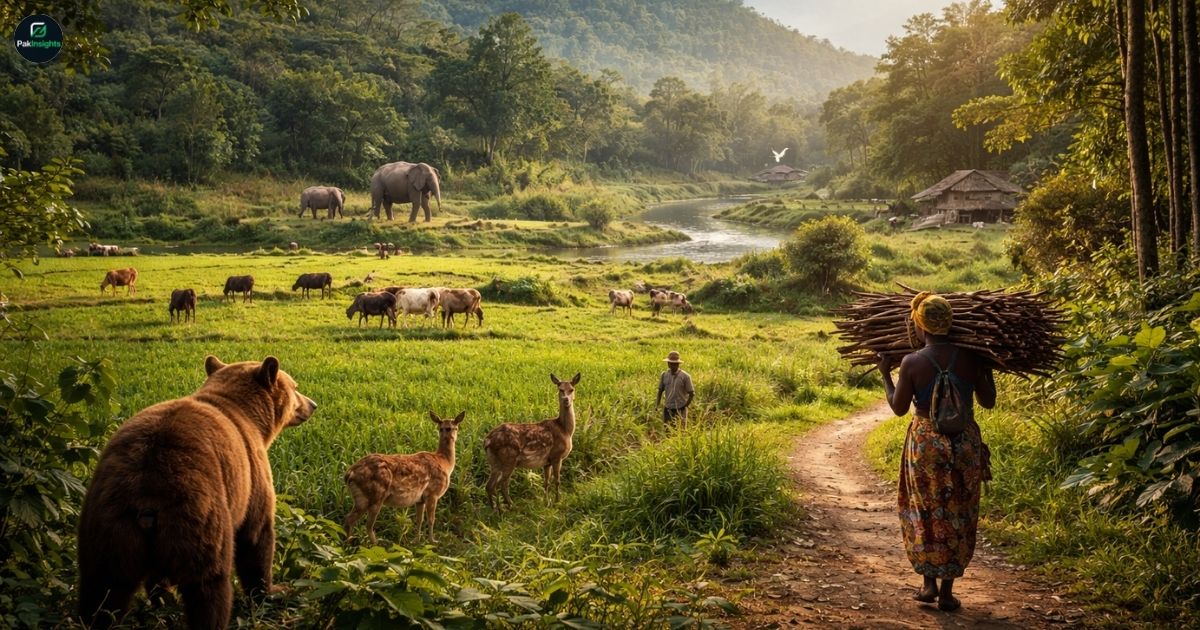
Humans are sharing space with wildlife more than ever. From the forests of Montana to the suburbs of California, people encounter animals in their daily lives. Human-wildlife coexistence is about finding ways for humans and animals to live side by side safely. This concept is crucial for protecting biodiversity, reducing human-wildlife conflict (HWC), and creating safer communities. Achieving it requires understanding how animals behave, why conflicts happen, and what solutions work in different landscapes.
Successful coexistence depends on tolerance toward wildlife and strong local community engagement. People need to learn about species like black bears, grizzly bears, and tigers while respecting their habitats. At the same time, wildlife must have space to roam and thrive. Wildlife management strategies and education programs help reduce negative interactions with wildlife, protect property, and ensure that communities benefit from living alongside animals.
Understanding Human-Wildlife Interactions
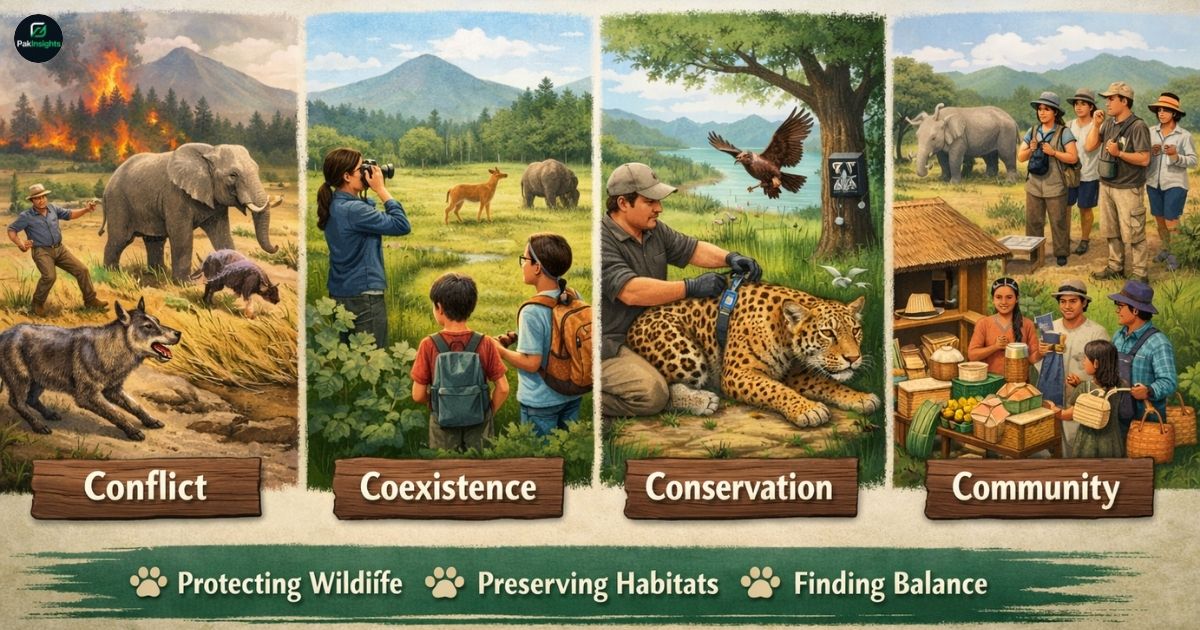
Humans and wildlife have interacted for centuries, but today, interactions are more frequent due to urban expansion, habitat loss, and fragmentation. Animals like coyotes, deer, and even gorillas in protected areas sometimes enter human-dominated spaces. These encounters can range from harmless sightings to serious incidents, creating a spectrum known as the coexistence spectrum. How people respond often determines whether conflicts escalate or coexistence is possible.
Social attitudes also play a big role. Cultural perceptions and fear can increase human-wildlife conflict. For instance, in agricultural landscapes, farmers may see wildlife as threats to crops or livestock, while conservationists highlight the importance of species protection. Integrated education programs and awareness campaigns, such as education programs for wildlife awareness, can shift perspectives and help communities adopt coexistence-friendly practices.
Common Challenges and Risks of Coexisting with Wildlife
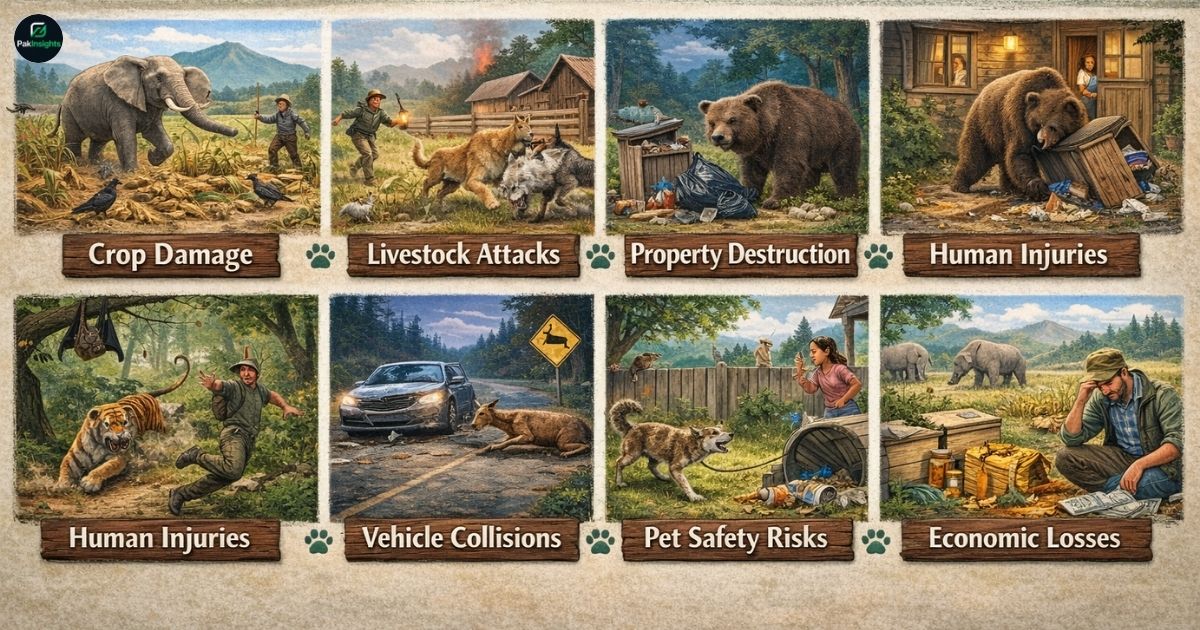
Living with wildlife is not without risks. Livestock predation by wildlife and crop and property damage are the most common problems in rural areas. Black bears and grizzly bears often raid garbage bins or orchards in suburban regions, while tigers and gorillas pose safety concerns near villages and national parks. These risks can reduce tolerance toward wildlife and increase conflict.
Climate and environmental changes worsen these challenges. Climate change impacts on wildlife force species to move into human-dominated landscapes. Habitat loss and fragmentation restrict animal movement, making encounters with humans more likely. Managing these challenges requires rapid response mechanisms for wildlife incidents, wildlife relocation and mitigation measures, and continuous monitoring and long-term interventions to prevent escalation.
Effective Solutions for Harmonious Coexistence
Successful coexistence combines technology for early warning systems, community engagement, and smart planning. Buffer zones and wildlife corridors help animals move safely without entering human areas. In the USA, programs using GPS tracking and motion sensors alert communities about approaching wildlife. These methods reduce negative interactions with wildlife and increase safety.
Community programs also make coexistence practical. Community-based ecotourism programs provide income to people living near wildlife, while revenue-sharing schemes for local communities reward conservation efforts. Collaboration between stakeholders, such as government agencies, NGOs, and residents, ensures effective integrated conflict management. Through education programs for wildlife awareness, public awareness campaigns, and sustainable planning, communities can enjoy the benefits of sustainable development and biodiversity while reducing conflict.
Case Study Table: Human-Wildlife Coexistence in the USA
| Location | Species | Conflict Issue | Solution Implemented | Outcome |
|---|---|---|---|---|
| Montana | Black bears | Garbage raids, livestock predation | Bear-resistant containers, education programs | Reduced incidents by 70% |
| California | Coyotes | Pets attacked | Community awareness, rapid response | Increased tolerance toward wildlife |
| Northern Rockies | Wolves | Livestock predation | Compensation programs, monitoring | Improved community engagement and coexistence |
| Florida | Florida panther | Road accidents | Wildlife corridors, signage | Enhanced connectivity for wildlife movement |
Conclusion
Human-wildlife coexistence in the USA is possible but requires effort. Communities must balance safety, property, and wildlife protection through stakeholder collaboration and partnerships, innovation in coexistence strategies, and continuous education. Addressing drivers of human-wildlife conflict while promoting land-sharing and habitat access ensures a future where humans and wildlife can thrive together.
By understanding interactions, preparing for risks, and implementing proven solutions, we can create a world where species-specific coexistence challenges are managed effectively, benefits from ecotourism and community programs are maximized, and sustainable development and biodiversity are preserved.
Frequently Asked Questions
Q1: What is human-wildlife coexistence?
It is the practice of humans and wildlife living safely in the same area while minimizing conflicts and protecting both people and animals.
Q2: Why is coexistence important?
It helps preserve biodiversity, reduces human-wildlife conflict, and ensures communities can safely benefit from wildlife.
Q3: What are common challenges in coexistence?
Challenges include livestock predation by wildlife, crop and property damage, and safety risks from species like black bears or tigers.
Q4: How can communities reduce conflicts with wildlife?
Using wildlife management strategies, rapid response mechanisms, and education programs helps prevent incidents and increase tolerance toward wildlife.
Q5: Can coexistence benefit communities economically?
Yes, community-based ecotourism programs and revenue-sharing schemes provide income while promoting wildlife conservation.