
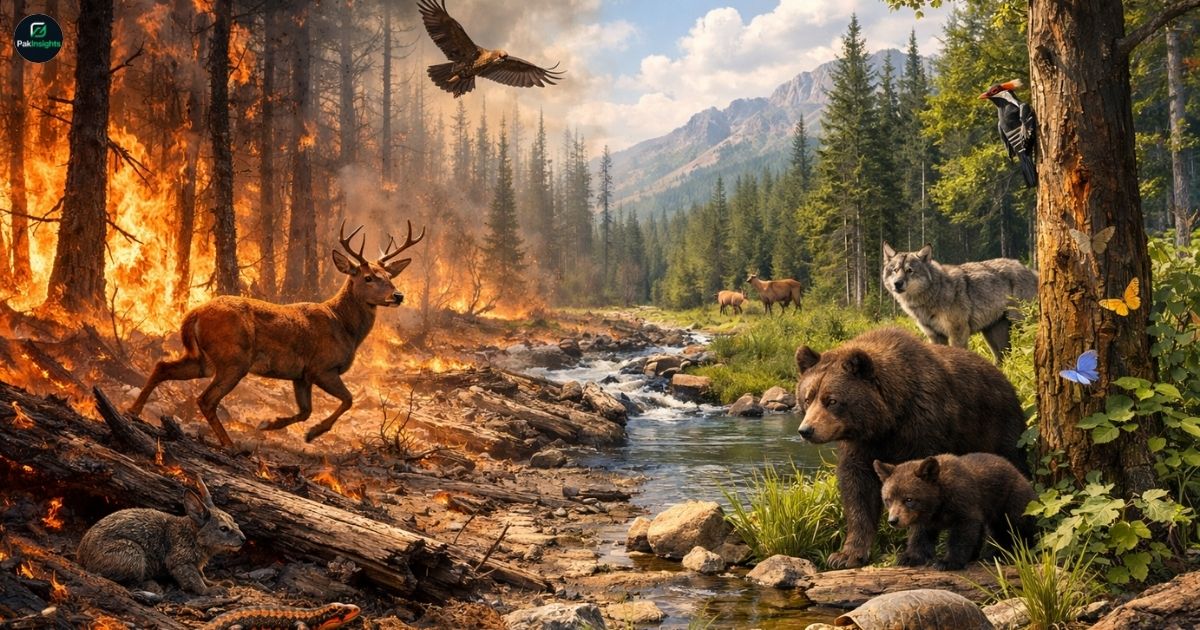
Wildfires have become a major concern across the United States. Each year, forests burn, leaving burned forest areas, scorched soil, and vegetation removal in their wake. These fires reshape the land and affect both animals and plants. From California to the Sierra Nevada, forests and ecosystems face constant pressure from climate change and wildfires. While wildfires can be destructive, they also trigger natural cycles of forest regrowth and native plants regeneration. Understanding how wildlife responds to these events is key to protecting endangered species and maintaining forest biodiversity.
The effects of wildfires are not uniform. Some areas experience low-intensity fires, which clear thick vegetation and open space for new growth. Others see high-severity fires that burn trees, destroy habitats, and disrupt aquatic species in streams and lakes. Sometimes, a mix occurs called mosaic fires, where patches of forest burn at different intensities. These variations affect how animals survive and how forests recover over time.
Immediate and Long-Term Effects of Wildfires on Wildlife
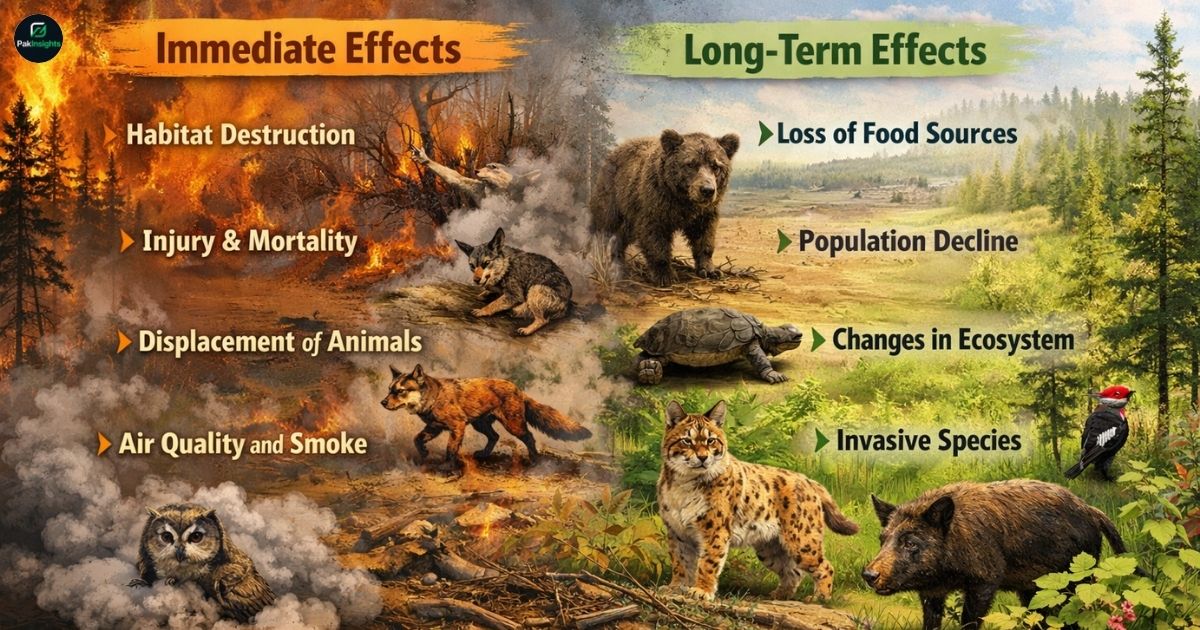
When wildfires strike, animal displacement happens instantly. Many species flee their homes, seeking animal refuge in nearby safe areas. Small creatures like rodents and mice or frogs and amphibians burrow underground to escape flames, while birds climb into the tree canopy. Larger animals, such as deer and rabbits, move across the landscape, often encountering fragmented wildlife corridors. Stream and lake contamination from ash and debris disrupts the aquatic lifecycle of fish and amphibians, showing how wildfires affect ecosystems beyond the forest floor.
Over time, the impact of high-severity fires becomes more visible. Trees die, and the loss of the forest canopy changes sunlight and precipitation effects on the ground. Soil becomes vulnerable, causing soil erosion and slowing vegetation recovery. Invasive grasses and weeds often take root before native plants can regenerate, altering the forest’s structure. Some species, like the California spotted owl, Southern Sierra Nevada fisher, and Sierra Nevada red fox, struggle to find food and shelter. However, resilient species slowly adapt to the transformed landscape.
| Wildfire Effects | Immediate | Long-Term |
|---|---|---|
| Habitat | Habitat destruction, animal displacement | Loss of forest canopy, slower vegetation recovery |
| Water | Stream and lake contamination | Soil erosion affects water quality |
| Wildlife | Wildlife relocation, predator-prey interaction | Species resilience varies; endangered species struggle |
| Vegetation | Vegetation removal, forest floor enrichment | Growth of invasive grasses and weeds, native plants regeneration |
Wildlife Adaptations and Survival Strategies
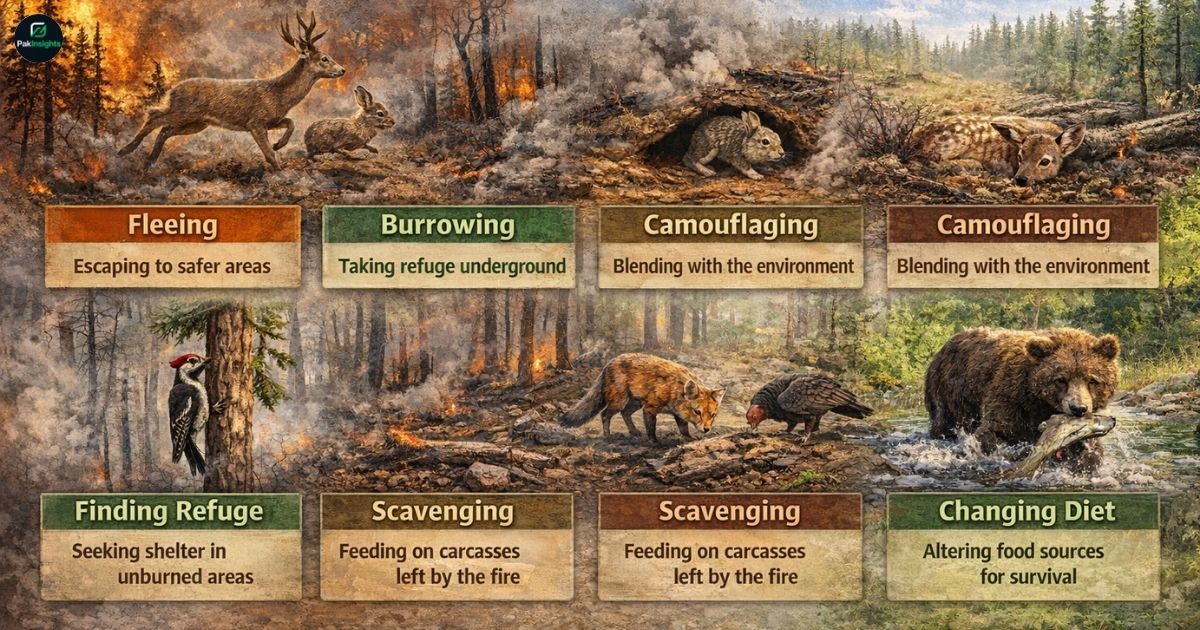
Wildlife has developed incredible ways to survive wildfires. Many animals use animal refuge to avoid flames. Rodents and mice hide in burrows, frogs and amphibians retreat to water, and woodpeckers follow insects in burned trees. Some species climb or fly to safety, while others adjust hunting and feeding habits to cope with changed conditions. Fire-adapted species, such as certain shrubs and trees, also provide temporary shelter and food for returning animals.
Wildlife adaptation is essential for recovery. Carnivores and grazers learn to track prey across altered landscapes. Seed dispersal by birds and small mammals supports forest regrowth, while forest floor enrichment from ash and fallen branches improves soil health. Even species considered vulnerable, like the California spotted owl and the Southern Sierra Nevada fisher, can survive when corridors and refuges are preserved. Understanding these strategies helps conservationists plan ecosystem restoration and preserve forest biodiversity after wildfires.
Human Role and Conservation Efforts in Post-Fire Landscapes
Humans play a major role in helping forests and wildlife recover. Prescribed burns and tree thinning reduce fuel and prevent high-severity fires. Replanting native vegetation and controlling invasive species promotes vegetation recovery and strengthens ecosystem resilience. Agencies like the U.S. Forest Service, National Park Service, and Bureau of Land Management work together to restore habitats and support species resilience.
Conservation efforts also focus on wildlife. Creating safe wildlife corridors ensures animals like the Sierra Nevada red fox and Southern Sierra Nevada fisher can move safely and find mates. Protecting forest ecosystems helps maintain carbon dioxide absorption, prevents soil erosion, and supports aquatic species in streams and lakes. Careful forest management ensures that wildfires are less damaging while allowing nature’s cycles to continue. Observing wildlife recovery after fires shows how ecosystems can adapt and flourish when humans intervene wisely.
Frequently Asked Questions
Q1: What are wildfires?
Wildfires are uncontrolled fires that burn forests, grasslands, or other ecosystems, often caused by lightning, human activity, or dry conditions.
Q2: How do wildfires affect wildlife?
Wildfires cause habitat destruction, animal displacement, and disrupt predator-prey interactions, but some species show remarkable wildlife adaptation.
Q3: What is the difference between high-severity and low-intensity fires?
High-severity fires destroy trees and soil deeply, while low-intensity fires burn surface vegetation, often helping forest regrowth.
Q4: Can animals survive after a wildfire?
Yes, many animals find animal refuge, adapt hunting habits, and return as ecosystems recover, especially in mosaic fires.
Q5: How do humans help post-fire recovery?
Humans use prescribed burns, tree thinning, and replanting native vegetation to reduce risks and support ecosystem restoration.



One Comment