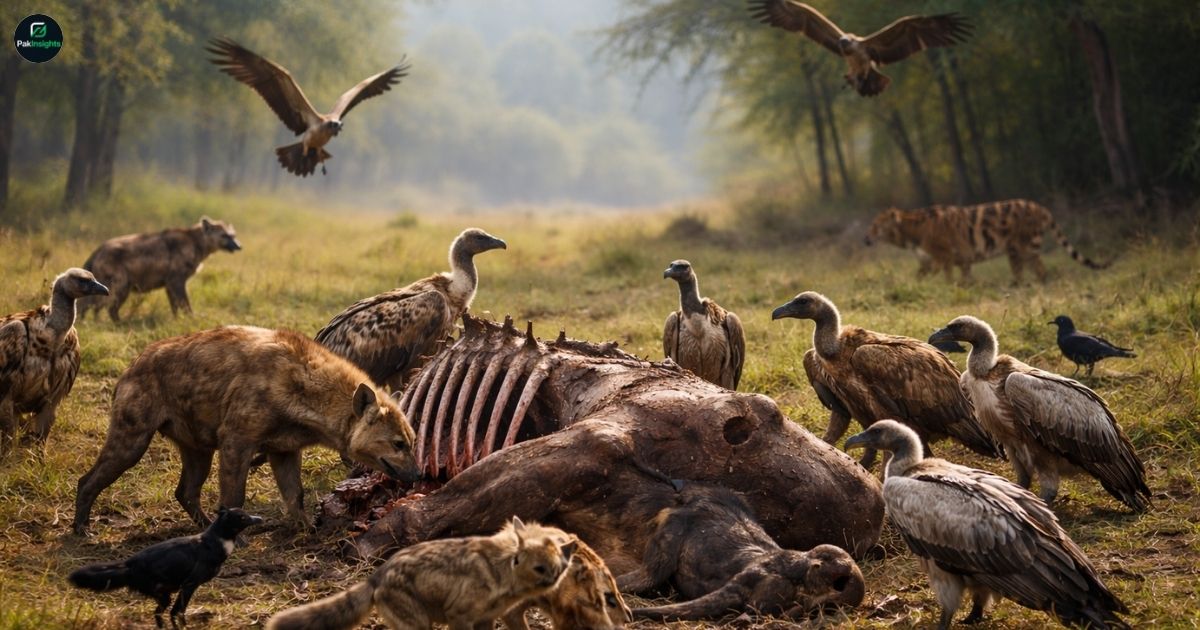
Scavengers play a quiet but vital role in keeping our environment clean and healthy. Animals like vultures, hyenas, and jackals remove dead matter from the ecosystem. Without them, carcasses would rot, causing disease and disrupting ecosystem health. Scavengers are nature’s cleanup crew, helping recycle nutrients and maintain balance in the food web dynamics. They are not just eating leftovers—they are essential for biodiversity maintenance and organic waste decomposition.
Across the USA and other regions, from forests to cities, scavengers support wildlife conservation. They remove carrion that would otherwise attract disease and pests. Their scavenging behavior ensures that smaller species, plants, and even humans benefit indirectly. Understanding how scavengers protect ecosystems can help us manage habitats better and support long-term environmental health.
How Scavengers Maintain Ecological Balance
Scavengers are crucial for maintaining ecological balance because they prevent the buildup of decaying animals. Without these creatures, predator-prey competition would intensify, and some populations could explode uncontrollably. Obligate scavengers, such as vultures, rely entirely on carrion, whereas facultative scavengers like jackals, wild dogs/dholes, and civets feed opportunistically. Together, they ensure that dead animals do not disrupt food web dynamics or soil quality.
In addition, scavengers help other wildlife species indirectly through the facilitation of other scavengers. For instance, when vultures open a carcass, smaller animals like mongoose or carrion beetles gain access to meat that would otherwise remain unavailable. This process of carcass opening/access to meat is vital for species coexistence. In some ecosystems, the decline of scavengers leads to a cascade effect, impacting predators like leopards and tigers and even affecting vegetation through a trophic cascade.
| Type of Scavenger | Role in Ecosystem | Example Species (USA) |
|---|---|---|
| Obligate scavenger | Eats only carrion, prevents disease | Vultures |
| Facultative scavenger | Opportunistic feeders, aid decomposition | Jackals, Dholes, Civets |
| Micro-scavenger | Decomposes small organic matter | Carrion beetles, Ants |
Environmental Benefits of Scavenger Activity
Scavengers provide multiple environmental benefits that go beyond simply cleaning dead animals. They prevent the spread of disease, offering disease prevention for humans and wildlife alike. By consuming carrion, they stop bacteria from contaminating soil and water, contributing to soil enrichment. Their feeding activity ensures nutrient recycling, supporting plant growth and maintaining overall ecosystem health.
Furthermore, scavengers aid biodiversity maintenance by allowing predators to focus on hunting live prey instead of competing for carcasses. Species like hyenas, vultures, and even wild dogs/dholes help smaller animals survive by clearing meat and exposing nutrient-rich tissues. Urban scavengers such as raccoons also contribute to organic waste decomposition, reducing human-wildlife conflicts over garbage. These benefits highlight why supporting scavengers is essential for wildlife conservation.
Threats to Scavenger Populations and Ecosystem Impact
Despite their importance, scavengers face many threats that harm both them and the ecosystems they protect. Diclofenac poisoning from veterinary drugs once caused drastic population declines in vultures, particularly across India at sites like the Jorbeed carcass dump site. In the USA, urbanization, free-ranging dogs, and habitat destruction pose similar risks. Reduced scavenger populations lead to an increase in disease-carrying animals and unprocessed carrion, affecting ecosystem health.
Human activities also create human-wildlife conflict, forcing scavengers to compete with invasive species or domestic animals. Declines in scavengers can trigger trophic cascades, where predators like leopards or tigers (in other ecosystems) face food shortages. Conservation measures such as conservation reserves, breeding centers, and stricter wildlife management programs are essential to maintain ecological balance. A study from the Kanha Tiger Reserve shows that protected areas allow scavengers and predators to coexist peacefully, demonstrating the critical role of targeted conservation.
Frequently Asked Questions
Q1: What are scavengers?
A: Scavengers are animals that eat dead plants and animals, like vultures, hyenas, and jackals, helping keep ecosystems clean.
Q2: Why are scavengers important for ecosystems?
A: They prevent disease, recycle nutrients, and maintain ecological balance by removing carrion from the environment.
Q3: What is the difference between obligate and facultative scavengers?
A: Obligate scavengers eat only dead animals, like vultures, while facultative scavengers eat leftovers but also hunt, like jackals.
Q4: How do scavengers help other animals?
A: By opening carcasses, they give smaller animals and insects like carrion beetles access to food, aiding species coexistence.
Q5: What threats do scavengers face?
A: They face Diclofenac poisoning, habitat loss, free-ranging dogs, and human-wildlife conflicts that reduce their populations.