
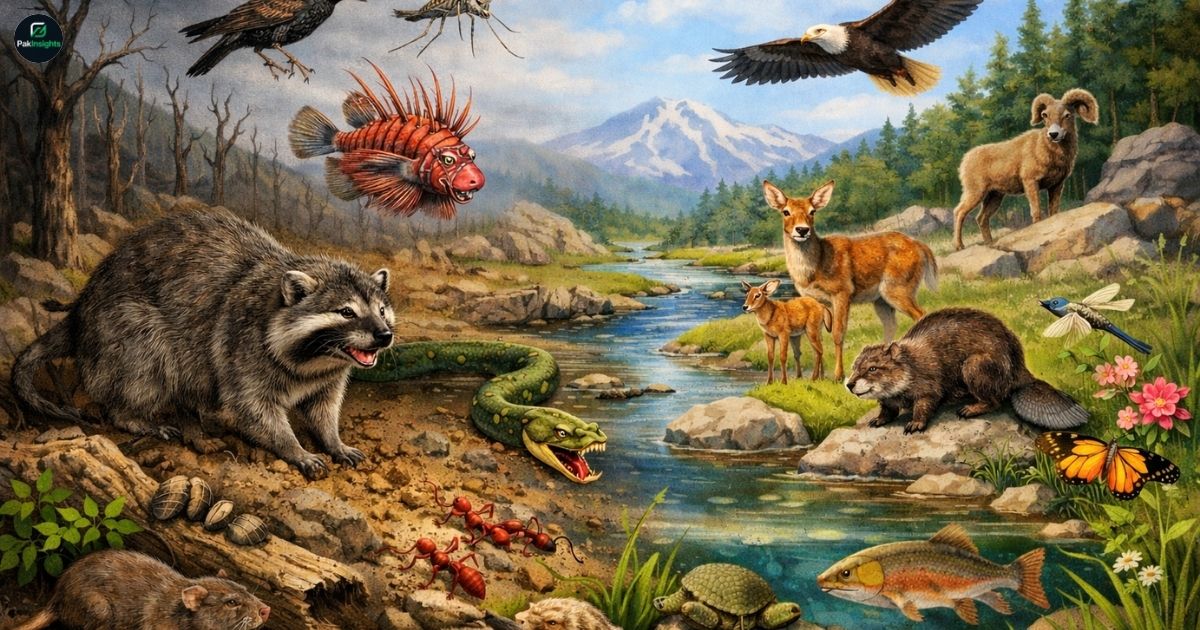
The United States is home to millions of species, but not all of them belong here. Invasive species have spread across the country, threatening native wildlife and fragile ecosystems. These non-native species often arrive accidentally or through human activities like the pet trade and gardening with ornamental plants. Once they settle, they out-compete native species, causing population decline, extirpation, and severe ecosystem disruption.
From freshwater rivers to forests and backyards, these invaders create serious problems. For example, the brown trout introduced for sport has disrupted populations of brook trout in the eastern U.S., while Hydrilla, also called water thyme, can block sunlight and decrease dissolved oxygen, suffocating fish in lakes and ponds. Invasive flora and invasive fauna, like the Red-eared Slider turtle and African Clawed Frogs, have upset the delicate balance of many local habitats. Protecting ecosystems has become a priority for scientists, governments, and communities nationwide.
Understanding Invasive Species and Their Impact
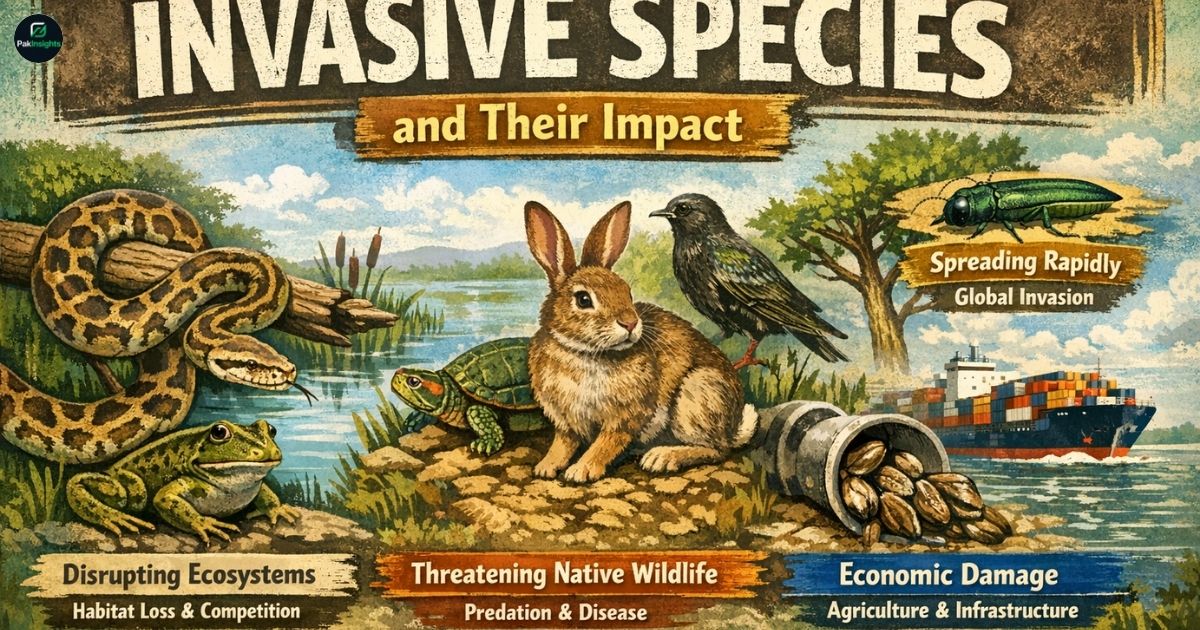
Invasive species are plants or animals introduced to areas where they are not native. Unlike harmless non-native species, invasives disrupt natural systems. They out-compete native species for food, shelter, and resources. This often leads to population decline and the extirpation of native animals. They can spread disease, change soil composition, or even choke native plants.
In the U.S., some of the most damaging examples include Japanese knotweed, Cuban Tree Frogs, and the Southern pine beetle. The beetle, affected by global warming, now thrives in northern states where winters used to limit its survival. As these species expand, they bring severe habitat destruction, threaten biodiversity, and upset ecosystem balance. Governments spend billions annually on eradication and management, but prevention remains the most effective strategy.
Common Types of Invasive Species Affecting Wildlife
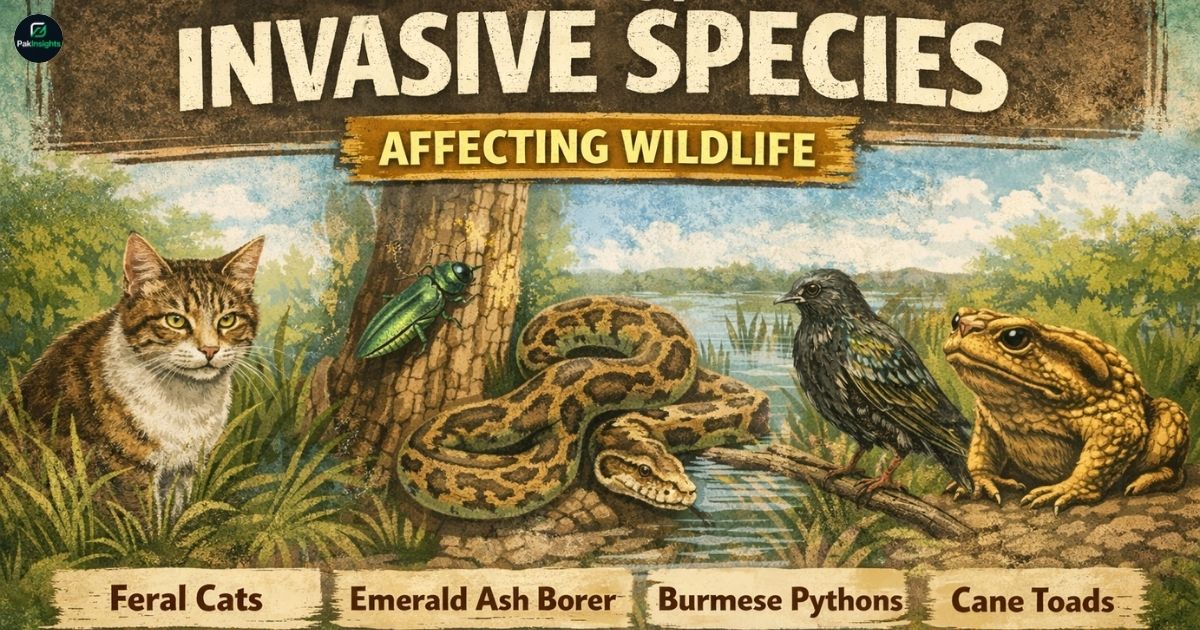
Across the country, invasive fauna and invasive flora target different ecosystems. In freshwater lakes and rivers, species like Hydrilla and Asian carp grow rapidly, block sunlight, and decrease dissolved oxygen, making life difficult for native fish. Red-eared Slider turtles compete with native turtles for basking spots and food. On land, brown trout, Cuban Tree Frogs, and African Clawed Frogs disrupt local populations and can introduce harmful diseases like chytrid fungus.
Here’s a quick table showing some major U.S. invasive species and their impacts:
| Species | Type | Impact |
|---|---|---|
| Brown Trout | Fish | Eats native frogs, spreads disease (chytrid) |
| Japanese Knotweed | Plant | Chokes native plants, habitat destruction, difficult to remove |
| Red-eared Slider Turtle | Turtle | Competes for basking spots, spreads disease |
| Hydrilla (Water Thyme) | Aquatic Plant | Blocks sunlight, decreases dissolved oxygen, kills fish |
| African Clawed Frogs | Amphibian | Eats native frogs, spread disease (chytrid) |
| Southern Pine Beetle | Insect | Kills native trees, changes forest composition |
These species show how quickly invasive species can harm wildlife if left unchecked. They are often introduced through accidental introduction or the pet trade, emphasizing the importance of careful management.
Strategies to Protect Native Wildlife from Invasions
Preventing invasive species is easier than removing them later. People can help by choosing to plant native species in gardens, cleaning equipment/boats before entering lakes or rivers, and never releasing pets into the wild. Local communities can contact the local wildlife agency if they spot unusual species in their area.
For species already established, conservation efforts use a mix of methods. Herbicide treatment can remove invasive plants like Japanese knotweed, while controlled burns are sometimes used for land plants. Invasive animals like African Clawed Frogs or Cuban Tree Frogs are often humanely euthanized to protect native populations. Long-term environmental protection requires awareness, education, and collaboration among scientists, governments, and citizens to preserve wildlife conservation and maintain ecosystem balance.
Frequently Asked Questions
Q1: What are invasive species?
Invasive species are non-native plants or animals that harm ecosystems by out-competing native species and disrupting habitats.
Q2: How do invasive species affect native wildlife?
They cause population decline, extirpation, and biodiversity loss by eating, spreading disease, or taking over space and resources.
Q3: What are some common invasive species in the U.S.?
Examples include brown trout, Hydrilla (water thyme), Red-eared Slider turtles, African Clawed Frogs, and Japanese knotweed.
Q4: How do invasive species spread?
They spread through the pet trade, accidental introduction, or by humans moving plants, animals, or boats between habitats.
Q5: How can I help prevent invasive species?
You can plant native species, clean equipment/boats, avoid releasing pets, and report sightings to the local wildlife agency.



One Comment