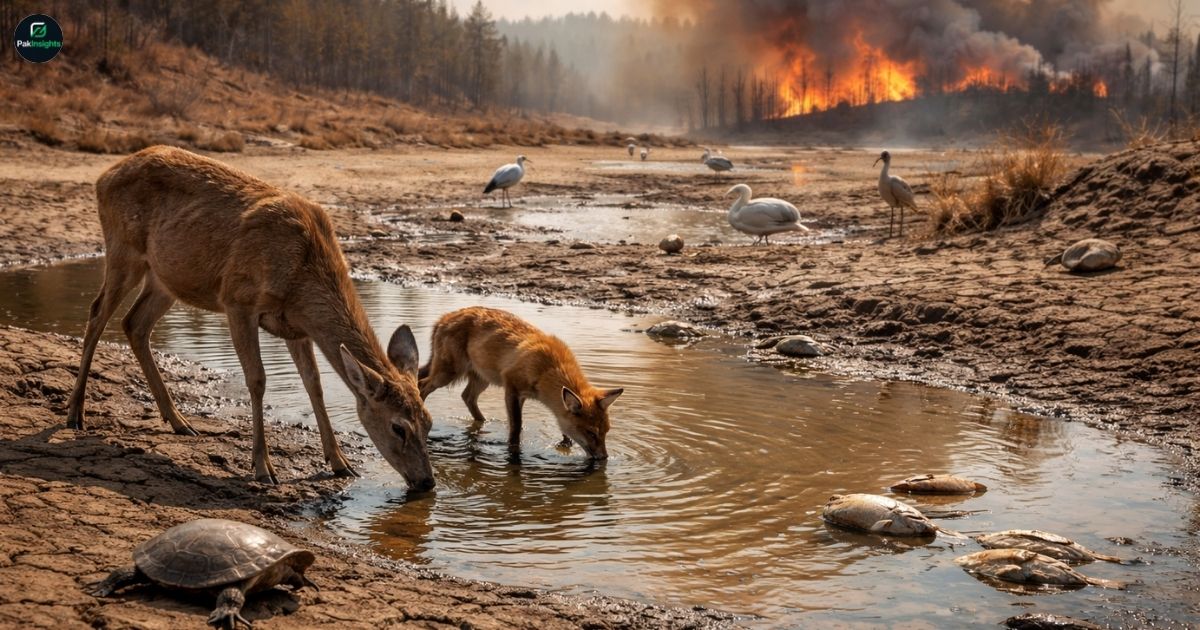
Drought conditions impact wildlife in the United States more than many people realize. When water becomes scarce, animals struggle to survive. Wildlife survival during dry conditions is challenged by low water levels, forage scarcity for mammals and birds, and warm water stress on fish. Rivers, ponds, and wetlands shrink, leaving animals with fewer places to eat, drink, or hide from predators. In areas like the Klamath Basin, water scarcity in Klamath Basin worsens year by year, affecting both migratory and resident species. The consequences of habitat degradation ripple through entire ecosystems, changing how animals behave, reproduce, and interact.
From tiny amphibians to large mammals, all species feel the strain. Amphibian survival in drought is particularly sensitive because frogs, salamanders, and other species require a moist environment for breeding and growth. Fish also suffer. Trout, salmon, and steelhead (cold water fish) experience isolated pools and low oxygen stress, making juvenile and adult fish migration difficult. Birds like black-necked stilt, American white pelican, Caspian tern, Franklin’s gull, and sandhill crane face nesting failure in wetland birds as water levels drop. Even reptiles like the western pond turtle and the western painted turtle deal with reptile food shortages and higher predation risk.
Understanding the Effects of Drought on Wildlife Habitats
Drought changes habitats in dramatic ways. Alkali lakes and wetland drying leave birds and mammals with limited access to food and water. Wetlands shrink, rivers slow, and ponds dry up, forcing wildlife to compete for fewer resources. Food scarcity for birds and mammals leads to weaker animals and higher mortality among young offspring. Catastrophic wildfires and wildlife destruction can follow, as dry vegetation ignites more easily, further reducing safe habitats.
In freshwater ecosystems, warm water stress on fish is severe. Trout, salmon, and steelhead (cold water fish) are sensitive to even small temperature rises. Low water combined with heat can cause disease transmission in amphibians and other aquatic species. In regions like Oregon, the Oregon Drought Watch, US Drought Monitor track these changes. The impact extends to migratory routes, creating fish migration obstacles that affect survival for entire species.
| Habitat Type | Key Species Affected | Main Drought Impact |
|---|---|---|
| Rivers & Streams | Trout, salmon, steelhead | Low oxygen, isolated pools, migration obstacles |
| Wetlands | Black-necked stilt, sandhill crane | Nesting failure, food scarcity |
| Ponds | Western pond turtle, amphibians | Reptile food shortage, disease spread |
| Forests/Grasslands | Deer, elk, small mammals | Forage scarcity, increased predation during drought |
Wildlife Adaptations and Survival Strategies During Drought
Animals try to survive using clever adaptations. Fish may migrate to cooler, deeper water, while birds shift their feeding patterns or move to wetter regions. Juvenile and adult fish migration is critical for survival, and some species wait for rains to trigger breeding. Amphibians hide in moist soil or under debris to meet their moist environment requirement for amphibians. Reptiles become more active at night to avoid heat, reducing increased predation during drought.
Some mammals rely on stored fat or water in their bodies. Others concentrate near the remaining water holes, creating increased competition for the remaining water pools. Birds like the American white pelican or Caspian tern may skip breeding seasons to save energy. Observing wildlife during this time requires care. Following wildlife viewing best practices helps humans avoid stressing animals further. Using binoculars or a spotting scope to minimize disturbance is essential for responsible interaction.
Conservation Measures and Mitigation Strategies
Conservation can save wildlife during drought. Governments and organizations use programs like Instream Leasing and Transfer Programs to maintain water flow in rivers. Habitat restoration, artificial ponds, and careful water allocation protect vulnerable species. Fire safety tips during drought are critical to prevent habitat destruction. Campers must camp at least 300 feet from water sources to avoid stressing wildlife.
Responsible recreation is another key factor. Hikers and anglers must avoid sensitive areas and respect habitat disturbance prevention rules. Educating communities about drought’s effects, following Oregon Department of Forestry wildfire updates, and using local resources such as Oregon Conservation Strategy species guidelines help protect wildlife long-term. By combining these strategies, humans can reduce stress on animals and preserve ecosystems, even during extreme dry seasons.
Frequently Asked Questions
Q1: How does drought affect wildlife survival?
Drought reduces water and food availability, causing stress, disease, and higher mortality for fish, birds, mammals, amphibians, and reptiles.
Q2: Which species are most impacted by drought?
Wetland birds like black-necked stilt and sandhill crane, cold water fish like trout, salmon, steelhead, and amphibians face the highest risks.
Q3: How do animals adapt to drought conditions?
Wildlife may migrate, change feeding habits, hide in moist areas, or become nocturnal to conserve water and energy.
Q4: What human actions help wildlife during drought?
Providing water sources, restoring habitats, following responsible recreation during drought, and avoiding disturbance near water can protect animals.
Q5: Can drought lead to wildfires affecting wildlife?
Yes, prolonged drought dries vegetation, increasing the risk of catastrophic wildfires and wildlife loss in forests and grasslands.