
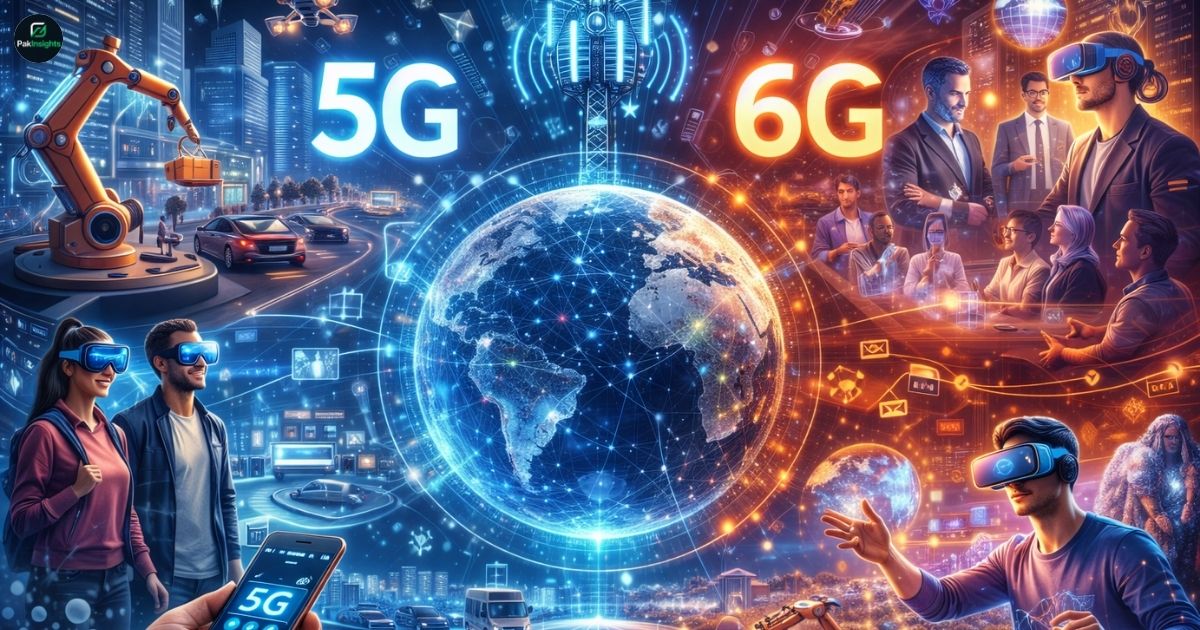
The rise of 5G and 6G is set to redefine how we communicate, work, and live. These next-generation communication technologies are more than just faster internet on your phone. They promise an era of high-performance connectivity, enabling smart cities, autonomous vehicles, and connected healthcare systems that could save lives. The United States is at the forefront of deploying mobile networks that not only serve individual users but also power massive industries. By combining edge networking, software-defined networks, and IoT connectivity, 5G and 6G create a connected future that was science fiction just a decade ago.
Even today, 5G advanced networks are rolling out across major cities in the US. They deliver peak data rates up to 20 Gbit/s and support low-latency communication (uRLLC), crucial for latency-critical applications. Meanwhile, 6G technology promises speeds in the terabit range, global mobile coverage, and the integration of satellite constellations and high-altitude platforms. The evolution of these networks is not just about speed; it is about enabling real-time data transmission for everything from autonomous mobility to intelligent machines in agriculture and construction.
Understanding 5G and 6G Technology
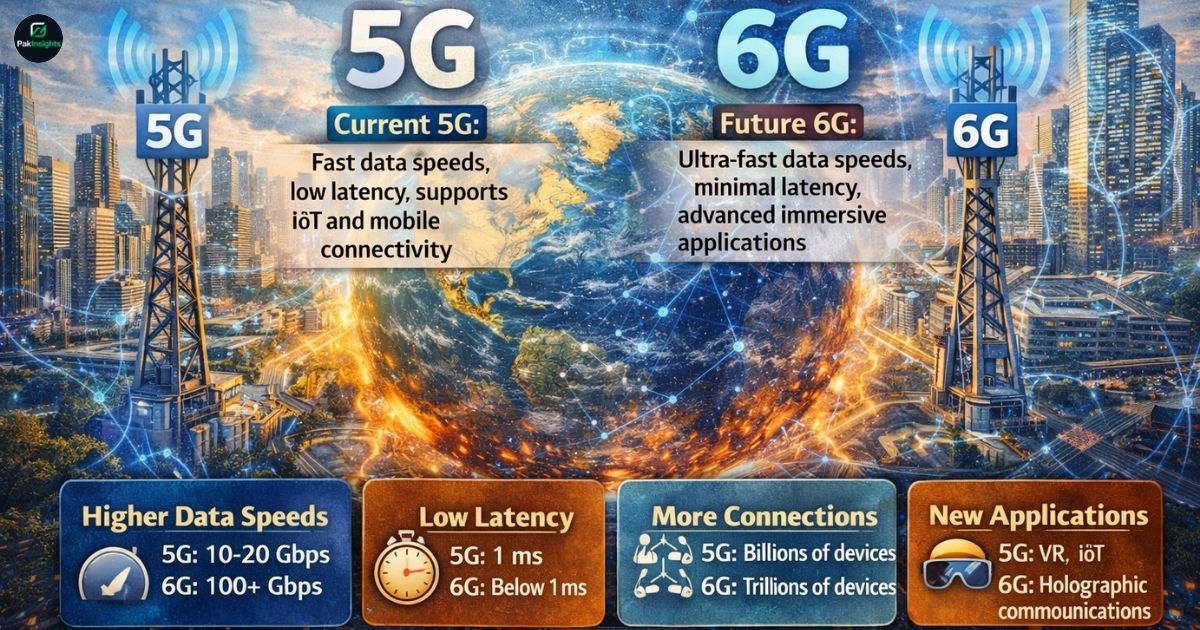
5G is more than a faster version of 4G. It combines Massive MIMO, mobile broadband, and ultra-reliable low-latency communications (uRLLC) to support millions of devices in dense areas. Its architecture relies on fiber-optic backhaul, decentralized data centers, and high-bandwidth infrastructure to ensure high-performance connectivity. The technology also enables autonomous mobility and digital twins, giving cities and industries new ways to simulate and control systems in real time. Experts call it a foundation for innovation in communication of the future.
6G technology goes even further. It integrates terahertz (Thz) communications, visible light communications (VLC), and wireless AI to deliver instantaneous connectivity. Researchers predict 3D holographic representation for meetings and Holographic-Type Communication (HTC) for virtual consultations. Network automation and edge networking will allow smart systems to make decisions instantly. In the US, pilot projects are testing remote-controlled vehicles, smart grids, and autonomous mobility, setting the stage for a fully connected future by the 2030s.
Impact on Communication and Connectivity
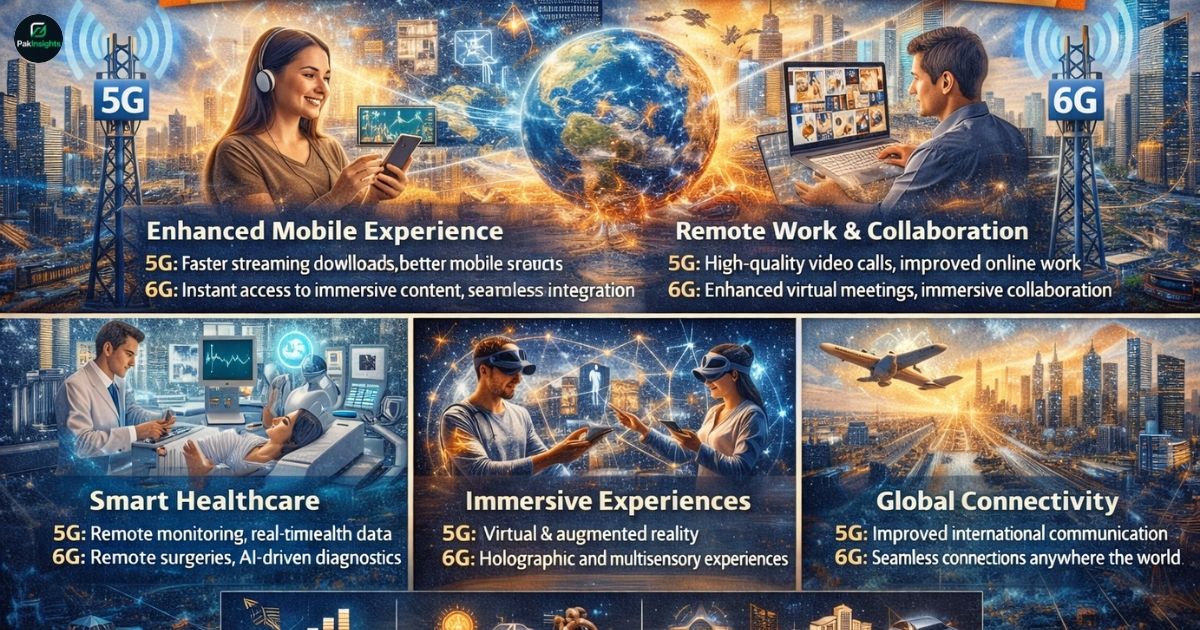
The impact of 5G and 6G on communication goes beyond faster downloads. Connected healthcare is revolutionized through virtual medical consultations and emergency response systems using low-latency communication (uRLLC). Hospitals can now monitor critical patients remotely, while paramedics transmit real-time data from ambulances directly to specialists. This level of innovation in communication saves lives and makes healthcare more accessible, especially in rural areas.
Smart cities and autonomous vehicles benefit from IoT connectivity and data exchange between devices. Traffic systems, public transport, electricity grids, and urban infrastructure can communicate instantly, reducing congestion and improving passenger safety. Construction sites are also evolving, with construction site monitoring and intelligent machines streamlining projects. In agriculture, agricultural automation powered by 5G enables real-time data transmission from soil sensors and drones, boosting crop yields and sustainability.
| Sector | 5G/6G Application | Benefit |
|---|---|---|
| Healthcare | Virtual medical consultations, remote monitoring | Faster response, life-saving care |
| Transportation | Autonomous vehicles, traffic management | Safer roads, reduced congestion |
| Smart Cities | Energy grids, public services | Efficient, sustainable infrastructure |
| Construction & Industry | 3D monitoring, intelligent machines | Faster, safer project completion |
| Agriculture | Soil sensors, automated machinery | Higher yield, precision farming |
Challenges and Future Prospects of 5G and 6G
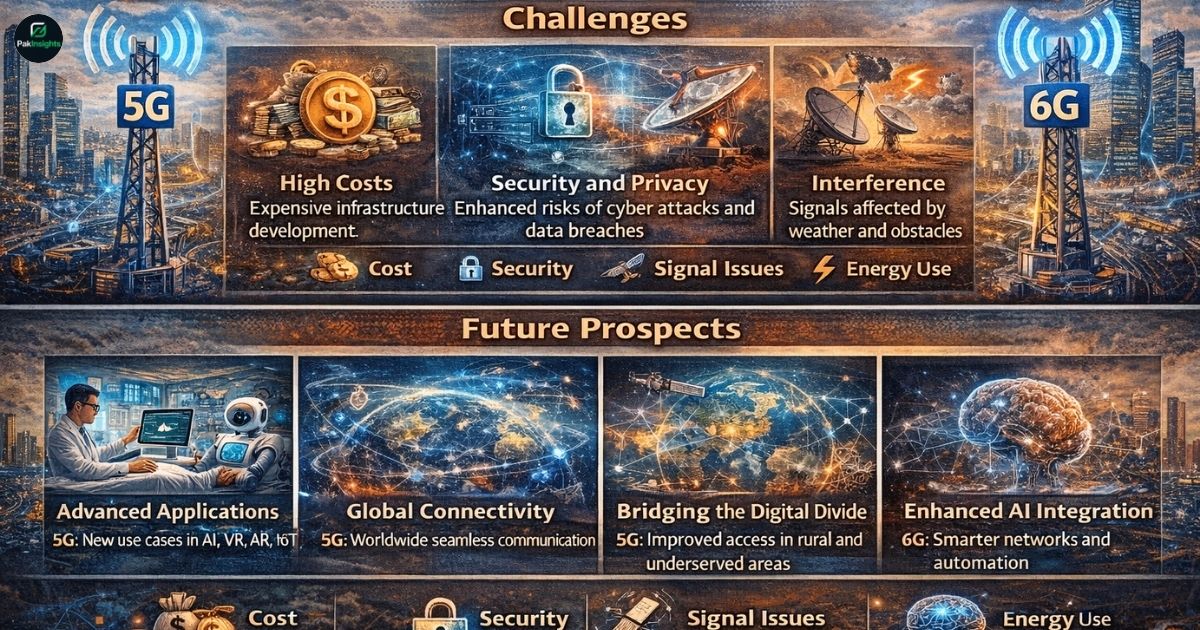
Deploying 5G and 6G in the US comes with challenges. Rolling out high-bandwidth infrastructure, fiber-optic backhaul, and decentralized data centers is expensive and complex. Spectrum efficiency must improve to support millions of devices per km². Security remains a concern as network deployment increases the attack surface. Energy use is also critical; both 5G and 6G aim for energy-efficient networks while supporting latency-critical applications.
Looking forward, 6G will introduce Holographic-Type Communication (HTC), global 3D coverage, and wireless AI for smart systems. The future includes digital twins for cities, remote-controlled vehicles, and content and cloud integration for seamless operations. Research into high-altitude platforms and satellite constellations could finally provide global mobile coverage, connecting remote regions. The connected future is closer than ever, and the US is poised to lead this transformation through innovation, infrastructure, and regulatory support.
Frequently Asked Questions
Q1: What is the difference between 5G and 6G?
5G provides faster speeds, low-latency communication (uRLLC), and better connectivity, while 6G will offer terabit data rates, global 3D coverage, and advanced Holographic-Type Communication (HTC).
Q2: How will 5G and 6G affect everyday life in the US?
They will improve connected healthcare, smart cities, autonomous vehicles, and real-time data transmission, making life faster, safer, and more connected.
Q3: Are 5G and 6G safe for health?
Current research shows 5G and 6G technology follows strict safety standards and is safe for daily use.
Q4: When will 6G be available in the US?
6G is expected to roll out around the 2030s after testing and network deployment of pilot projects.
Q5: What industries benefit most from 5G and 6G?
Healthcare, transportation, agriculture, construction, and urban infrastructure all gain from autonomous mobility, digital twins, and intelligent machines.