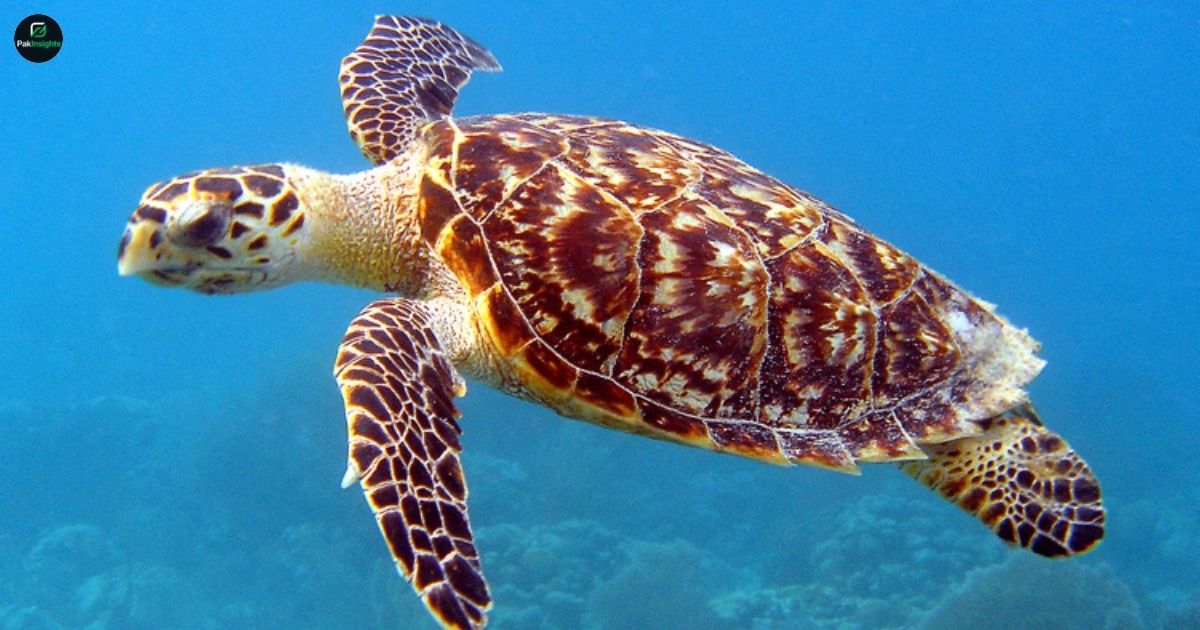
Hawksbill Sea Turtle fascinates scientists and nature lovers worldwide and remains a critically endangered sea turtle species. Belonging to the Cheloniidae family, this marine reptile is known for its beautiful turtle shell/carapace, which has overlapping scutes and a saw-like serrated edge. Its bright patterns and unique shape make it one of the most recognizable turtles in the world. Found across tropical reefs in the Indian Ocean, Pacific Ocean, and Atlantic Ocean, the Hawksbill plays a crucial role in maintaining coral reef habitats and the balance of marine and estuary ecosystems.
Despite its stunning appearance, the Hawksbill Sea Turtle faces severe threats from poaching / illegal trade, tortoiseshell / bekko / shell exploitation, and human activities. The species is listed in the IUCN Red List as critically endangered and protected under CITES Appendix I. Conservation programs in the Florida Keys, Seychelles, and Philippines are vital for protecting this spongivorous reptile, which feeds mainly on sponges and other invertebrates. Its ability to eat toxic sponges makes it unique among turtles.
Understanding Hawksbill Sea Turtles – Characteristics and Lifespan
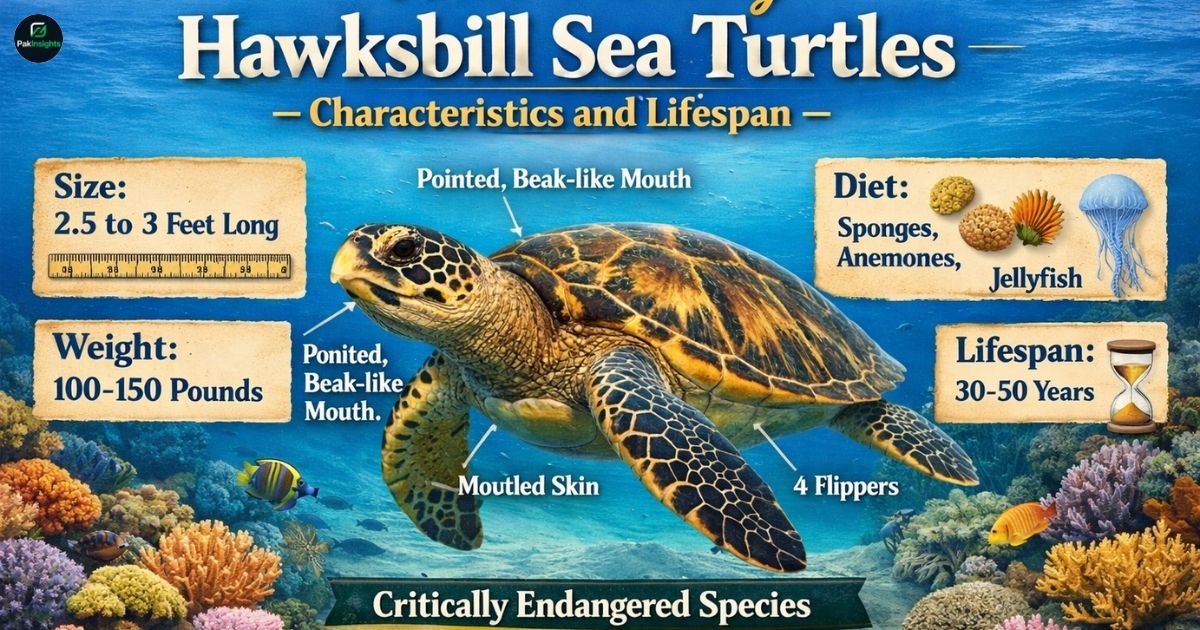
The Hawksbill Sea Turtle is distinguished by its narrow head ending in a sharp, hooked tomium (beak feature). Its serrated shell edges and overlapping scutes give it a jagged, saw-like appearance. Adult turtles usually grow up to one meter long and weigh around 80 kilograms, though some individuals reach up to 127 kilograms. Its oar-like flippers allow strong swimming adaptations, helping it navigate coral reefs and open ocean habitats. Interestingly, biofluorescence in turtles has been observed in Hawksbills, giving their shells a faint glow under certain light. Scientists believe this may help in reef camouflage or communication.
Hawksbills have a slow lifespan and growth, reaching sexual maturity after 20–35 years. Their life stages: early, benthic, and reproductive phases are complex. Hatchlings enter a pelagic juvenile phase, drifting in open ocean currents for years before returning to shallow reefs. Adults are largely solitary and highly migratory, but they return to the same nesting beaches each breeding season. Predator threats include humans, sharks, crocodiles, and octopuses. These turtles’ solitary behavior and tough shells reduce predation, but cannot fully protect them from human activities.
Hawksbill Turtle Habitat and Diet – Where and What They Eat
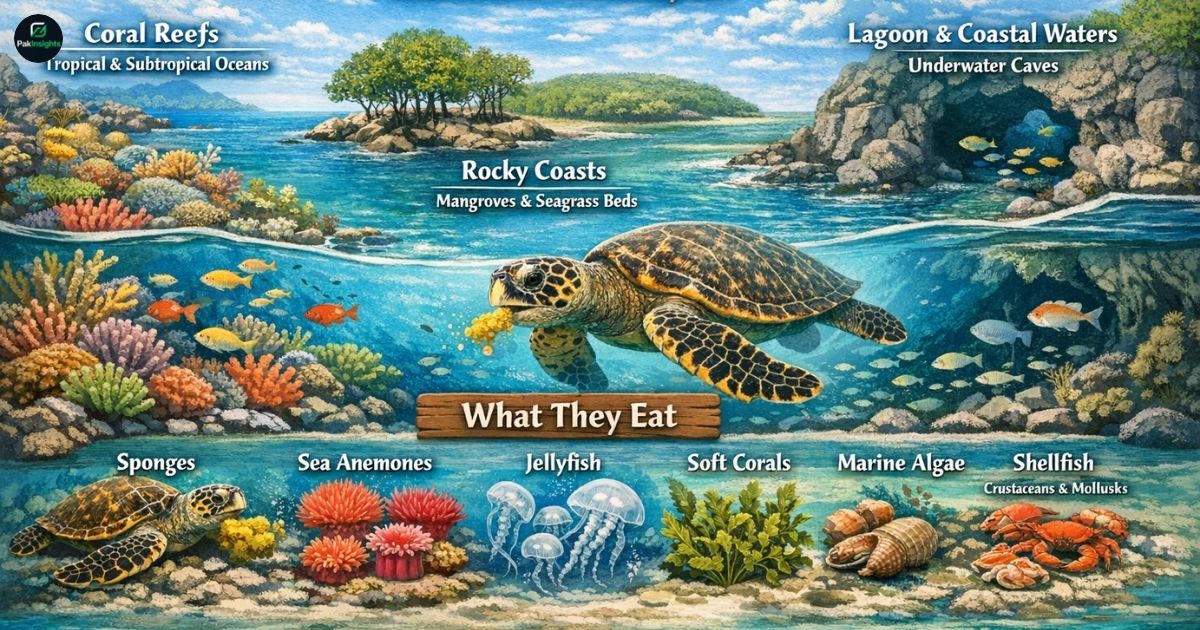
The Hawksbill Sea Turtle thrives in tropical reefs, particularly in the Caribbean nesting sites, Florida Keys, Indonesia, Sri Lanka, Australia, and parts of the Philippines – Boracay, Punta Dumalag, Dahican Beach. It also frequents lagoons, mangrove estuaries, and marine and estuary ecosystems where coral reefs provide shelter and abundant food. Hawksbills are reef-dependent, often resting in caves or crevices during the day to avoid predators and conserve energy. Their presence promotes coral health by controlling sponge populations, which compete with corals for space.
Diet plays a critical role in the Hawksbill’s ecological niche. As a spongivorous reptile, it consumes 70–95% sponges, but also eats algae, cnidarians, sponge and cnidarian diet, mollusks, and occasionally fish. Hawksbills can handle toxic prey like Portuguese man o’ war, showing remarkable resilience. Their feeding habits influence reef diversity, making them crucial for sea turtle conservation. Without Hawksbills, some sponges would overgrow, damaging coral reef structures.
| Hawksbill Diet | Examples |
|---|---|
| Sponges | Aaptos aaptos, Chondrilla nucula |
| Cnidarians | Jellyfish, hard corals |
| Algae & Seagrasses | Green algae, seagrass leaves |
| Mollusks & Crustaceans | Snails, crabs, small lobsters |
Threats, Conservation Efforts, and How You Can Help
The Hawksbill Sea Turtle faces many threats. Poaching / illegal trade and tortoiseshell / bekko / shell exploitation are historic and ongoing problems. Coastal development and habitat loss / coastal development destroy nesting beaches, while pollution and fishing practices harm juvenile and adult turtles. Climate change also affects nesting success and sex ratios of hatchlings.
Conservation programs have shown positive results. In the Florida Keys, the Hawksbill Project monitors populations and educates divers about reef protection. Worldwide, organizations like NOAA, WWF-Australia, and the Seychelles Turtle Conservation Project enforce conservation projects/recovery plans. You can help by supporting marine protected areas, avoiding products made from tortoiseshell, participating in beach cleanups, and donating to sea turtle conservation programs. Each small action contributes to the survival of this incredible species.
Frequently Asked Questions
Q1: What is a Hawksbill Sea Turtle?
A Hawksbill Sea Turtle (Eretmochelys imbricata) is a critically endangered sea turtle known for its colorful turtle shell/carapace and sharp, hooked beak.
Q2: Where do Hawksbill Sea Turtles live?
They are found in tropical reefs across the Indian, Pacific, and Atlantic Oceans, including the Florida Keys, Caribbean nesting sites, and the Philippines.
Q3: What do Hawksbill Turtles eat?
Hawksbills are a spongivorous reptile, feeding mainly on sponges, cnidarians, algae, and some small mollusks and crustaceans.
Q4: How long do Hawksbill Sea Turtles live?
They can live over 30–50 years, reaching sexual maturity after 20–35 years, depending on the region.
Q5: Why are Hawksbill Sea Turtles endangered?
Major threats include poaching / illegal trade, tortoiseshell / bekko / shell exploitation, habitat loss / coastal development, and pollution and fishing practices.