
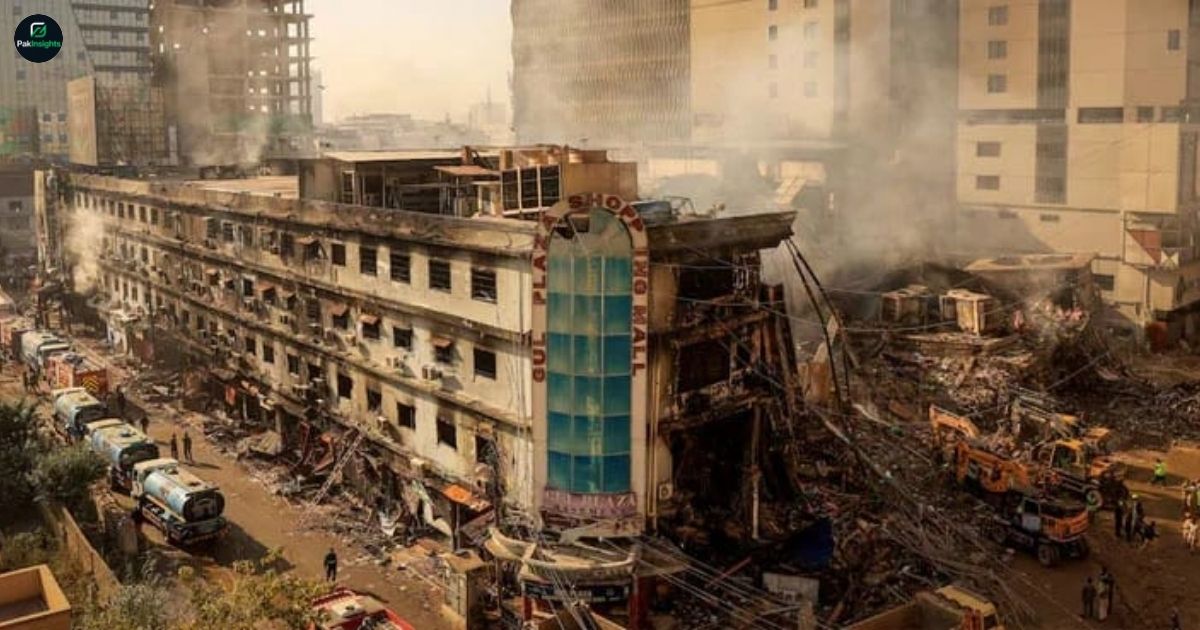
Gul Plaza Fire Survivors Give Testimonies Before Judicial Commission describing the chaotic blaze that engulfed the shopping mall on M.A. Jinnah Road, Karachi. The survivors shared their experiences of mezzanine floor fire, smoke inhalation, and evacuation, and the lack of immediate emergency response. Their statements highlight serious fire safety lapses in commercial buildings.
Muhammad Junaid, a shopkeeper, recalled seeing thick smoke at 10:15 pm on January 17 and escaping through the bathrooms after falling unconscious. Ali Haider described the blaze spreading to the ground and mezzanine floors, exploding suitcases, and trapping people during the blaze. Both survivors emphasized the absence of fire tenders and rescue agencies during the incident. The Edhi ambulance rescue eventually transported them to hospitals.
During the judicial commission hearing, Gul Plaza Association president Tanveer Pasta provided official details on building layout, gates, and CCTV surveillance. The commission reviewed 280 cameras and 1,153 shops to investigate building safety compliance. The survivors’ testimonies, combined with management statements, aim to guide the inquiry into the Gul Plaza fire and improve emergency evacuation procedures.
The hearing also examined official closing times, gate management, and corridor widths of 6–10 feet. Survivor statements revealed delays in announcements and evacuation guidance, underscoring urgent reforms in Karachi’s emergency response system. The judicial commission testimony highlights lessons for public safety, emphasizing proper fire exits, building code compliance, and training for shop leaseholders.
This inquiry serves as a critical step toward accountability and future prevention. Gul Plaza fire survivors’ testimonies before the judicial commission shed light on structural weaknesses, gaps in emergency response, and the urgent need for stricter fire safety measures in commercial buildings.