
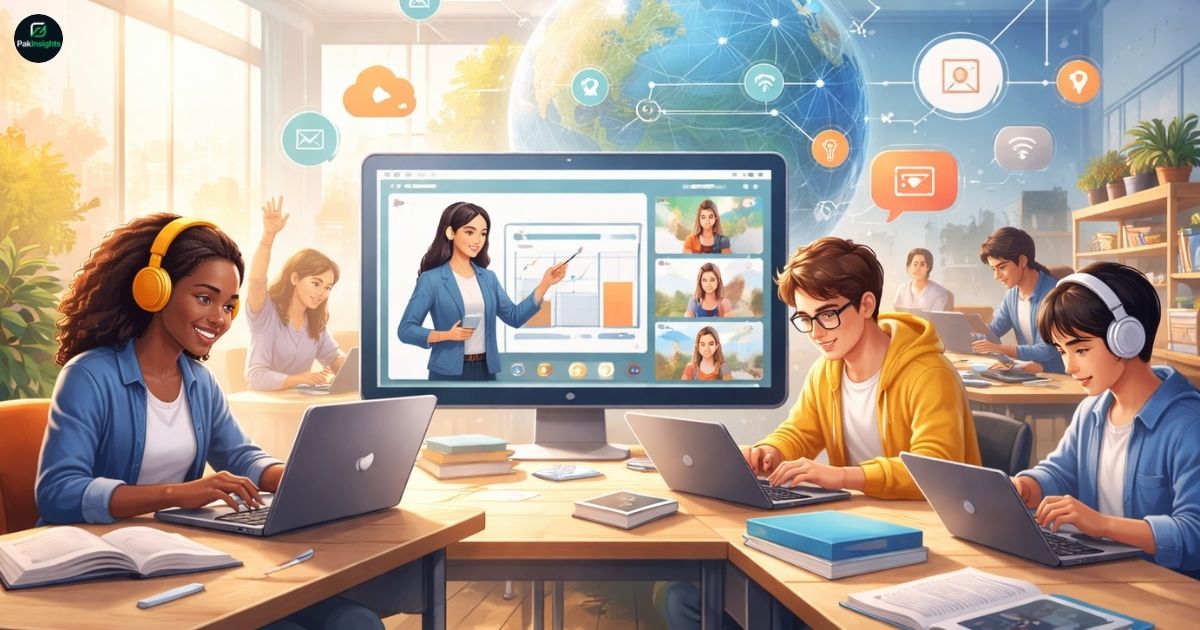
Learning today is no longer confined to traditional classrooms. Technology changes learning by offering students freedom, flexibility, and access to resources that were unimaginable a few decades ago. With laptops, tablets, and mobile devices, students can study anytime, anywhere. Web-based learning and mobile and web-based access allow learners to follow a pace and style that fits their needs. Schools and universities in the USA are now embracing hybrid learning models to combine the best of physical and digital instruction. As a result, the role of teachers in the digital age has shifted from delivering content to guiding, coaching, and facilitating.
The rise of instructional technology has also transformed how students interact with information. Students are no longer passive recipients of knowledge. The passive to active learning shift encourages active learning strategies such as problem-based learning, discussions, and reflection. This approach improves cognitive and analytical skills development, helping learners think critically rather than memorize facts. Moreover, socio-emotional processes in learning are strengthened as students collaborate online, participate in virtual discussions, and develop relationships in virtual classrooms and global collaboration settings.
The Rise of Digital Learning Tools
The explosion of digital learning tools has redefined education. Platforms like e-learning platforms and interactive learning software provide instant access to resources. Virtual classrooms enable online collaboration across continents. Tools like Google Drive, Dropbox, Evernote, and task management in learning allow students to work together seamlessly. Teachers now use personalized instruction to cater to learning profiles and readiness levels, ensuring every student progresses effectively. Mobile apps make adaptive learning possible, allowing students to study anywhere, whether at home, a café, or during travel.
The impact of these tools goes beyond convenience. Students can choose their own learning paths, creating freedom to choose learning path experiences. Collaborative vs individual learning is now more balanced, as technology enables group work even outside the classroom. Students can combine a hybrid of self-study and group study methods for better understanding. Schools increasingly implement blended learning strategies to mix face-to-face lessons with online education, ensuring both accessibility and engagement.
Benefits of Technology in Education
Technology in education boosts engagement and motivation. Student-centered learning replaces old teacher-centered methods. Learners participate actively, using digital learning platforms to research, solve problems, and create projects. Brain-based learning and active learning strategies help students retain knowledge more effectively. With personalized content delivery, teachers can adjust lessons to suit individual learning profiles. This improves cognitive development while fostering socio-emotional learning through teamwork and discussion.
Students also benefit from online human interaction, which reduces the isolation often associated with online courses. Global access to virtual classrooms and global collaboration expands perspectives and encourages cultural exchange. By combining mobile learning apps, interactive learning, and online collaboration, learners experience a richer learning experience design. They develop skills that are essential for modern careers, including critical thinking, problem-solving, and multitasking abilities.
Challenges and Future Trends in Tech-Driven Learning
Despite its benefits, technological changes in learning bring challenges. Digital multitasking challenges and distractions can reduce focus. Many students struggle with multitasking in learning, switching between apps and tabs without retaining information. Schools must address the digital divide and accessibility issues to ensure equitable access for all students. Teachers also face a learning curve with new instructional technology, balancing traditional and digital methods effectively.
Looking ahead, technology in education will continue evolving. Future trends include adaptive learning, AI tutors, gamification, AR/VR experiences, and fully personalized instruction. Students will increasingly enjoy freedom to choose a learning path while teachers focus on student engagement and participation. Innovations in hybrid learning models, web as a hypermedia source, and problem-based learning will make education more flexible, effective, and human-centered. As technology improves, the role of teachers in the From Classrooms to Screens: How Technology Changes Learningdigital age will remain critical, guiding students through both knowledge and skills development while fostering socio-emotional processes in learning.
Example Table: Comparing Traditional vs Tech-Enhanced Learning
| Feature | Traditional Learning | Tech-Enhanced Learning |
|---|---|---|
| Access | Classroom only | Mobile and web-based access anywhere |
| Interaction | Mostly individual | Collaborative learning tools, online collaboration |
| Pace | Fixed | Personalized instruction, adaptive learning |
| Engagement | Passive | Active learning strategies, interactive learning |
| Resources | Textbooks | E-learning platforms, web as hypermedia source |
Frequently Asked Questions
Q1: How is technology changing learning in schools?
Technology enables student-centered learning, digital collaboration, and personalized instruction, allowing students to learn anytime, anywhere.
Q2: What are the benefits of digital learning tools?
They improve engagement, cognitive development, and socio-emotional learning while supporting active learning strategies and flexible study paths.
Q3: What challenges come with tech-driven learning?
Students face digital multitasking challenges, distractions, and digital divide and accessibility issues that schools must address.
Q4: How do hybrid learning models help students?
Hybrid learning models combine classroom and online education, offering freedom to choose a learning path and more personalized learning.
Q5: What future trends are expected in technology in education?
Emerging trends include AI-driven tutoring, AR/VR, adaptive learning, gamification, and enhanced online human interaction.