
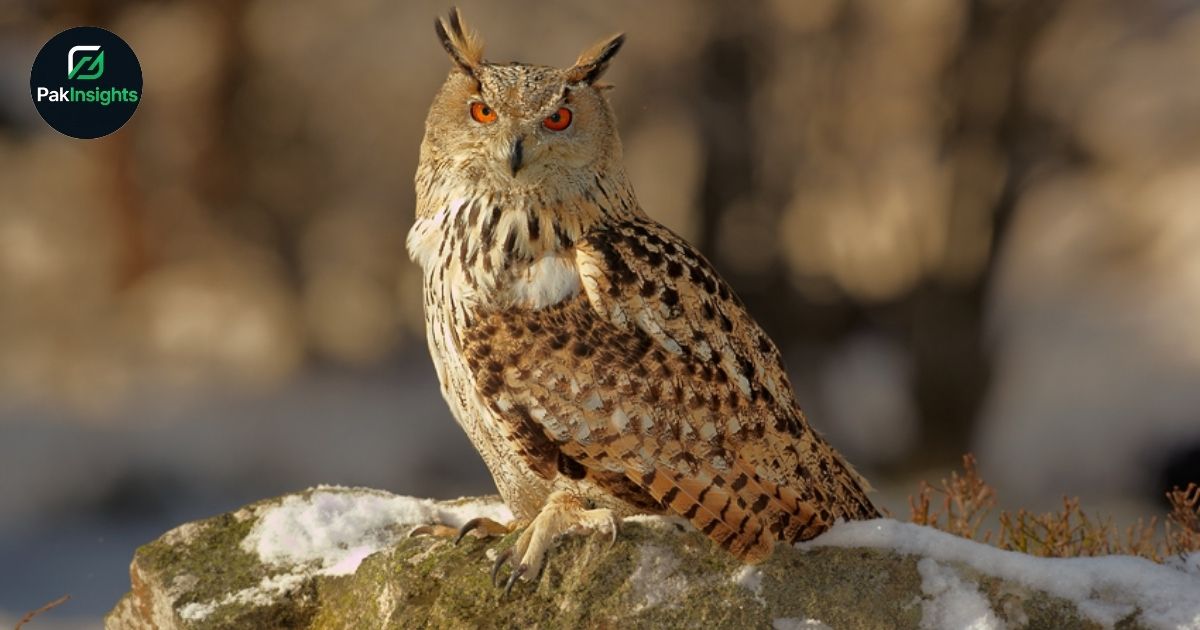
The Eurasian Eagle-Owl is one of the largest owl species in the world, known for its striking orange eyes, powerful talons, and impressive wingspan. Found across Europe and Asia, this nocturnal predator fascinates bird lovers, wildlife enthusiasts, and researchers alike. Its ability to thrive in various owl habitats, from forests to mountainous areas, makes it a remarkable example of adaptability among large raptors. Whether you spot it perched on a cliff or soaring silently over the night, the Eurasian Eagle-Owl commands attention.
Overview of the Eurasian Eagle-Owl

The Eurasian Eagle-Owl (Bubo bubo) belongs to a diverse group of owl subspecies, including B. b. hispanus, B. b. sibiricus, and B. b. hemachalana. These birds are recognized for their massive wingspan and body length, reaching up to 6 feet when fully stretched, making them one of the largest owl species worldwide. Their plumage coloration provides natural camouflage patterns, allowing them to blend seamlessly into rocky and mountainous areas, forests, steppes, and wetlands.
In terms of sexual dimorphism, females are slightly larger than males, which helps during breeding and nesting. Eurasian distribution stretches from Spain across Europe to Russia, and down to parts of Asia. Their population distribution varies by region, with some subspecies adapting to harsher climates like Siberia, while others thrive in milder environments like central Europe. This remarkable genetic diversity ensures the species’ resilience against environmental changes.
Behavior and Hunting Patterns
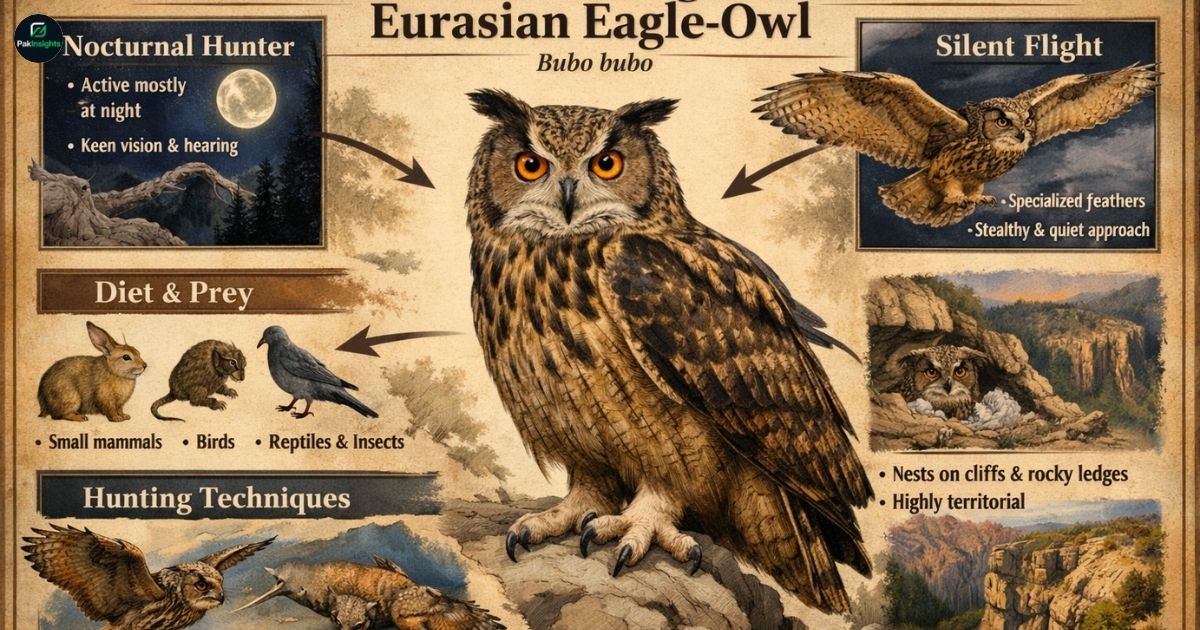
The Eurasian Eagle-Owl is a skilled nocturnal hunter, relying on both visual and sound-based hunting techniques. With keen eyesight and silent flight, it hunts prey like rodents, rabbits, and birds. Its talon size and strength make it capable of catching prey much larger than itself. Unlike some other owls, it often hunts from high perches or while flying low over open ground.
These large raptors exhibit fascinating predator-prey relationships. They can adapt their diet and feeding habits depending on prey availability, showcasing advanced hunting techniques. The owls are largely solitary but demonstrate complex breeding behavior, forming long-term bonds with mates. Parental care is extensive; both parents feed and protect the chicks until they fledge, usually after 6 to 8 weeks.
Conservation Status and Human Interaction
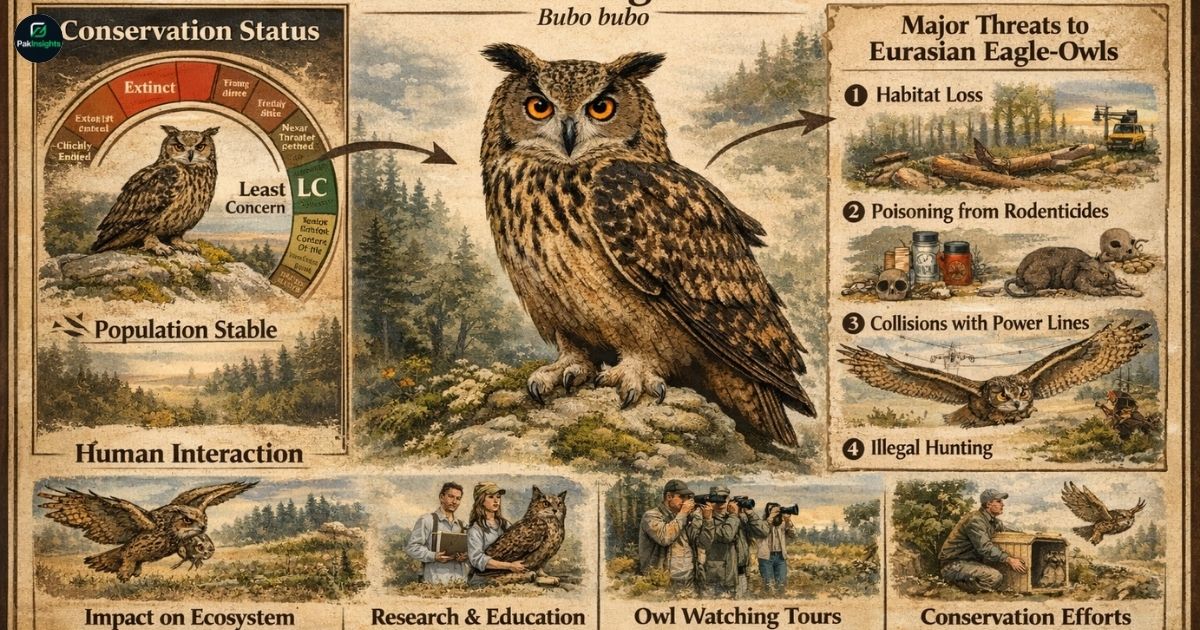
Currently, the Eurasian Eagle-Owl holds an IUCN Least Concern status, but local threats like habitat loss, hunting, and human disturbance still impact some populations. Conservation efforts aim to preserve owl habitat, maintain genetic diversity, and educate people about these magnificent birds of prey.
Humans often admire them in the wild, zoos, and wildlife centers. In North America, enthusiasts compare them to related owl species like the great horned owl and snowy owl. Protecting breeding behavior and cliff ledges is essential for maintaining healthy populations. Programs that encourage coexistence between humans and wildlife have helped some European and Asian owls thrive despite urban expansion.
Interesting Facts About Eurasian Eagle-Owls
The Eurasian Eagle-Owl is full of surprises. Its ear tufts and orange eyes make it instantly recognizable, while its plumage variation allows it to adapt across diverse habitats. It can live over 20 years in the wild, showcasing remarkable longevity for a nocturnal predator.
Some fascinating facts include their wing loading, which allows for agile flight, and their role in ecosystem balance as top predators. Moulting patterns and seasonal behavior vary across owl subspecies, making research on European and Asian owls highly interesting. Evolutionary lineage ties them to other large raptors, and comparisons with the Indian eagle-owl and the Pharaoh eagle-owl highlight their widespread adaptations.
| Fact | Details |
|---|---|
| Wingspan | 4.5 – 6 feet |
| Body Length | 24 – 34 inches |
| Diet | Rodents, rabbits, birds |
| Lifespan | 20+ years in wild |
| Habitats | Forest, steppe, wetland, rocky areas |
| Eye Color | Orange |
| Subspecies | B. b. hispanus, B. b. sibiricus, B. b. hemachalana, B. b. turcomanus |
FAQs
Where can you see Eurasian Eagle-Owls?
They live across Europe and Asia, often in rocky areas and forests.
What do Eurasian Eagle-Owls eat?
They hunt rodents, rabbits, and birds, using stealth and strong talons.
Are Eurasian Eagle-Owls endangered?
No, their IUCN conservation status is least concern, but local threats exist.
How long do they live?
Researchers have recorded them living for over 20 years in the wild.
Meta Description:
Discover the Eurasian Eagle-Owl, a large nocturnal predator with striking orange eyes, wingspan, and fascinating behavior across Europe and Asia.